

Are you familiar with the diverse branches of Buddhism? Did you know that Buddhism is not a monolithic religion but rather composed of different sects and practices? Explore the intriguing world of Buddhism and delve into the two major branches: Mahayana and Theravada.
In this article, we will unravel the distinct teachings, practices, and approaches of Mahayana and Theravada Buddhism. Discover the geographical spread, core beliefs, and motivations that guide these two paths. Challenge your preconceptions and deepen your understanding of Buddhism.
Let’s embark on a spiritual journey and explore the depths of Buddhism’s dual paths.
Key Takeaways:
- Mahayana and Theravada are the two main branches of Buddhism.
- Mahayana is practiced mainly in East Asia, while Theravada is predominant in Southeast Asia.
- Mahayana emphasizes compassion and the Bodhisattva Path, while Theravada focuses on monasticism and the Eightfold Noble Path.
- Both branches share the goal of alleviating suffering and attaining enlightenment.
- Choosing the right path depends on personal inclination and guidance from experienced practitioners.
Mahayana Buddhism: Embracing Compassion and Enlightenment
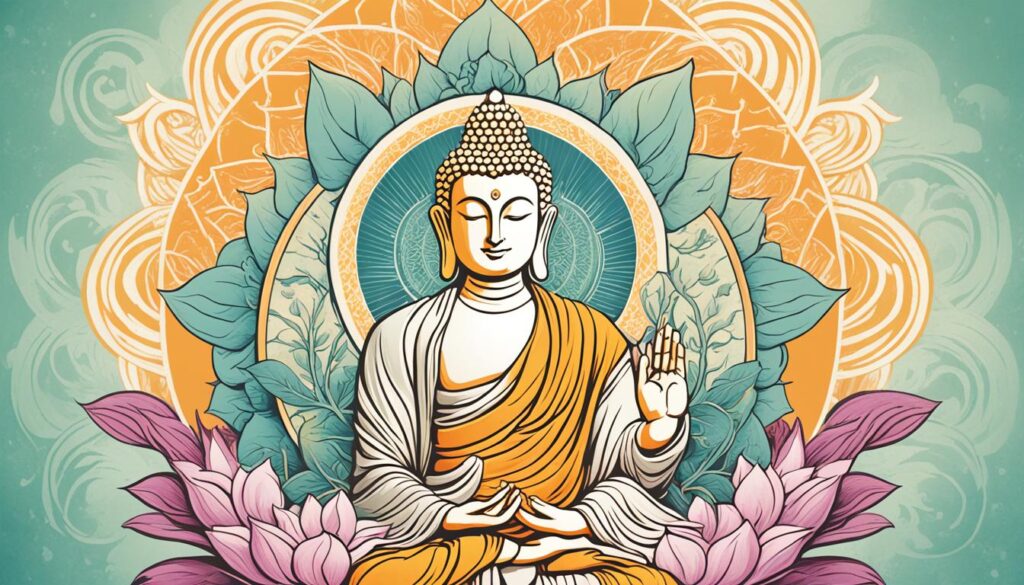
Mahayana Buddhism is a branch of Buddhism that encompasses various schools such as Pure Land, Zen, and Tibetan Buddhism. It is characterized by its expansive teachings on compassion and the Bodhisattva Path, which are central to Mahayana practices and scriptures.
In Mahayana, the cultivation of bodhicitta, the mind of awakening, is emphasized. Practitioners aspire to become fully enlightened Buddhas, not only for their own liberation but also for the benefit of all sentient beings. This deep sense of compassion and the aspiration to alleviate suffering are at the core of Mahayana teachings.
Mahayana scriptures play a significant role in guiding practitioners along their spiritual journey. The Lotus Sutra, Heart Sutra, and Diamond Sutra are among the revered scriptures in Mahayana Buddhism. These scriptures provide profound insights into the nature of reality, the workings of the mind, and the path to enlightenment.
Practices in Mahayana Buddhism often involve meditation, chanting, and visualization. These practices are designed to cultivate awareness, concentration, and insight, enabling practitioners to deepen their understanding of the nature of existence and the interconnectedness of all beings.
By nurturing compassion and embracing the Bodhisattva ideal, Mahayana practitioners strive to embody the qualities of love, kindness, and wisdom in their daily lives. They seek to alleviate the suffering of others, contribute to the welfare of society, and ultimately attain enlightenment.
Theravada Buddhism: Nurturing Insight and Monasticism
Theravada Buddhism, also known as the “Doctrine of the Elders,” is predominantly practiced in countries such as Sri Lanka, Myanmar, Thailand, Cambodia, and Laos. Rooted in the original teachings of the Buddha, Theravada places great emphasis on the pursuit of insight and the monastic lifestyle.
For Theravada practitioners, the path to enlightenment involves the cultivation of mindfulness, meditation, and the Eightfold Noble Path. Through these practices, individuals strive to develop awareness of the present moment, understand the nature of reality, and ultimately attain liberation from suffering.
The authoritative scriptures in Theravada Buddhism are known as the Pali Canon. This collection of texts contains the teachings of the Buddha and his disciples, offering guidance and wisdom for practitioners on their spiritual journey. The Pali Canon serves as a profound source of inspiration and knowledge, providing a roadmap for following the path laid out by the Buddha.
Meditation is a central aspect of Theravada practices. By engaging in mindful meditation, individuals learn to observe their thoughts, emotions, and sensations with non-judgmental awareness. This practice cultivates clarity of mind, tranquility, and insight into the nature of existence.

The Monastic Tradition
Theravada Buddhism places great importance on monasticism, with monks and nuns dedicating their lives to the pursuit of spiritual development and the preservation of the Dhamma (the teachings of the Buddha).
Monastics follow a strict code of conduct known as the Vinaya, which governs their behavior, attire, and daily routines. Through this disciplined lifestyle, monastics aim to cultivate qualities of morality, simplicity, and detachment.
The monastic community provides a supportive environment for practitioners to deepen their practice and pursue spiritual awakening. Monasteries serve as centers of learning, meditation, and refuge, where individuals can seek guidance from experienced monastics and engage in intensive spiritual training.
| Key Features of Theravada Buddhism | Theravada Teachings and Practices |
|---|---|
| Emphasis on original teachings of the Buddha | Mindfulness meditation |
| Importance of monasticism | Eightfold Noble Path |
| Pali Canon as authoritative scripture | Development of insight and wisdom |
Differences in Approach: Motivation and Handling Afflictive Emotions
When exploring the differences between Mahayana and Theravada Buddhism, it becomes evident that the two branches vary in their motivations for practicing and their approaches to handling afflictive emotions. While both traditions acknowledge the importance of love, compassion, and mindfulness, their specific focuses diverge.
Mahayana Motivation: In Mahayana Buddhism, practitioners are motivated by the aspiration to attain Buddhahood for the benefit of all beings. This motivation stems from the belief that every individual has the potential to achieve enlightenment and become a fully awakened Buddha. The Mahayana path is driven by compassion and the desire to alleviate the suffering of all sentient beings, cultivating the mind of awakening (bodhicitta).
Theravada Motivation: In Theravada Buddhism, the main motivation is on self-liberation from suffering. Practitioners strive to attain enlightenment by following the Eightfold Noble Path and focusing on personal development. While love and compassion are considered virtuous, the emphasis lies on individual liberation and achieving freedom from the cycle of birth, death, and rebirth.
Both Mahayana and Theravada Buddhism recognize the presence of afflictive emotions, which include ignorance, desire, and aversion, as fundamental causes of suffering in human existence. However, their approaches to handling these afflictive emotions differ.
Handling Afflictive Emotions in Mahayana: Mahayana teachings emphasize transforming afflictive emotions into their positive essence. The path encourages individuals to recognize the interconnectedness of all sentient beings and to generate compassion and wisdom as antidotes to these emotions. Practices such as meditation, contemplation, and visualizations are utilized to cultivate a mind that is free from afflictions.
Handling Afflictive Emotions in Theravada: In contrast, Theravada teachings focus on avoiding and overcoming afflictive emotions. Through the practice of mindfulness, practitioners develop an awareness of their thoughts, feelings, and sensations, with the goal of recognizing and disengaging from destructive patterns of reaction. By cultivating mindfulness and inner clarity, individuals can gradually free themselves from the grip of afflictive emotions.
Comparison of Motivation and Handling Afflictive Emotions
| Aspect | Mahayana Buddhism | Theravada Buddhism |
|---|---|---|
| Motivation | Aspiring to attain Buddhahood for the benefit of all beings | Personal liberation from suffering |
| Approach to Handling Afflictive Emotions | Transforming them into their positive essence | Avoiding and overcoming them through mindfulness |
Finding the Right Path: Personal Inclinations and Guidance
Choosing the right Buddhist path requires careful consideration of your personal inclinations and understanding of individual karma. With three distinct branches of Buddhism to choose from – Mahayana, Theravada, and Vajrayana – it is essential to find the one that resonates most with your inner self.
Mahayana Buddhism encompasses schools like Pure Land, Zen, and Tibetan Buddhism, placing emphasis on compassion, the Bodhisattva Path, and the aspiration to become a fully enlightened Buddha for the benefit of all sentient beings. Theravada Buddhism, predominantly practiced in Southeast Asia, focuses on monasticism, mindfulness, meditation, and the Eightfold Noble Path.
For those drawn to a path that combines the Mahayana tradition with secret teachings and rituals, Vajrayana Buddhism may be the path of choice. However, it is important to note that Vajrayana is considered highly efficient yet risky, and thus requires guidance from a qualified lama.
A lama, a teacher with deep understanding and experience, plays a crucial role in Vajrayana Buddhism. They serve as a mentor and guide, providing spiritual instruction and meaningful insights to practitioners. The guidance of a lama is essential for navigating the complex practices and overcoming obstacles on the Vajrayana path.
When choosing your Buddhist path, trust in your personal inclination and seek guidance from qualified teachers who can provide the necessary support and knowledge to help you along your journey. Remember, the path to enlightenment is unique for each individual, and finding the right path is a deeply personal and transformative process.
Conclusion
Mahayana and Theravada represent two distinct branches of Buddhism, each offering unique teachings, practices, and approaches. Despite their differences, both branches share a common aspiration: to alleviate suffering and attain spiritual enlightenment. Mahayana places great emphasis on compassion, offering the Bodhisattva Path as a means to awaken the heart and benefit all sentient beings. Conversely, Theravada emphasizes monasticism and the Eightfold Noble Path as the path towards liberation.
When it comes to choosing a path, it is essential to find one that resonates with your personal inclinations and aspirations. Whether you are drawn to the compassionate ideals of Mahayana or the disciplined path of Theravada, both provide valuable insights into the nature of reality, the human condition, and the pursuit of enlightenment.
As you embark on your Buddhist journey, seeking the guidance of qualified teachers is crucial. They can help navigate the complexities of the path and offer invaluable wisdom and support. Remember, Buddhism is not merely a philosophy – it is a living tradition that requires practice, dedication, and personal experience.
Ultimately, the diversity of Buddhist practices and traditions serves as a testament to the universal human quest for inner peace, wisdom, and compassion. Whether you find solace in Mahayana or Theravada, or any other Buddhist tradition, the teachings and practices offer transformative tools to cultivate kindness, wisdom, and spiritual growth. May your exploration of Buddhism lead to a deeper understanding of yourself, others, and the interconnected nature of all existence.
FAQ
What are the two main branches of Buddhism?
The two main branches of Buddhism are Mahayana and Theravada.
What is Mahayana Buddhism?
Mahayana Buddhism is a branch of Buddhism that emphasizes compassion and the Bodhisattva Path.
What is Theravada Buddhism?
Theravada Buddhism is a branch of Buddhism that places emphasis on the original teachings of the Buddha and the monastic lifestyle.
What are some of the Mahayana Buddhist schools?
Some Mahayana Buddhist schools include Pure Land, Zen, and Tibetan Buddhism.
Where is Mahayana Buddhism mainly practiced?
Mahayana Buddhism is mainly practiced in East Asia.
Where is Theravada Buddhism predominantly practiced?
Theravada Buddhism is predominantly practiced in Southeast Asia.
What are the key scriptures in Mahayana Buddhism?
The key scriptures in Mahayana Buddhism include the Lotus Sutra, Heart Sutra, and Diamond Sutra.
What is the emphasis of Theravada Buddhism?
The emphasis of Theravada Buddhism is on mindfulness, meditation, and the Eightfold Noble Path.
How do Mahayana and Theravada differ in motivation for practicing?
Mahayana practitioners are motivated by the aspiration to attain Buddhahood for the benefit of all beings, while Theravada practitioners are primarily focused on liberating themselves from suffering.
How do Mahayana and Theravada approach afflictive emotions?
Mahayana teachings emphasize transforming afflictive emotions into their positive essence, while Theravada teachings encourage avoiding and overcoming them.
How can I choose the right Buddhist path?
Choosing the right Buddhist path depends on personal inclinations and individual karma. It is important to find a path that resonates with you.
Is there guidance available in Buddhism?
Yes, guidance from qualified teachers, such as lamas, is available to help navigate the complexities of the Buddhist journey.
What is the role of a lama in Vajrayana Buddhism?
In Vajrayana Buddhism, a lama serves as a teacher and guide, providing understanding and experience to help practitioners overcome obstacles on the path to enlightenment.