
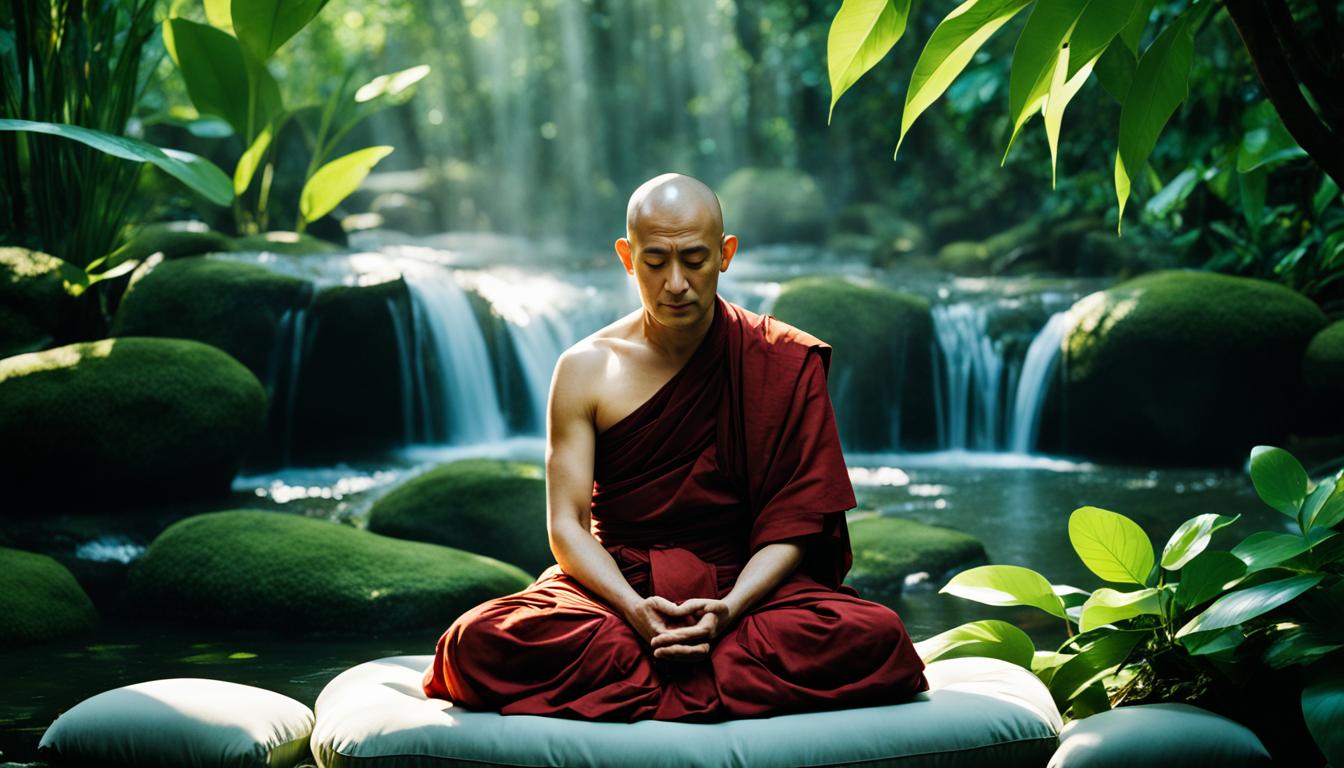
As you navigate through the complexities of modern life, finding moments of inner peace can seem elusive. In the hustle and bustle of daily routines, it’s easy to get caught up in stress, anxiety, and the pursuit of external achievements. But what if there was a path to inner peace that didn’t depend on external circumstances? Buddhism offers profound insights and practices for cultivating inner peace, rooted in the exploration of the human mind and the teachings of Gautama Buddha.
At its core, Buddhist philosophy encourages individuals to look within and address the root causes of suffering. By understanding the nature of reality and the workings of the mind, you can transcend worldly concerns and experience a deep sense of peace and contentment. Through meditation practices and the application of Buddhist principles in daily life, you can embark on a transformative journey towards inner peace.
Buddhism teaches us that true peace comes from within, regardless of the external circumstances. It invites us to develop a clear understanding of ourselves and the world around us, cultivating a state of mind that is free from grasping, aversion, and ignorance. By embracing Buddhist philosophy and integrating mindfulness practices into our lives, we can uncover a greater sense of purpose, harmony, and well-being.
Key Takeaways
- Buddhism offers profound insights and practices for cultivating inner peace.
- By exploring the human mind and the teachings of Gautama Buddha, you can address the root causes of suffering.
- Meditation practices and mindfulness techniques play a central role in cultivating inner peace.
- Understanding the nature of reality and the workings of the mind can transcend worldly concerns.
- Embracing Buddhist philosophy and integrating mindfulness practices in daily life leads to harmony and well-being.
Understanding Buddhism’s Impact on Inner Peace
Buddhism offers profound insights and practices for cultivating inner peace. By understanding the Four Noble Truths, following the Eightfold Path, and incorporating mindfulness practices, individuals can embark on a transformative journey towards peace and well-being.
The Four Noble Truths: Acknowledging Suffering and its Overcoming
The Four Noble Truths form the foundation of Buddhism, providing a clear understanding of the nature of suffering and its causes. They are:
- Dukkha: The acknowledgement that suffering is a pervasive part of life, experienced in various forms such as physical pain, emotional turmoil, and existential angst.
- Samudaya: Understanding that suffering arises from craving and clinging, rooted in ignorance and the illusion of permanence.
- Nirodha: The realization that suffering can be extinguished by overcoming attachment and craving, leading to liberation.
- Magga: The Eightfold Path serves as the roadmap to liberation and the cessation of suffering.
The Eightfold Path: Guiding Ethical Living and Personal Development
The Eightfold Path offers a comprehensive guide for ethical living and personal development. It consists of eight interconnected practices:
- Right View: Developing an accurate understanding of the nature of reality and the Four Noble Truths.
- Right Intention: Cultivating wholesome intentions and aligning them with the principles of compassion, non-harming, and non-attachment.
- Right Speech: Communicating with truth, kindness, and mindfulness, avoiding harmful or divisive speech.
- Right Action: Behaving in ways that are virtuous, ethical, and harmonious, abstaining from actions that cause harm.
- Right Livelihood: Engaging in a profession or livelihood that aligns with ethical principles and promotes social well-being.
- Right Effort: Cultivating the energy and commitment to overcome unwholesome thoughts and emotions while nurturing wholesome ones.
- Right Mindfulness: Developing present-moment awareness, observing thoughts, feelings, and sensations with clarity and non-judgment.
- Right Concentration: Cultivating focused and tranquil states of mind through meditation and contemplative practices.

Mindfulness Practices: The Essence of Buddhist Meditation
Mindfulness practices play a vital role in Buddhism and are central to cultivating inner peace. Mindfulness involves intentionally paying attention to the present moment, without judgment or attachment, to develop a clear and non-reactive awareness of thoughts, emotions, and sensations.
Key mindfulness practices include:
- Mindful Breathing: Focusing attention on the breath, using it as an anchor to cultivate present-moment awareness.
- Body Scan: Scanning the body systematically, observing physical sensations and releasing tension or discomfort.
- Loving-kindness Meditation: Cultivating feelings of love, compassion, and kindness towards oneself and all beings.
- Walking Meditation: Engaging in slow and mindful walking, paying attention to each step and the sensations of movement.
By integrating these mindfulness practices into daily life, individuals can develop resilience, clarity, and a deep sense of inner peace.
| Benefits of Understanding Buddhism’s Impact on Inner Peace | Action Steps |
|---|---|
| 1. Increased self-awareness and emotional intelligence | 1. Start a daily meditation practice to cultivate mindfulness and self-reflection. |
| 2. Reduced stress and anxiety | 2. Incorporate mindful breathing exercises into your daily routine. |
| 3. Improved relationships and communication | 3. Practice compassionate listening and non-reactive communication. |
| 4. Enhanced mental well-being and resilience | 4. Engage in loving-kindness meditation to cultivate compassion for yourself and others. |
Buddhism’s Approach to Addressing Modern Challenges
Buddhism’s teachings transcend time, offering wisdom that is relevant in addressing modern challenges. By embracing the dharma teachings, individuals can navigate the complexities of modern life and find inner peace. The dharma teachings emphasize the importance of living with purpose and integrity, providing guidance and clarity in a world filled with distractions and uncertainties.
One of the key aspects of Buddhism’s approach to modern challenges is the practice of mindfulness. Mindfulness practices allow individuals to cultivate present-moment awareness, enabling them to fully engage with the present rather than being trapped in the past or worrying about the future. These practices promote non-reactivity to stressors, helping to reduce anxiety and increase resilience in the face of adversity.
Mindfulness practices can take various forms, such as meditation, breathing exercises, and body scans. Through these practices, individuals learn to observe their thoughts and emotions without judgment, cultivate self-compassion, and develop a greater understanding of themselves and the world around them. These practices, rooted in Buddhist teachings, can bring about a deep sense of calm, clarity, and well-being amidst the chaos of modern life.
Incorporating mindfulness practices into daily routines allows individuals to create moments of stillness, self-reflection, and rejuvenation. It helps them become more attuned to their own needs and values, making intentional choices that align with their inner wisdom. By cultivating mindfulness, individuals can better respond to the demands and pressures of modern life with grace and clarity of mind.
Exploring Buddhism’s approach to addressing modern challenges is an invitation to embrace a mindful and purposeful way of living. By integrating dharma teachings and mindfulness practices into your life, you can navigate the complexities of the modern world while maintaining inner peace and well-being.
Buddhism’s Teachings and Mindfulness Practices
The teachings of Buddhism and mindfulness practices go hand in hand, offering tools and perspectives that foster inner peace and well-being. Buddhism provides a comprehensive framework for understanding the human mind and the nature of reality, while mindfulness practices enable individuals to cultivate awareness and compassion. Together, they form a transformative path towards finding peace amidst the challenges of modern life.
| Buddhism’s Teachings | Mindfulness Practices |
|---|---|
| Emphasize purpose and integrity | Cultivate present-moment awareness |
| Promote self-reflection and self-awareness | Observe thoughts and emotions without judgment |
| Offer insights into the nature of reality | Cultivate compassion and empathy |
| Guide ethical living and personal development | Reduce anxiety and increase resilience |
Theravada Buddhism and Mahayana Buddhism
Buddhism encompasses a rich tapestry of schools and traditions, each offering unique perspectives and practices for achieving inner peace. Among these, two prominent branches are Theravada Buddhism and Mahayana Buddhism. While they share a common foundation in Buddhist philosophy, these branches diverge in their primary focus and approach.
Theravada Buddhism: Self-Discipline and Meditation
Theravada Buddhism, often referred to as the “Way of the Elders,” emphasizes individual liberation through self-discipline and meditation practices. It follows the teachings of the Pali Canon, which preserves the earliest recorded discourses of the Buddha. Theravada practitioners strive to achieve spiritual awakening through deep introspection, self-discipline, and the cultivation of profound concentration.
Theravada Buddhists dedicate themselves to a monastic lifestyle, renouncing worldly attachments and committing to rigorous meditation practices. Their goal is to attain enlightenment and break free from the cycle of rebirth and suffering. By focusing on self-purification and personal liberation, Theravada Buddhism offers a path for individuals seeking to understand the nature of existence and transcend suffering.
Mahayana Buddhism: Compassion and Liberation
Mahayana Buddhism, also known as the “Great Vehicle,” places a strong emphasis on the liberation of all sentient beings. It encourages its practitioners to develop compassion and engage in altruistic actions to benefit others. Mahayana texts, such as the Lotus Sutra and the Heart Sutra, provide guidance for cultivating wisdom and compassion in one’s journey towards enlightenment.
Unlike Theravada, Mahayana welcomes both monastic and lay practitioners, recognizing that everyone has the potential to awaken and contribute to the well-being of others. The Bodhisattva ideal, central to Mahayana, encourages individuals to postpone their own liberation until all beings are liberated. This compassion-driven approach aligns with the belief that true enlightenment lies in selflessly serving and assisting others.
Insights and Practices for Inner Peace
Both Theravada Buddhism and Mahayana Buddhism offer valuable insights and practices for cultivating inner peace. Theravada’s focus on self-discipline and meditation enables practitioners to develop deep concentration, self-awareness, and insight into the true nature of existence. Mahayana’s emphasis on compassion helps individuals foster empathy, kindness, and interconnectedness, leading to a sense of harmony within oneself and with others.
By embracing the teachings of both Theravada and Mahayana Buddhism, individuals can integrate self-discovery, compassion, and mindfulness into their journey towards inner peace. Each tradition provides a unique lens through which to explore the profound wisdom of Buddhist philosophy and apply it in daily life.
| Theravada Buddhism | Mahayana Buddhism |
|---|---|
| Emphasizes self-discipline and meditation | Emphasizes compassion and the liberation of all beings |
| Focuses on individual liberation | Focuses on the liberation of all sentient beings |
| Pali Canon serves as the primary scripture | Includes additional scriptures like the Lotus Sutra and the Heart Sutra |
| Dedicated to monastic lifestyle | Welcomes both monastic and lay practitioners |
Exploring Inner Peace Through Buddhist Philosophy
Buddhist philosophy offers a profound understanding of the nature of reality and the human mind. Through the exploration of key concepts such as impermanence, non-self, and interdependence, individuals can gain insights that contribute to the development of inner peace.
Impermanence, or the understanding that all things are constantly changing, reminds us to let go of attachments and embrace the present moment. By recognizing the transient nature of both pleasant and unpleasant experiences, we can cultivate a sense of equanimity and find peace amidst life’s ups and downs.
The concept of non-self challenges the notion of a fixed, separate identity. It invites us to question our attachment to ego and fosters a sense of interconnectedness with all beings. By recognizing that we are part of a greater whole, we can develop empathy, compassion, and a deep sense of belonging, which are essential for inner peace.
Interdependence, the understanding that everything is interconnected and reliant on each other, encourages us to see beyond the illusion of separateness. It reminds us that our thoughts, words, and actions have consequences that ripple out into the world. By cultivating awareness of our interdependence, we can make choices that promote harmony and well-being for ourselves and others.
Mindfulness practices play a vital role in the cultivation of inner peace. By practicing mindfulness, individuals can develop present-moment awareness, non-judgmental acceptance, and deep self-understanding. Mindfulness allows us to observe our thoughts and emotions without becoming attached or reactive, creating space for peace and clarity to arise.
Through the integration of Buddhist philosophy and mindfulness practices, individuals can embark on a transformative journey towards inner peace. By exploring impermanence, non-self, and interdependence, and nurturing mindfulness in daily life, we can experience a greater sense of harmony, well-being, and connection with ourselves and the world around us.

| Key Concepts | Benefits for Inner Peace |
|---|---|
| Impermanence | Letting go of attachments and finding equanimity in life’s changes |
| Non-self | Cultivating empathy, compassion, and a sense of interconnectedness |
| Interdependence | Promoting harmony and well-being through mindful choices |
| Mindfulness | Cultivating present-moment awareness and non-reactivity |
The Role of Compassion in Buddhism
In Buddhism, compassion plays a central and transformative role in the pursuit of inner peace. By cultivating compassion for oneself and others, individuals embark on a profound journey of self-discovery, empathy, and interconnectedness. Through mindfulness practices, this journey becomes a powerful catalyst for personal growth and the cultivation of harmony with all sentient beings.
Compassion is the ability to recognize and alleviate the suffering of others, driven by a deep sense of empathy and understanding. In Buddhism, it is seen as an essential quality that leads to profound personal transformation and enlightenment. The practice of compassion involves extending kindness, forgiveness, and support to oneself and all beings, nurturing a sense of interconnectedness and harmony in the world.
By developing mindfulness practices, such as meditation and self-awareness, individuals can strengthen their capacity for compassion. Mindfulness allows us to observe our thoughts, emotions, and sensations with non-judgmental awareness, fostering a greater understanding of the interconnectedness of all beings.
Through mindfulness, we learn to cultivate empathy towards others, recognizing their suffering, joys, and aspirations as inseparable from our own. This deepened understanding fosters a genuine desire to alleviate the suffering of others and to act with kindness and compassion in our interactions.

The Transformative Power of Compassion
Compassion has the power to transform our individual experience of the world and our relationships with others. When we cultivate compassion, we develop a sense of openness, acceptance, and unconditional love towards ourselves and others.
Compassion allows us to break free from the confines of self-centeredness and ego, promoting a greater connection to the world and a profound sense of interconnectedness. It liberates us from the limitations of judgment, resentment, and anger, fostering forgiveness and understanding.
Moreover, compassion brings a deep sense of joy and fulfillment. When we extend kindness and support to others, we witness the positive impact we can have on their lives and our own. This brings about a profound sense of purpose and meaning, contributing to our overall well-being and inner peace.
Cultivating Compassion in Buddhism
| Practices | Description |
|---|---|
| Metta Meditation (Loving-Kindness) | A practice that involves directing well-wishes and love towards oneself and others, nurturing a genuine sense of compassion and goodwill. |
| Tonglen Meditation (Sending and Receiving) | A practice where one imagines taking in the suffering of others and sending out love, healing, and compassion in return. |
| Engaging in acts of kindness | Demonstrating compassion through small acts of kindness and selfless service to others, fostering a sense of connection and empathy. |
| Contemplation on interconnectedness | Reflecting on the interdependent nature of all beings and recognizing that their happiness and well-being are intimately connected to our own. |
Conclusion
Buddhism offers profound teachings and practices that can guide you in exploring inner peace. By understanding the Four Noble Truths and following the Eightfold Path, you can embark on a transformative journey towards finding deep calm, contentment, and harmony within yourself.
Incorporating mindfulness practices into your daily life is a key aspect of the Buddhist path. Through meditation and self-awareness, you can cultivate a present-moment focus that allows you to observe your thoughts and emotions without judgment or attachment. This practice enhances your ability to stay grounded amidst life’s challenges and cultivate a sense of inner peace.
Embracing Buddhist philosophy and compassion can guide you towards personal and societal well-being. The Buddhism’s emphasis on compassion for oneself and others reminds us of our interconnectedness and the importance of treating all beings with kindness and empathy. By cultivating compassion, we contribute to the collective healing and create a more peaceful world.
In your journey towards inner peace, the Buddhism provides a wealth of wisdom and practical guidance. By incorporating its teachings and mindfulness practices into your life, you can experience a profound transformation and cultivate a lasting sense of harmony and well-being.
FAQ
What is Buddhism?
Buddhism is a philosophy and religion founded by Gautama Buddha that focuses on examining the human mind and addressing the root causes of suffering.
What are the Four Noble Truths?
The Four Noble Truths acknowledge the presence of suffering in life and offer a path to overcome it.
What is the Eightfold Path?
The Eightfold Path provides a guide for ethical living and personal development.
How do mindfulness practices relate to Buddhism?
Mindfulness practices, such as meditation and self-awareness, are integral to Buddhism and can help individuals cultivate inner peace.
What are some modern challenges addressed by Buddhism?
Dharma teachings emphasize the importance of living with purpose and integrity, while mindfulness practices help individuals navigate the complexities of modern life.
What are Theravada Buddhism and Mahayana Buddhism?
Theravada focuses on individual liberation through self-discipline and meditation, while Mahayana emphasizes compassion and the liberation of all beings.
How can Buddhist philosophy help explore inner peace?
Buddhist philosophy offers a profound understanding of the nature of reality and the human mind, providing insights for developing inner peace.
What is the role of compassion in Buddhism?
Compassion is a central principle in Buddhism. The practice of cultivating compassion for oneself and others is seen as essential for finding inner peace.
How can Buddhism contribute to personal and societal well-being?
By understanding the Four Noble Truths, following the Eightfold Path, and incorporating mindfulness practices into daily life, individuals can cultivate a deep sense of calm, contentment, and harmony.