Buddhism in Tibet: History & the Four Schools
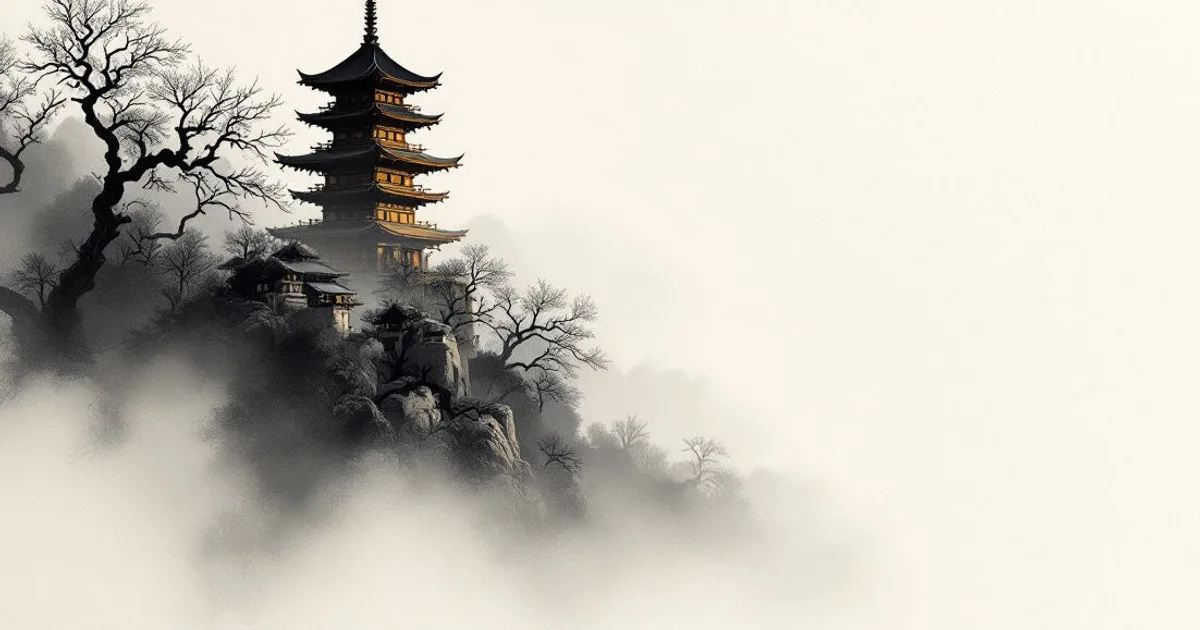
Buddhism reached Tibet in two great waves. The first diffusion (7th–8th centuries CE) came under the kings Songtsen Gampo and Trisong Detsen, who invited Indian masters — above all Padmasambhava, who, in legend, founded Tibet’s first monastery at Samye. After a 9th-century collapse came a second diffusion, from which the four schools of Tibetan Buddhism grew.
What is the history of Buddhism in Tibet?
The history of Buddhism in Tibet is the story of how an Indian religion crossed the Himalayas, nearly died, was carried back across them a second time, and then flowered into one of the richest of all Buddhist worlds. It begins in the seventh century with King Songtsen Gampo, whose reign, in Encyclopædia Britannica’s words, “marked the beginning of recorded history in Tibet” and who “is credited by lama historians with introducing Buddhism into Tibet.” It reaches its first peak under King Trisong Detsen, who made Buddhism the state religion and invited the scholar Shantarakshita and the tantric master Padmasambhava (Guru Rinpoche) from India to found Samye, Tibet’s first monastery. After a ninth-century persecution under King Langdarma scattered the monastic order, a second diffusion in the tenth and eleventh centuries — led by the Bengali master Atisha and Tibetan translators such as Marpa — rebuilt the tradition and gave rise to the four schools that survive today: Nyingma, Kagyu, Sakya, and Gelug. This is the historical companion to our doctrinal guide to Tibetan (Vajrayana) Buddhism; it is one of the great branches of Buddhism.
The first diffusion (7th–8th centuries)
Songtsen Gampo opens the door
Tibet entered recorded history as a rising military power, and its turn toward Buddhism began with its greatest early king, Songtsen Gampo (7th century). Britannica notes that he “is credited by lama historians with introducing Buddhism into Tibet” — precisely because, the entry explains, two of his wives were Buddhists. He wed a Nepalese princess and a Chinese princess of the Tang court, both Buddhists, and they are remembered as bringing sacred images and devotion to the Tibetan court. Under him the building of Buddhist temples began — the Jokhang in Lhasa is associated with this period — and the foundations were laid for translating Buddhist scripture into Tibetan. At this early stage Buddhism was a court religion, thin on the ground; the deep planting came a century later.
Trisong Detsen, Shantarakshita, and Padmasambhava
The decisive figure of the first diffusion was King Trisong Detsen (8th century), who made Buddhism the official religion of the Tibetan state and set out to give it institutional roots. To do so he looked to India, the homeland of the Dharma, and invited two very different masters.
The first was Shantarakshita, a learned monk and philosopher of the Madhyamaka (Middle Way) school, who brought the disciplined, scholastic, monastic Buddhism of the great Indian university-monasteries. The second was Padmasambhava — known to Tibetans as Guru Rinpoche, “the Precious Master” — a tantric adept whose arrival is among the most celebrated events in Tibetan religious memory. Britannica records that “he was invited to Tibet” by the king and that he “is said to have exorcised demons that were inhibiting the construction of a Buddhist monastery.” In the traditional telling, the land itself — its local spirits and forces — resisted the new religion, and Padmasambhava subdued these obstacles, binding the old powers into the service of the Dharma. Whatever one makes of the legend, its meaning is clear: Padmasambhava is the figure through whom tantric Buddhism took living root in Tibetan soil.
Samye: Tibet’s first monastery
Their shared achievement was Samye, the first Buddhist monastery in Tibet, built in the late eighth century. Britannica states that Padmasambhava “supervised the completion of the monastery,” and tradition holds that the first Tibetan monks were ordained there — a turning point, because it meant Tibet now had its own ordained Sangha rather than depending on visiting foreigners. (Sources differ on exact dates; Britannica places Padmasambhava’s arrival and Samye’s completion in the 740s, while many Tibetan and modern scholarly accounts put the monastery’s founding around the 760s–770s. The broad picture — a great monastery raised under Trisong Detsen by these two masters — is not in doubt.) Samye remained the symbolic heart of the first diffusion, and Padmasambhava became the patron saint of the oldest of the four schools, the Nyingma, who, in Britannica’s words, “claim to follow most closely Padmasambhava’s teachings.” That memory is still recited by the school itself. Writing at Samye, the Nyingma master Dudjom Rinpoche addressed all three founders in a single short prayer — Shantarakshita as “Great Ācārya Bodhisattva”, the king as “Emperor King Tri Songdetsen”, and Padmasambhava in these lines:
Sole ally protecting the realm of Tibet, you are so kind, / Guru of Uḍḍiyāna, Second Buddha: to you I pray!
It closes by asking that “the long-standing tradition of these three, the immaculate Ancient Translations” — the Nyingma — “forever grow, expand, and entirely fill the four continents of the world”.
The great Samye debate
Out of this founding moment came a famous controversy, the Samye debate (sometimes called the Council of Lhasa), held in the late eighth century. The question was nothing less than how awakening is reached. On one side stood the Indian, gradualist view — that liberation is won slowly, through long cultivation of ethics, study, and meditation, stage by stage. On the other stood a “sudden” view associated with the Chan (the Chinese ancestor of Zen) teachers then active in Tibet — that awakening dawns all at once, beyond gradual effort. Tibetan tradition holds that the king ruled in favour of the gradual, Indian approach, and that this helped set the long-term orientation of Tibetan Buddhism toward the Indian monastic and tantric inheritance rather than the Chinese. Modern scholars debate how the debate actually unfolded and how decisive it really was, but as a symbol it captures a real and lasting choice about Tibet’s spiritual direction.
Collapse and the second diffusion
The persecution under Langdarma
The first diffusion did not last unbroken. In the ninth century the Tibetan empire fell into crisis, and a king remembered as Langdarma turned against the monasteries. Tibetan accounts describe a persecution that scattered the monastic order, closed monasteries, and drove ordained Buddhism underground for the better part of a century — a “dark period” in the traditional telling. (Here too, honesty requires a note: some modern historians question how systematic this persecution really was, since contemporary records are thin, and suggest the later tradition may have sharpened the contrast between a golden imperial age and the disorder that followed. What is clear is that central royal patronage of Buddhism collapsed, and with it the organised monastic life of the first diffusion.)
Atisha, Marpa, and the renewal
After roughly a century of disruption, Buddhism in Tibet was renewed in a second diffusion during the tenth and eleventh centuries. This time the impulse came less from kings than from a generation of Tibetans determined to recover authentic teaching — translators who travelled south to India at great risk, and Indian masters invited north to teach.
Two figures stand out. The first is Atisha (Atisha Dipankara), a renowned Bengali master from the Indian monastery-university of Vikramashila, invited to Tibet in the mid-eleventh century. He came to restore discipline and clarity to a tradition that had grown fragmented, and his teaching — emphasising the graded path, monastic ethics, and the cultivation of compassion — became enormously influential. That teaching survives in his own words. The short root text he composed at the Toling temple in western Tibet, at the urging of his royal patron Jangchup Ö — the Bodhipathapradīpa, or Lamp for the Path to Enlightenment — grades practitioners from its second verse (“Understand there are three types of individuals— lesser, middling, and superior”), rising from those who “exclusively seek mere mundane pleasures” to those who “truly desire to completely eradicate all the suffering of others.” Its translator, Patrick Dowd, calls it “the foundational text for the ‘stages of the path’ (lam rim) genre so prominent in Tibetan Buddhist literature.” The second is Marpa “the Translator,” a Tibetan layman who made arduous journeys to India, studied under Indian adepts, and carried back tantric teachings and texts that he rendered into Tibetan. Marpa’s lineage passed to his disciple Milarepa, Tibet’s beloved yogi-poet, and from there into one of the four great schools. The second diffusion’s defining work was translation on a vast scale — the careful rendering of the Indian Buddhist inheritance into Tibetan — which is why this era produced the body of scripture and the lineages that still define Tibetan Buddhism. (For the wider story of how the Dharma travelled out of India across Asia, see how Buddhism spread.)
The four schools
From these two diffusions emerged the four main schools (or orders) of Tibetan Buddhism. They are not rival sects so much as distinct lineages of transmission, each tracing its core teachings to particular Indian and Tibetan masters. All four share the same Vajrayana foundation; they differ in lineage, emphasis, and the texts and practices they hold most central.
- Nyingma — “the Ancient Ones,” the oldest school, which traces itself to the first diffusion and above all to Padmasambhava. It preserves the earliest tantras brought to Tibet and is known for the contemplative teachings of Dzogchen (“the Great Perfection”).
- Kagyu — “the Oral Lineage” (or “whispered transmission”), which descends through Marpa and his disciple Milarepa from Indian adepts. It is known for its meditation transmissions and its yogic, practice-centred character.
- Sakya — named for its principal monastery, founded in the eleventh century. It became renowned for scholarship and for a period of political prominence in medieval Tibet under Mongol patronage.
- Gelug — “the Virtuous,” the newest and largest school, founded on the reforming work of the great teacher Tsongkhapa (14th–15th centuries), who stressed monastic discipline and rigorous study. The Gelug is the school of the Dalai Lamas.
A doctrinal overview of how these schools practise — mantras, mandalas, deity yoga, and the role of the lama — is given on our Tibetan (Vajrayana) Buddhism page.
The rise of the Dalai Lamas
The title Dalai Lama belongs to the Gelug school, and the institution came to dominate Tibetan religious and political life from the seventeenth century. Britannica describes the Dalai Lama as the “leader of the dominant Dge-lugs-pa (Yellow Hat) order of Tibetan Buddhists and, until 1959, both spiritual and temporal ruler of Tibet.” The decisive figure was the fifth Dalai Lama, Ngawang Lobsang Gyatso (1617–1682), remembered as the “Great Fifth.” With Mongol military backing he unified Tibet under a single government in the mid-seventeenth century, becoming both its spiritual and temporal head and beginning the construction of the Potala Palace in Lhasa. From his time onward, the Dalai Lama was not only the most revered teacher of the Gelug school but the ruler of Tibet — an unusual fusion of religious and political authority that lasted three centuries. Tibetan tradition regards each Dalai Lama as a reincarnation of his predecessor and an emanation of Avalokiteshvara, the bodhisattva of compassion. The story of the office and its present holder is told in full on our page on the Dalai Lama.
The 20th century: annexation, uprising, and exile
The modern chapter is a difficult one. In the early 1950s, the newly founded People’s Republic of China asserted control over Tibet and annexed it, ending its independence. Tension between Tibetan society and Chinese rule mounted through the decade. In March 1959, a popular uprising broke out in Lhasa, fuelled by fears for the safety of the young 14th Dalai Lama, Tenzin Gyatso. As the revolt was suppressed, he fled south across the Himalayas and was granted asylum in India. The official biography published by the Office of His Holiness the Dalai Lama puts it plainly: “Finally, in 1959, following the brutal suppression of the Tibetan national uprising in Lhasa by Chinese troops, His Holiness was forced to escape into exile. Since then he has been living in Dharamsala, northern India.” From there the Central Tibetan Administration, led by the Dalai Lama, took the question of Tibet to the United Nations, and Dharamsala became the centre of Tibetan life beyond Tibet.
Tens of thousands of Tibetans — monks, scholars, and lay people — followed him into exile, carrying their lineages, texts, and teachers with them. This diaspora had a consequence few could have foreseen: it scattered Tibetan Buddhism across the world. Refugee monasteries were rebuilt in India and Nepal; teachers travelled to Europe, North America, and beyond; and a tradition that had developed in near-isolation for over a thousand years became, within a generation, one of the most widely known forms of Buddhism on earth. The 14th Dalai Lama himself — a Nobel Peace Prize laureate — became its global face.
Tibetan Buddhism today
So the history of Buddhism in Tibet runs from a seventh-century king’s first openness to the Dharma, through the founding of Samye and the near-extinction of the order, to a second flowering, the rise of four enduring schools, three centuries of rule by the Dalai Lamas, and finally a forced exile that paradoxically carried the tradition to the wider world. To understand Tibetan Buddhism is to understand a teaching that has been transmitted, lost, recovered, and transplanted — and that survives today both in its Himalayan homeland and across a global diaspora. For the living doctrine and practice that this history produced, continue to our guide to Tibetan (Vajrayana) Buddhism; to see how Tibet’s story fits the wider picture, explore Buddhism around the world; and for how it sits among the great traditions, see the branches of Buddhism.
Frequently asked questions
How did Buddhism come to Tibet?
Buddhism reached Tibet in two waves. The 'first diffusion' began in the 7th-8th centuries CE under the kings Songtsen Gampo and especially Trisong Detsen, who invited the Indian masters Shantarakshita and Padmasambhava and founded Samye, Tibet's first monastery. After a 9th-century collapse, a 'second diffusion' in the 10th-11th centuries, led by the Bengali master Atisha and the translator Marpa, re-established the teaching and gave rise to the four schools that survive today.
Who brought Buddhism to Tibet?
No single person did. King Songtsen Gampo (7th century) is traditionally credited with first opening Tibet to the Dharma, and King Trisong Detsen (8th century) made it the state religion, inviting the scholar-monk Shantarakshita and the tantric master Padmasambhava (Guru Rinpoche) from India. Padmasambhava is especially revered as the figure who, in legend, subdued the obstacles to founding Samye monastery and planted the tantric teachings that became the Nyingma school.
Where did the four schools of Tibetan Buddhism come from?
From the two diffusions of Buddhism into Tibet. The Nyingma ('the Ancient Ones'), the oldest school, trace themselves to the first diffusion and above all to Padmasambhava. The Kagyu ('the Oral Lineage') descend through Marpa and his disciple Milarepa; the Sakya are named for their principal monastery, founded in the eleventh century; and the Gelug ('the Virtuous'), the school of the Dalai Lamas, was founded on Tsongkhapa's reforms in the fourteenth and fifteenth centuries.
Why did the Dalai Lama leave Tibet?
China annexed Tibet in the early 1950s. In March 1959, amid a popular uprising in Lhasa and fears for his safety, the 14th Dalai Lama fled across the Himalayas and was granted asylum in India, where he established a Tibetan administration in exile at Dharamsala. Tens of thousands of Tibetans followed, creating the global diaspora through which Tibetan Buddhism became known worldwide.
What was the Samye debate?
The Samye debate (or 'Council of Lhasa'), held in the late 8th century, was a contest over how awakening is reached: gradually, through long ethical and meditative cultivation in the Indian manner, or suddenly, in the Chan (Zen) view then present in Tibet. Tibetan tradition holds that the king ruled for the gradual, Indian approach, a decision that helped shape later Tibetan Buddhism, though scholars debate the details.
Sources
- Songtsen Gampo (entry), Encyclopædia Britannica
- Padmasambhava (entry), Encyclopædia Britannica
- Buddhism — Tibet, Mongolia, and the Himalayan kingdoms (entry), Encyclopædia Britannica
- Dalai Lama (entry), Encyclopædia Britannica
- 14th Dalai Lama (Tenzin Gyatso) (entry), Encyclopædia Britannica
- 'A Short Prayer to the Abbot, the Master and the King' by Dudjom Rinpoche, written at Samyé — the Nyingma tradition's own invocation of Shantarakshita, Padmasambhava and Trisong Detsen — Lotsawa House (trans. Samye Translations: Stefan Mang and Peter Woods, 2018)
- Atiśa Dīpaṃkara, 'The Lamp for the Path to Enlightenment' (Bodhipathapradīpa), composed at Toling for Jangchup Ö — the root text of the Tibetan lam rim — Lotsawa House (trans. Patrick Dowd, 2021)
- 'Brief Biography' (His Holiness the 14th Dalai Lama), the official site of the Office of His Holiness the Dalai Lama — the 1959 uprising, the escape into exile and Dharamsala