Mara: The Buddhist Figure of Temptation and Death
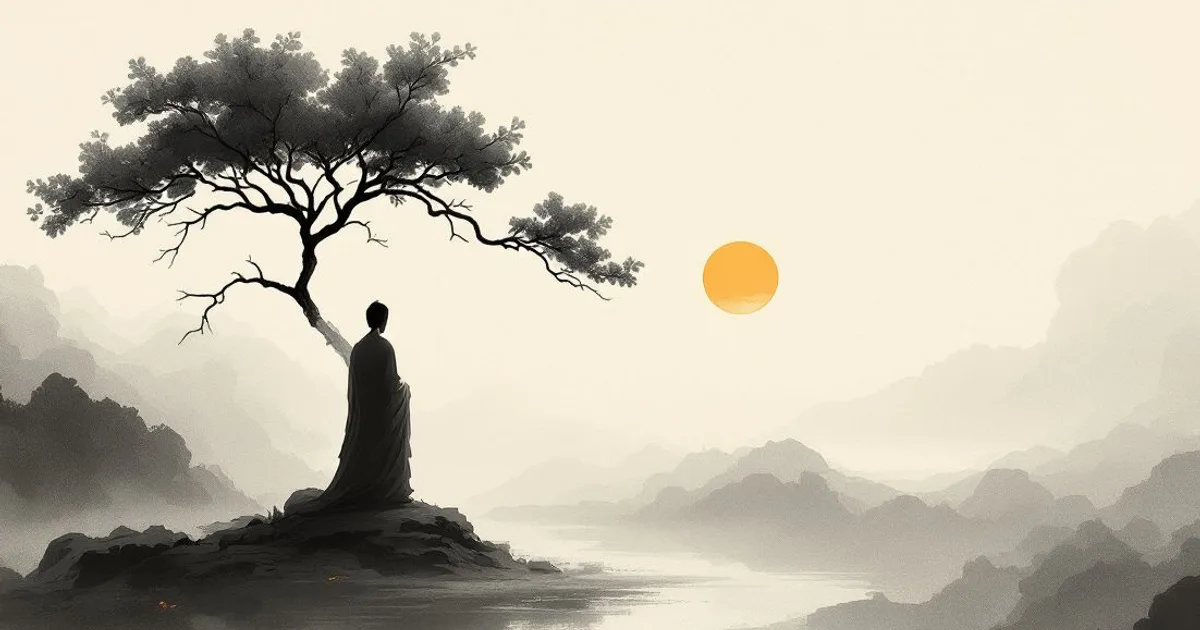
Mara is the figure in Buddhist tradition who personifies death, desire, and delusion — the “tempter” who tries to keep beings bound to suffering, and who famously assailed the Buddha on the night of his awakening.
He is best understood not as a cosmic devil but as the embodiment of the very forces, within us and around us, that resist awakening. He appears throughout the story of who the Buddha was, from the night of awakening onward.
What does Mara represent in Buddhism?
Mara (Pāli and Sanskrit, from a root meaning “to die”) is the closest thing Buddhism has to a devil — though the comparison is misleading. His role in the texts is to keep beings trapped in the round of rebirth and to obstruct the path to liberation. He is most famous for his assault on the Buddha-to-be beneath the Bodhi tree, where the Buddha touched the earth as witness and Mara fled (see the Buddha’s enlightenment). Crucially, the early texts present Mara’s “armies” as inner forces — sensual desire, discontent, craving, sloth, fear, and doubt (Padhāna Sutta, Snp 3.2). So Mara is read both as a figure in the texts and as a vivid symbol of whatever, in our own minds, pulls us back toward heedlessness.
Who — or what — is Mara?
Mara is often introduced as “the Buddhist devil,” and there is something to that, but the label imports the wrong picture. Buddhism is non-theistic: it has no creator God, and so no cosmic Satan set against one. Mara is not the source of all evil or the ruler of a hell. He is the personification of death and of the forces that keep beings bound to the world of desire — the pull of the senses, the grip of craving, the fog of delusion, the flinch of fear. The tradition does give him a place in its cosmology, as a powerful deity of the sensual realm who reigns over the round of birth and death; but it just as readily treats him as a symbol of the obstacles to awakening. Both readings run together through the texts, and neither is “the” official one.
Mara and the night of awakening
Mara’s most famous appearance is at the climax of the Buddha’s quest. As Siddhartha sat beneath the Bodhi tree on the verge of awakening, the tradition tells of Mara’s great assault: he hurled armies and storms, and sent temptation, to break the seeker’s resolve or to dispute his right to the seat of awakening. Unmoved, the Buddha-to-be reached down and touched the earth, calling it to witness his readiness — and Mara fled.
The earliest texts give the deeper, inner version of this confrontation. In the Padhāna Sutta (Snp 3.2), Mara comes to the gaunt, striving ascetic and tempts him to give up the struggle: “You are ashen, thin. Death is in your presence. What use is exertion to you?” — urging him to abandon the hard path and simply live, making merit. The Buddha-to-be answers by naming Mara’s army (trans. Ṭhānissaro Bhikkhu): “Sensual passions are your first army. Your second is called Discontent. Your third is Hunger & Thirst. Your fourth is called Craving. Fifth is Sloth & Drowsiness. Sixth is called Terror. Your seventh is Uncertainty. Hypocrisy & Stubbornness, your eighth.” And he resolves to face this army with “mindfulness well-established.” This is the key to the whole figure: Mara’s “armies” are not external monsters but inner forces — craving, aversion, laziness, fear, doubt — the very defilements the path exists to uproot. (Several of them are also the five hindrances that obstruct meditation.)
The daughters of Mara
The tradition also tells of Mara’s three daughters, named for Craving (Taṇhā), Discontent or aversion (Aratī), and Passion (Ragā). In the Māra-saṃyutta (SN 4), they try to seduce the newly awakened Buddha and fail completely — for there is nothing left in him for them to catch hold of. The daughters make the symbolism unmistakable: Mara’s power over us is our craving, our aversion, and our passion. Where those are uprooted, Mara simply has nowhere to stand.
”I see you, Mara”
Mara does not disappear after the awakening. The Māra-saṃyutta shows him returning again and again across the Buddha’s life — appearing as a terrifying shape to frighten the meditator, sowing doubt, whispering discouragement to monks and nuns. And each time, the response is the same, and it is the entire teaching in miniature: the Buddha (or his disciple) simply recognises him — “I know you, Mara” — and Mara, seen through and robbed of his disguise, dejectedly vanishes. The forces of Mara keep their power only so long as they go unrecognised; named and clearly seen, they lose their grip.
Real being, or symbol?
Inevitably, people ask whether Mara is “really real” — a literal being — or a personification of inner states. The honest answer is that the texts support both, and Buddhists across the traditions hold the question differently. And for practice, remarkably little hangs on it. What matters is the function the figure names: Mara is whatever pulls the mind back toward craving, fear, distraction, and heedlessness — the undertow that works against awakening. Read him as a cosmic being or as a map of your own resistance; either way, the practical instruction is identical.
Meeting your own Mara
This is why Mara remains so alive a figure: everyone who practises meets him. He is the restlessness that murmurs “not now,” the doubt that says “this will never work,” the craving that pleads “just this once,” the fear that flinches from letting go. The Buddha’s example is not to wrestle these forces into submission by brute force, but to do something quieter and far harder — to see them clearly, name them for what they are, and remain unmoved: to touch the earth, keep your seat, and let them pass. Mara is overcome not by fighting but by clear seeing. (For the night he was faced, see the Buddha’s enlightenment; for the inner roots he embodies, the three poisons.)
Frequently asked questions
Who is Mara in Buddhism?
Mara is the figure who personifies death, craving, and delusion — often called 'the Evil One' or the Buddhist tempter. His role in the texts is to keep beings bound to the round of suffering and to obstruct the path to liberation. He is best known for assailing the Buddha on the night of his awakening. He is not a creator or a cosmic devil, but the embodiment of the forces that resist awakening.
Is Mara the Buddhist devil?
Not exactly. Mara is the closest figure Buddhism has to a devil, but the comparison misleads. Buddhism is non-theistic, with no creator God and so no cosmic Satan set against one; Mara is not the source of all evil or the ruler of a hell. He personifies death and the forces that keep beings bound to desire: craving, delusion and fear. In the Padhana Sutta his 'armies' are inner defilements.
What are the armies of Mara?
In the Padhana Sutta (Snp 3.2), the Buddha-to-be names Mara's forces: 'Sensual passions are your first army. Your second is called Discontent. Your third is Hunger & Thirst. Your fourth is called Craving. Fifth is Sloth & Drowsiness. Sixth is called Terror. Your seventh is Uncertainty. Hypocrisy & Stubbornness, your eighth.' In other words, Mara's armies are the inner defilements that the path is designed to uproot.
What happened between Mara and the Buddha?
As Siddhartha sat on the brink of awakening, the tradition tells of Mara's assault — armies, storms, and temptation — to break his resolve. The Buddha-to-be touched the earth to call it as his witness, and Mara fled. Afterward, the Mara-samyutta (SN 4) shows Mara returning again and again to disturb the Buddha, who each time simply recognises him — 'I see you, Mara' — at which Mara, seen through, dejectedly vanishes.
Is Mara real or just a symbol?
Both. The texts support both readings, and neither is the official one. The tradition gives Mara a place in its cosmology as a powerful deity of the sensual realm, yet just as readily treats him as a symbol of the obstacles to awakening. For practice little hangs on it: Mara names whatever pulls the mind back toward craving, fear and heedlessness, and the response is the same, to see it clearly.
Sources
- Padhāna Sutta (Snp 3.2), Access to Insight (trans. Ṭhānissaro Bhikkhu)
- Māra-saṃyutta (SN 4), Access to Insight