Zazen: How to Practise Zen Sitting Meditation

Zazen — Japanese for “seated meditation” — is the heart of Zen Buddhism: sitting upright and still, fully present, and letting the mind settle on its own rather than chasing any special state. In the Sōtō school it takes the form of shikantaza, “just sitting”; in Rinzai it is paired with a koan.
For the master Dōgen, zazen is not merely a means to awakening but its very expression.
What makes zazen different from other meditation?
Zazen is, in Encyclopaedia Britannica’s words, simply “seated meditation” — and it is the central discipline of Zen, the Chan tradition of East Asia. Two things make it distinctive. First, the posture itself is the practice: you are not primarily watching the breath or visualising anything, but sitting, awake and upright, with the body composed and — unusually — the eyes open. Second, the two great Japanese schools sit in different spirits: Sōtō Zen “just sits” (shikantaza), while Rinzai Zen often sits with a koan, a paradoxical question. Underneath both lies the radical teaching of Dōgen (1200–1253): that zazen is “not only … a method of moving toward enlightenment but also, if properly experienced, to constitute enlightenment itself.” You do not sit to become a buddha later; rightly done, the sitting is the awakening. (Dōgen distils the insight behind it in his most famous lines, “to study the self is to forget the self”.) (For where Zen sits among the traditions, see the branches of Buddhism; for the wider field of practice, our guide to Buddhist meditation.)
What zazen is
Zen is the Japanese name for the Chinese Chan tradition, and zazen is its beating heart — so much so that, in Zen, to meditate essentially means to sit. Where some methods reach toward a particular experience, zazen makes a quieter wager: that the awake, clear mind is already here, and shows itself the moment you stop stirring the water. So you sit, and you let it settle. Britannica describes the aim as suspending “logical, analytic thinking … as should all desires, attachments, and judgments, leaving the mind in a state of relaxed attention.” This is not a blank trance and not hard concentration on an object, but an alert, open presence — doing, in a sense, nothing, and doing it wholeheartedly.
How to sit: the zazen posture
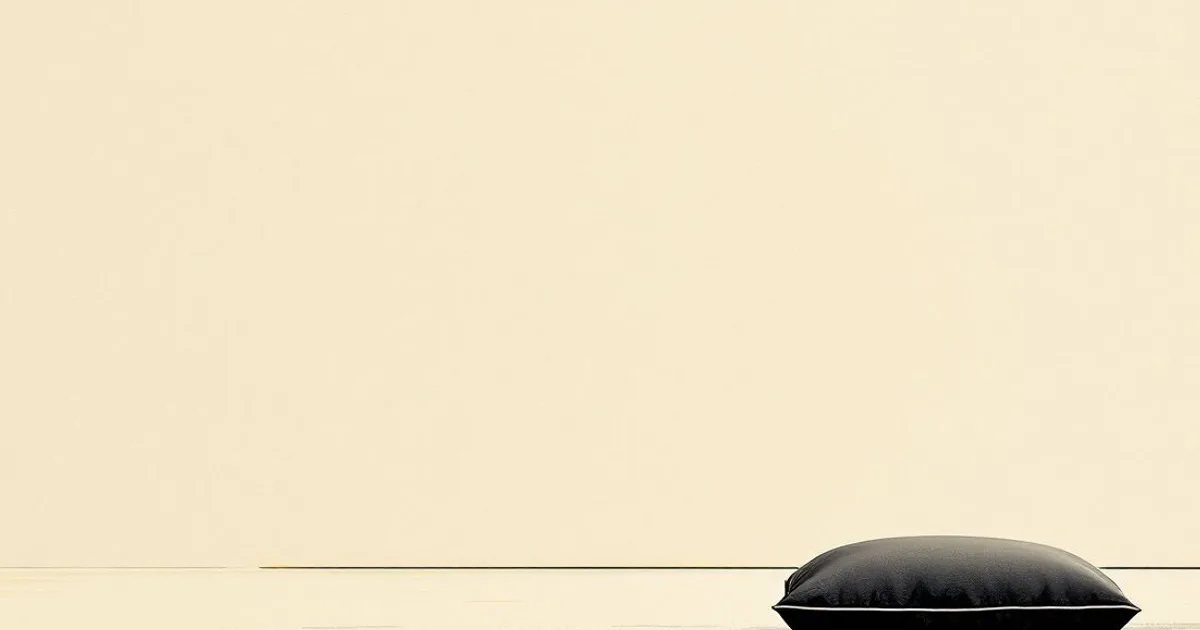
Because the sitting is the practice, Zen pays close attention to the body. Britannica’s instructions are precise: sit in a quiet room, breathing easily and rhythmically, “with legs fully or half crossed, spine and head erect, hands folded one palm above the other, and eyes open.” In practice that means a stable base — traditionally a firm round cushion called a zafu, often on a padded mat (zabuton), though a firm cushion or an upright chair serves just as well. The legs are crossed in full or half lotus, or folded in kneeling, or — on a chair — set with both feet flat on the floor. The spine rises erect but unforced, the head balanced above it. The hands rest in the lap, “one palm above the other,” thumb-tips lightly meeting to form a soft oval — the position Zen calls the cosmic mudra. Dōgen set those details down himself, in the Fukan Zazengi (“Universally Recommended Instructions for Zazen”) that the Sōtō school still publishes as its standard guide:
At your sitting place, spread out a thick mat and put a cushion on it. … Then place your right hand on your left leg and your left hand on your right palm, thumb-tips lightly touching. Straighten your body and sit upright, leaning neither left nor right, neither forward nor backward. Align your ears with your shoulders and your nose with your navel. … Always keep your eyes open, and breathe softly through your nose.
The detail that surprises newcomers is the eyes: in zazen they stay open, the gaze lowered to the floor a little way ahead and left unfocused. The reason is characteristically Zen — closing the eyes invites drowsiness and daydream, and the whole point is to be fully here, in this room, on this cushion, awake to things as they are. (For setting up a sustainable sitting posture — cushion, bench, or chair — see our guide to meditation posture; for the wider beginner’s method, our step-by-step guide to meditating.)
”Just sitting”: shikantaza, the Sōtō way
The form of zazen most often taught in the West comes from the Sōtō school — which Britannica calls “the largest of the Zen Buddhist sects in Japan” — and from its founder, Dōgen, who “introduced Zen to Japan in the form of the Sōtō school” in the thirteenth century. Dōgen taught what he called, in Britannica’s transliteration, shikan taza — “zazen only,” usually rendered “just sitting.”
Just sitting is exactly what it sounds like, and far harder than it sounds. You are not concentrating on the breath, not repeating a phrase, not pursuing a vision or solving a problem. You are sitting in bright, open awareness and letting whatever arises — thoughts, sensations, sounds — come and go without seizing on any of it, returning over and over to the simple, upright fact of sitting. What makes this more than relaxation is Dōgen’s startling claim, which Britannica records as his stress on “the identity of practice and enlightenment” — and which he makes himself in the Fukan Zazengi: “The zazen I speak of is not meditation practice. It is simply the dharma gate of joyful ease, the practice realization of totally culminated enlightenment.” For Dōgen, you are not sitting in order to gain awakening at some later date, like saving toward a purchase; the sitting, done with the whole heart, is itself the conduct of an awakened being. His great work, the Shōbōgenzō (“Treasury of the True Dharma Eye”), elaborates this vision at length, and the training monastery he founded, Eihei-ji, still carries it on.
Sitting with a question: koan and the Rinzai way
It would flatten the picture to leave it there, because the other great Japanese school sits in a different spirit. Rinzai Zen, which Britannica says “stresses the abrupt awakening of transcendental wisdom, or enlightenment,” also practises zazen — but its hallmark is the koan: “a succinct paradoxical statement or question used as a meditation discipline” (Britannica), such as the famous demand to show one’s “original face” before one’s parents were born. Sitting with a koan, the practitioner presses against it until, in Britannica’s words, the effort has “exhaust[ed] the analytic intellect and the egoistic will” and a more direct insight breaks through. This is checked in private interviews with the teacher, and aimed at a sudden seeing-through (kenshō). The schools describe their own practice the same way: throughout their histories, the official Rinzai–Ōbaku site says, they “have sought, through the practices of zazen, koan training, and samu, to awaken the practicer to the Buddha-nature inherent in all beings”.
So where Sōtō tends toward objectless just-sitting and a realisation already present in the act, Rinzai drives toward sudden breakthrough. Both are zazen; both have deep roots; and an honest guide names the difference rather than blending the two into a generic “Zen meditation.” (For how these and other schools relate, see the branches of Buddhism.)

Zazen and the two wings of practice
Readers who know the early-Buddhist map of calm and insight — samatha and vipassanā — sometimes ask which one zazen is. The honest answer is that Zen does not divide practice that way. It folds the settling of the mind and the clear seeing into the single act of sitting: the stillness of an erect, breathing body does the steadying work that calm does, and the open, non-grasping awareness does the seeing that insight does — but Zen would rather you simply sit than stand outside the experience labelling its parts. It is the same mountain, climbed in a different idiom.
A word on teachers and lineage
One feature of Zen deserves an honest flag: more than most traditions, it prizes direct transmission from teacher to student. You can, and should, begin the posture and the just-sitting at home if zazen draws you — nothing here is gated. But the tradition itself regards a qualified teacher (a rōshi) as important for going deep, and for Rinzai koan work, where one’s understanding is tested face to face, as essential. Let that shape your humility about your own interpretations, not your willingness to start.
How to begin
Begin small. Set up the posture above — firm seat, erect spine, hands one palm above the other, eyes lowered but open — and just sit for five or ten minutes, letting thoughts arise and dissolve while you return, lightly, to the fact of sitting. You can keep time with our free meditation timer so you are not watching a clock. If a restless mind needs an anchor at first, gently counting the breath is a traditional doorway into stillness. And if the practice keeps calling you back, look for a local Zen group or teacher; zazen has been handed person to person for many centuries, and it is best learned the same way. (For how Sōtō’s refusal to treat sitting as a means to an end sits beside the reasons other traditions give, see why Buddhists meditate.) (To see how zazen fits the whole landscape of Buddhist practice, return to our guide to Buddhist meditation; to keep a record of the sittings as they accumulate, there is a free meditation journal.)
How to Practise Zazen: Zen Sitting Meditation
- Find a quiet place and a firm seat.Choose a calm spot and a stable base. Traditionally one sits on a zafu — a firm round cushion — often over a padded mat, but a firm cushion or an upright chair works. The aim is a steady, grounded posture you can hold without strain.
- Settle the legs and straighten the spine.Sit with the legs fully or half crossed (full or half lotus), or kneeling, or on a chair with both feet flat. Let the knees settle toward the floor. Keep the spine and head erect but not rigid, as if the crown were gently lifted.
- Rest the hands one palm above the other.Place the hands in the lap, one palm above the other, both facing up, with the thumb-tips lightly touching to form a soft oval. This is the traditional Zen hand position, sometimes called the cosmic mudra.
- Lower the gaze, but keep the eyes open.Unlike many meditations, zazen is practised with the eyes open, the gaze lowered softly to the floor a metre or so ahead. This keeps you present and awake rather than drifting toward sleep or daydream.
- Let the breath settle.Breathe easily and naturally through the nose, letting the breath find its own slow rhythm. If it helps you settle at first, quietly count each exhalation up to ten and begin again.
- Just sit.Now simply sit, upright and alert. Let thoughts arise and pass without chasing or fighting them, returning again and again to the bare fact of sitting. In the Rinzai school, one instead holds a koan. Begin with five or ten minutes.
Frequently asked questions
What is zazen?
Zazen (Japanese for 'seated meditation') is the central practice of Zen Buddhism: sitting upright, still, and fully awake, letting the mind settle of its own accord. Encyclopaedia Britannica defines it simply as 'seated meditation.' In the Sōtō school it takes the form of shikantaza, 'just sitting'; in the Rinzai school it is often paired with a koan. For the Zen master Dōgen, zazen is not only a means toward awakening but its very expression.
What is the correct zazen posture?
Sit in a quiet place on a firm cushion or an upright chair. The legs are fully or half crossed (or you sit on a chair with both feet flat), the spine and head erect, and the hands rest in the lap one palm above the other with the thumb-tips lightly touching. Distinctively for Zen, the eyes stay open, the gaze lowered to the floor, and the breath is left to flow easily and naturally.
What is shikantaza?
Shikantaza is the Sōtō Zen practice of 'just sitting' — in Dōgen's phrase, 'zazen only.' It is objectless: you are not concentrating on the breath or solving anything, but sitting in open, alert awareness, letting whatever arises pass without grasping it. In this view zazen is not a tool used to get enlightenment later; done rightly, the sitting itself is the expression of awakening.
What is the difference between Sōtō and Rinzai zazen?
Both schools make zazen central, but they sit differently. Sōtō, the largest Zen school in Japan, emphasises shikantaza, objectless 'just sitting,' and tends to see realisation as already present in the practice. Rinzai, which stresses abrupt awakening, often has practitioners sit with a koan, a paradoxical question meant to exhaust ordinary thinking until insight breaks through. Sōtō leans gradual, Rinzai sudden.
Do I need a teacher to practise zazen?
Not to begin. You can start the posture and just-sitting on your own, and nothing here is gated. But Zen places great weight on lineage and on working with a qualified teacher for going deeper, and for Rinzai koan practice, where understanding is tested in private interviews, a teacher is considered essential. Start at home if zazen draws you, and seek out a Zen group or teacher if the practice keeps calling you back.
Sources
- Zazen (entry), Encyclopædia Britannica
- Dōgen (entry), Encyclopædia Britannica
- Sōtō (entry), Encyclopædia Britannica
- Rinzai (entry), Encyclopædia Britannica
- Koan (entry), Encyclopædia Britannica
- Dōgen, Fukan Zazengi (Universally Recommended Instructions for Zazen) — the official English text published by the Sōtō Zen school (SOTOZEN.COM); no individual translator is credited on the page
- 'What is Zen? — Basic Stance', the official site of the Joint Council for Rinzai and Obaku Zen