Buddhist Ethics: How Buddhists Decide Right From Wrong

Buddhist ethics rests not on commandments from a god but on a single, practical question: does this action cause suffering, or relieve it? Right and wrong are judged by the intention behind an act and the harm or good it does — and the precepts are training rules for a freer, kinder life, not laws to be obeyed under threat.
This is how Buddhists decide right from wrong.
What is Buddhist ethics based on?
Buddhism is non-theistic, so its ethics is not obedience to a divine lawgiver. Instead, morality rests on two pillars: intention and harm. An action rooted in the three poisons — greed, hatred, and delusion — and one that causes suffering, is “unwholesome” (akusala); an action rooted in their opposites — generosity, kindness, and wisdom — and one that relieves suffering, is “wholesome” (kusala). The Buddha framed conduct as skilful or unskilful, not as sin and obedience. The five precepts are voluntary training rules, not commandments; and the test of any action, as the Kālāma Sutta says, is whether it is blameless and whether the qualities behind it “lead to welfare & to happiness.”
- Pali and Sanskrit term
- sīla (Pali); śīla (Sanskrit); the first of the three trainings, with meditation and wisdom
- Basis
- Intention and harm, not obedience to a divine lawgiver
- Key text
- Nibbedhika Sutta (AN 6.63): Intention, I tell you, is kamma
- Wholesome vs unwholesome
- Unwholesome (akusala) acts are rooted in greed, hatred, and delusion; wholesome (kusala) acts in generosity, kindness, and wisdom
- The precepts
- Five precepts are sikkhāpada, training rules undertaken voluntarily, not commandments handed down
- Across traditions
- Foundation shared by all; the Mahāyāna adds the bodhisattva’s ethics, which may bend a rule through skilful means to prevent greater harm
Ethics without a lawgiver
Much of Western moral thinking assumes a divine lawgiver whose commands define right and wrong. Buddhism has no such figure — no creator God issuing laws — and this changes the whole shape of its ethics. Goodness here is not obedience. What grounds it instead is the natural law of karma together with compassion: actions have consequences woven into the fabric of things, and a wise person therefore acts in ways that reduce suffering rather than multiply it. Ethics (Pali sīla; Sanskrit śīla) is also the first of the three trainings — ethics, meditation, and wisdom — on which the whole Eightfold Path is built. It comes first for a reason: a mind churning with the guilt and agitation of harmful action cannot settle into meditation or open into clear seeing. You cannot fully separate being good from becoming free.
Intention is everything
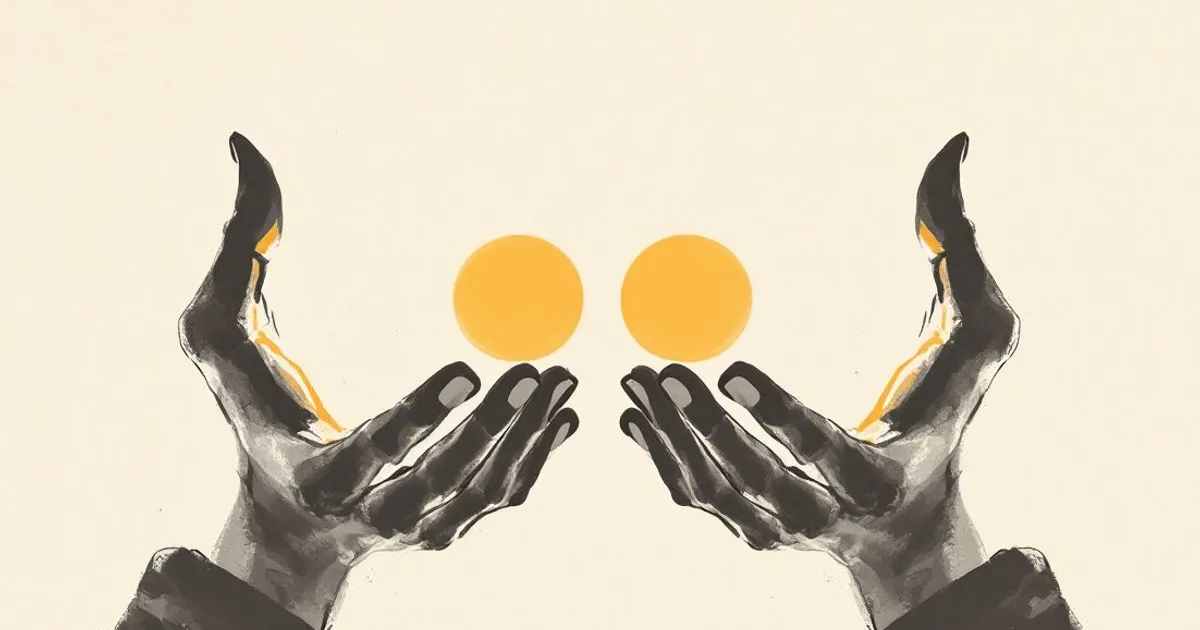
If one idea sits at the heart of Buddhist ethics, it is intention. “Intention, I tell you, is kamma,” the Buddha declared (Nibbedhika Sutta, AN 6.63); “intending, one does kamma by way of body, speech, & intellect.” The moral weight of an act flows from the will behind it, which is why the very same outward action — a hand laid on another, a difficult truth spoken — can be wholesome or unwholesome depending entirely on the heart that drives it. This roots morality in the mind, not merely in behaviour, and binds ethics inseparably to mental cultivation. The decisive question is always the state of mind an act springs from: an action rooted in the three unwholesome roots — greed, hatred, and delusion (Mūla Sutta, AN 3.69) — is unwholesome; one rooted in their opposites — non-greed (generosity), non-hatred (lovingkindness), and non-delusion (wisdom) — is wholesome.
The measure is suffering
Beneath the talk of wholesome and unwholesome lies a single, unifying criterion: suffering. Does this action cause harm — to oneself, to others, to both — or does it relieve it? That thread runs through every one of the precepts, which are, at bottom, simply forms of not harming: do not kill, steal, lie, betray, or cloud the mind. And the Buddha offered a test anyone can apply. Telling the Kālāmas (AN 3.65) not to settle a question by report, by tradition, by scripture or by the authority of a teacher, he gave them something to put in its place:
When you know for yourselves that, ‘These qualities are skillful; these qualities are blameless; these qualities are praised by the wise; these qualities, when adopted & carried out, lead to welfare & to happiness’ — then you should enter & remain in them.
The negative half of the test is its mirror: qualities that are “unskillful … blameworthy … criticized by the wise” and that “lead to harm & to suffering” are to be abandoned (trans. Ṭhānissaro Bhikkhu). Buddhist ethics, remarkably, is meant to be verified by its fruits rather than accepted on authority — its rightness is something you can watch unfold in your own life and the lives around you.
Skilful, not “sinful”
This points to a difference that changes everything about the moral life: Buddhism does not really speak of sin. An offence is not a crime against a deity to be punished, but an unskilful act — akusala, literally “unwholesome” or “unhealthy.” The model is less the courtroom than the physician: a harmful action is like touching a hot stove or eating bad food — it brings suffering by its own nature, not by a judge’s sentence. This reframes the entire emotional texture of ethics. There is no eternal damnation in Buddhism, and the proper response to having done wrong is not to be crushed by guilt but to feel honest remorse, learn, make amends, and resolve to do better. Morality becomes a training toward freedom, not a fearful obedience under threat — which is, for many people, an enormous relief to discover.

The precepts: training rules, not commandments
This is exactly why the five precepts are phrased the way they are. They are sikkhāpada — training rules — undertaken voluntarily: not “Thou shalt not,” handed down, but “I undertake the training rule to refrain from …,” taken up by oneself as a personal commitment. To break one is to fail at a training you set yourself, an occasion to learn rather than a sin to be condemned for. The five are the baseline for lay life; those who go deeper take on the eight or ten precepts, and monastics live by the hundreds of rules of the Vinaya, the monastic discipline. But across all of them the logic is the same — voluntary commitments to reduce harm and steady the mind, scaffolding for a transformed heart.
Empathy: putting yourself in another’s place
Buddhist ethics is not only restraint; it has a warm, outward-facing core, and the Buddha grounded it in plain empathy. The Dhammapada makes that move in two lines:
All tremble at violence; all fear death. Putting oneself in the place of another, one should not kill nor cause another to kill.
The next verse repeats it with a single change — “life is dear to all” in place of “all fear death” (trans. Acharya Buddharakkhita). That is the basic moral move: to recognise that every other being feels as you do — wants happiness, fears pain — and to act accordingly. From that recognition grow the positive virtues that Buddhism prizes even above mere rule-keeping: generosity (dāna), lovingkindness (mettā) and compassion (karuṇā), the open hand and the active wish for others’ welfare and the impulse to relieve their pain. Ethics, in the end, is not just avoiding harm but cultivating good — which is why the four divine abidings (lovingkindness, compassion, sympathetic joy, and equanimity) stand at the summit of the Buddhist moral ideal.
A compass, not a map
One honest consequence of all this is that Buddhist ethics is principle-based rather than a fixed rulebook, and so it asks for judgement. Because the guiding lights are intention, non-harm, and compassion rather than an exhaustive code, applying them to a real situation takes wisdom — and sincere Buddhists can, and do, weigh hard cases differently. This is at once a great strength and a real difficulty: a strength, because the same principles travel across every era and culture without growing brittle or legalistic; a difficulty, because there is rarely a rule to simply look up. It is why, on everyday questions — whether a Buddhist may eat meat, be vegan, eat eggs or onion and garlic, drink coffee, smoke, have tattoos, keep pets, kill an insect, swear, do yoga, or donate their organs — and on weightier ones like diet, our treatment of animals (including why Buddhists release animals), alcohol, sexuality and dating, LGBTQ identities, the environment and consumer culture, life online, and even violence and war and military service, this site shows a range of honest answers rather than one. The Buddha gave his followers a compass — not a map — and trusted them to navigate by it. (Whether one may gamble is the same kind of question.)
One ethic, held across the traditions
For all their differences, the Buddhist traditions share this moral foundation: intention as the root of action, non-harming as the measure, the precepts as voluntary training, and compassion as the goal. The Mahāyāna adds the soaring ethics of the bodhisattva, who places the welfare of all beings at the very centre and may even, through “skilful means,” bend a rule to prevent a greater harm — but this is the same compassion pressed to its limit, not a different morality. And everywhere the same deep insight holds: that ethics, meditation, and wisdom are not three separate projects but one. To act well, to settle the mind, and to see clearly all support one another — which is why, in Buddhism, becoming good and becoming free are finally the same path. (For the practical heart of it, see the five precepts; for the teaching it all rests on, the core teachings of Buddhism.)
Frequently asked questions
How does Buddhism decide what is right and wrong?
Not by commandments from a god — Buddhism is non-theistic — but by intention and harm. An action rooted in greed, hatred, or delusion, and one that causes suffering to oneself or others, is 'unwholesome' (akusala); an action rooted in generosity, kindness, and wisdom, and that relieves suffering, is 'wholesome' (kusala). The deepest test, as the Kalama Sutta puts it, is whether the qualities behind conduct are blameless and 'lead to welfare & to happiness.'
Does Buddhism have commandments?
No. The precepts are training rules undertaken voluntarily — 'I undertake the training rule to refrain from …' — not commandments issued by a divine authority. You take them on yourself as commitments to train your own conduct, and a lapse is a training failure to learn from rather than a sin to be punished.
What is the difference between 'sin' and Buddhist ethics?
Buddhism does not really use the idea of 'sin' as an offence against God. It speaks instead of skilful (kusala) and unskilful (akusala) action — wise versus unwise conduct that leads toward or away from suffering. An unwholesome act is less a crime to be punished than a mistake that naturally brings suffering. There is no eternal damnation, and remorse is meant to motivate change, not to crush a person with guilt.
Why is intention so important in Buddhist ethics?
Because, as the Buddha said, 'Intention, I tell you, is kamma' (AN 6.63). The moral quality of an act flows from the will behind it, so the very same outward action can be wholesome or unwholesome depending on the state of mind that drives it. This is why Buddhist ethics is inseparable from training the mind — ethics, meditation, and wisdom develop together.
Is Buddhist ethics the same across all traditions?
Mostly yes. Every tradition shares the same foundation: intention as the root of action, non-harming as the measure, the precepts as voluntary training, and compassion as the goal. The Mahāyāna traditions add the bodhisattva's ethics, which place the welfare of all beings at the centre and may, through 'skilful means', bend a rule to prevent a greater harm. That is the same compassion pressed to its limit, not a different morality.