Buddhism and the Environment
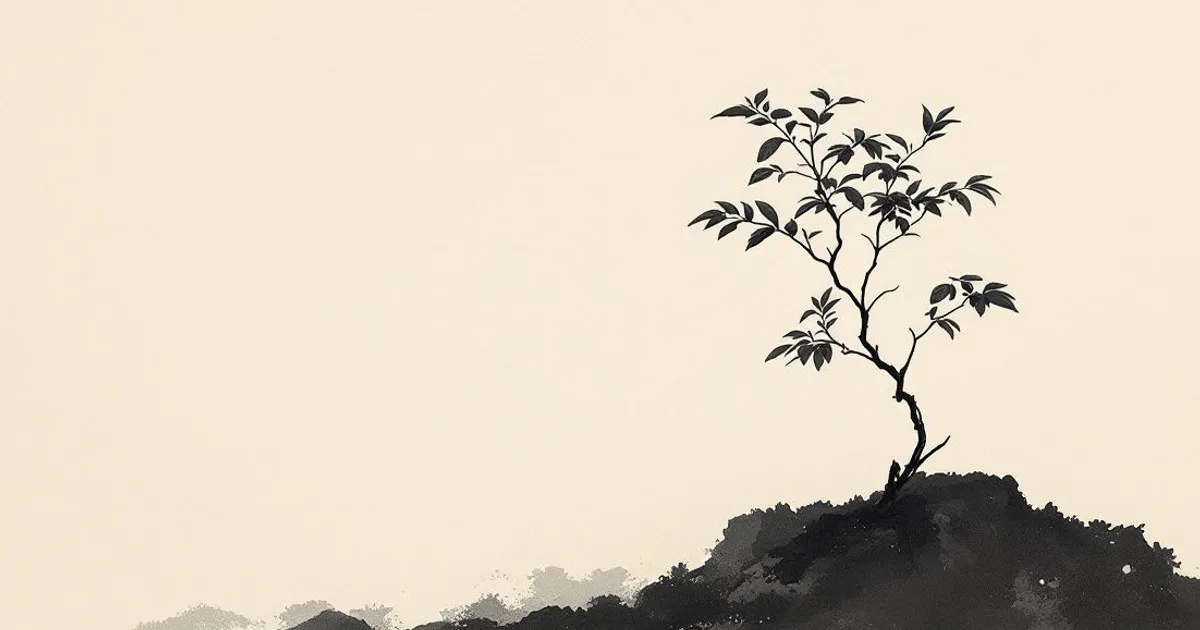
Buddhism does not contain a ready-made environmental teaching — the Buddha lived some 2,500 years before the ecological crisis, and the early texts are about suffering and liberation, not ecology. But modern Buddhists have built a serious environmental ethic from existing principles: interdependence, non-harming, the diagnosis of greed as the engine of overconsumption, and compassion for all beings.
Most scholars call this “green Buddhism” a well-grounded modern development, not something the Buddha explicitly taught.
What is the Buddhist view of the environment?
There is no ancient “Buddhist environmentalism.” What exists is a thoughtful contemporary movement — sometimes called eco-Buddhism or green Buddhism — that draws on long-standing Buddhist teachings to confront a problem the early texts never named. Its four main resources are: the teaching of dependent origination (everything arises in relationship, so damaging nature damages us); the principle of ahiṃsā, non-harming, extended from animals to the whole living world; the analysis of greed as one of the three poisons that fuels overconsumption; and loving-kindness (mettā) toward all beings. These belong to the wider field of Buddhist ethics. Crucially, honest scholars present green Buddhism as a reasonable application of Buddhist thought — not as proof that the Buddha was an environmentalist.
A crucial honesty: this is mostly a modern development
It would be easy, and flattering, to claim that Buddhism was “green all along.” The honest picture is more interesting. The early discourses were composed in a pre-industrial world with no concept of pollution, mass extinction or a warming planet; their concern is the end of suffering, not the management of ecosystems. There are passages of real beauty about forests and solitude, and monastic rules that discourage needlessly damaging plants and pouring living things into the ground — but these are not an environmental programme.
This is not just our caution; it is the scholarly consensus. Specialists such as Lambert Schmithausen, Ian Harris and Christopher Ives have argued carefully that a fully formed “Buddhist environmental ethic” is not simply sitting in the canon waiting to be read off — it has to be constructed from materials that were assembled for other purposes. So the most truthful way to put it is this: Buddhism offers unusually fertile ground for an environmental ethic, and modern teachers have grown a real one from that ground — but it is a modern flowering, not an ancient teaching. Holding both halves of that sentence at once is what keeps the topic honest.
Resource 1: interdependence and “interbeing”
The single richest resource is the teaching of dependent origination (paṭicca-samuppāda): nothing exists on its own; everything arises in dependence on conditions. Extended to the living world, this dissolves the picture of humanity as separate from “nature, out there.” We are not in the environment; we are of it — made of food, water, air and sunlight, woven into the same web as forests and oceans.
The Vietnamese Zen teacher Thich Nhat Hanh (1926–2022) gave this idea its most famous modern phrasing with the word “interbeing.” To express dependent origination in plain language, he said that things do not merely exist — they inter-are. In a well-known passage he writes that a sheet of paper contains a cloud (no cloud, no rain; no rain, no tree; no tree, no paper), and within it the forest, the logger, the sun and the wheat of the logger’s bread — so the paper “inter-is” with the entire cosmos. For environmental thought the implication is direct and disquieting: there is no real boundary between self and earth, so to poison a river or strip a forest is, quite literally, a form of self-harm. Thich Nhat Hanh became one of the most influential voices of engaged Buddhism, applying this insight to ecology and peace alike.
A closely related theme runs through the teaching of the Dalai Lama, who repeatedly frames ecological responsibility in terms of interdependence and what he calls universal responsibility. On his own site he writes that this responsibility “has less to do with questions of right or wrong than with the question of survival”, and that “The natural world is our home.” Across Zen and Tibetan voices alike, the same logic recurs: see clearly that you are not separate, and care for the world follows.
Resource 2: non-harming, extended to nature
The first of the Buddhist precepts is to refrain from harming living beings — ahiṃsā. Traditionally this is read as concern for sentient creatures, which is why Buddhism extends moral standing to animals (see Buddhism and animals, and why Buddhists release animals) and not only to humans. Modern Buddhist environmentalists extend the same instinct outward: if compassion reaches to all beings that can suffer, then protecting the habitats those beings depend on — forests, rivers, the climate itself — is non-harming carried to its logical conclusion.
Here, too, honesty matters. The classical precept is about not directly killing a living creature; stretching it to cover, say, carbon emissions or biodiversity loss is an interpretive move, not a literal reading. But it is a coherent move, and it is how a great many contemporary Buddhists now understand the spirit of the precept: harm is harm, whether it is delivered by a blade or by a system.
Resource 3: greed, simplicity and the critique of consumerism
Perhaps the sharpest contribution Buddhism makes is its diagnosis of why humans degrade the earth. In the Buddhist analysis, the root of suffering is craving, and three “unwholesome roots” — greed, hatred and delusion, the three poisons — drive our actions. Environmental destruction, on this view, is largely greed (lobha) operating at industrial scale: an economy organised around endlessly producing and consuming more, on the assumption that the next acquisition will finally satisfy.
The Dhammapada speaks of sensual pleasures rather than shopping, but its answer is that such wanting is never sated: “Even if it were raining money, / you’d not be sated in sensual pleasures” (Dhp 186, trans. Bhikkhu Sujato). Craving is not satisfied by feeding it, and Buddhist teachers offer contentment (santuṭṭhi) and voluntary simplicity in its place. The point is not grim self-denial but a kind of relief: the discovery that “enough” is a real place, and that a life weighed down by accumulation is heavier, not happier. This is why some modern Buddhist writers, David Loy among them, trace consumer culture to a felt lack that comes from a mistaken sense of self (see Buddhism and consumerism) — and why a simpler life is presented not as a sacrifice for the planet but as a better way to live that also happens to tread more lightly. It connects directly to the wider concerns of ethics in Buddhism about how we make a living and what we do with our wants.
Engaged Buddhism in action: the “ecology monks” and tree ordination
The most striking expression of green Buddhism is the tree-ordination movement among Thailand’s so-called ecology monks. Faced with rampant illegal logging, some monks began performing ceremonies that wrap a great tree in the saffron robes of a monastic — symbolically “ordaining” it. Once a tree is ordained, harming it is felt as a grave act, comparable to harming a monk, and that social and spiritual weight has proven a powerful deterrent to loggers where laws had failed.
The first such ceremony is generally traced to 1988, when a northern Thai monk, Phrakhru Manas Natheepitak, ordained a tree in Phayao Province to dramatise the deforestation that was drying up local rivers. As the anthropologist Susan Darlington and others have documented, the practice spread quickly from the late 1980s through the 1990s as a form of engaged Buddhism, often joining monks with villagers and environmental NGOs.
It is worth being precise about what this is. Tree ordination is not an ancient rite recovered from the canon; scholars describe it frankly as an invented tradition — a creative, modern adaptation of Buddhist ritual to a new purpose. That does not make it less meaningful. It makes it a vivid example of exactly what this whole topic is: Buddhists taking the symbols and ethics they have inherited and applying them, inventively, to a crisis their tradition never anticipated.
Buddhist voices on the climate crisis
Beyond the forests of Thailand, Buddhist communities have spoken collectively on the global stage. In the run-up to the 2015 Paris climate negotiations, hundreds of Buddhist leaders and teachers — across Theravada, Mahayana, Zen and Tibetan traditions — endorsed a statement titled “The Time to Act Is Now: A Buddhist Declaration on Climate Change,” whose signatories included the Dalai Lama, Thich Nhat Hanh and the 17th Karmapa. It urged world leaders to cut emissions sharply, move away from fossil fuels, reverse deforestation, and reorganise economies around sufficiency rather than endless growth — translating the inner logic of contentment and interdependence into public policy. It was a notable moment: rarely have so many Buddhist figures, from such different schools, spoken on one issue with a single voice.
Where teachers and traditions differ
As on most applied questions, Buddhists do not all agree, and it is fairer to say so. Some teachers treat environmental engagement as a natural, even obligatory, extension of the bodhisattva ideal and of compassion; others worry that the tradition’s deepest aim — liberation from all conditioned existence (saṃsāra) — sits awkwardly with a project to preserve and improve the material world, and caution against turning the Dharma into a branch of activism. There is also a methodological divide: more devotional Buddhists ground their ecology in respect for nature spirits and sacred places, while secular and modernist Buddhists ground it in interdependence read almost scientifically. And practical realities differ enormously, from monastics living on alms to lay Buddhists embedded in industrial economies. The shared ground is real — interdependence, non-harm, restraint of greed — but the emphasis, the urgency and the theology vary.
So — is there a “Buddhist” position on the environment?
The most accurate answer is layered. There is no single ancient teaching called environmentalism, and anyone who tells you the Buddha “was the first ecologist” is flattening history. But there is something arguably more valuable: a set of teachings — interdependence, non-harming, the unmasking of greed, compassion for all that lives — that turn out to be remarkably well-suited to the ecological moment, and a living, global movement of Buddhists who are applying them with seriousness and imagination. Green Buddhism is best understood as a modern flowering on ancient roots: not a discovery that Buddhism was always green, but a genuine and thoughtful response to a question the tradition is well-equipped to help us face. (For the ethical foundations, see Buddhist morality; for the roots of overconsumption, the three poisons; for the worldview beneath it all, dependent origination.)
Frequently asked questions
What does Buddhism say about the environment?
Classical Buddhism is not an environmental philosophy; the early texts predate the ecological crisis and say little directly. But modern Buddhists have built an environmental ethic from existing teachings: dependent origination (everything is interconnected, so harming nature harms ourselves), non-harming (ahimsa) extended to the natural world, greed as the root of overconsumption, and loving-kindness toward all beings. Most scholars describe 'green Buddhism' as a well-grounded modern development rather than something the Buddha explicitly taught.
Did the Buddha teach environmentalism?
Not in the modern sense. The Buddha lived roughly 2,500 years ago, long before industrial pollution or climate change, and the early discourses are concerned with suffering and liberation, not ecology. There are passages that show respect for trees, animals and natural places, and monastic rules that discourage damaging plants, but no environmental programme. Contemporary 'eco-Buddhism' draws on Buddhist principles to address a problem the texts never named — a reasonable extension, but an extension.
What is interbeing in Buddhism?
'Interbeing' is a term coined by the Vietnamese Zen teacher Thich Nhat Hanh to express dependent origination in plain, contemporary language: nothing exists by itself; everything 'inter-is' with everything else. A sheet of paper, he wrote, contains the cloud, the rain, the forest and the sun. For environmental thought, interbeing means there is no real separation between humans and nature, so polluting the earth is literally harming ourselves.
Why do Thai monks ordain trees?
Since 1988, some Thai 'ecology monks' have performed tree-ordination ceremonies, wrapping a large tree in monastic robes to mark it as sacred, to stop illegal logging. Harming an ordained tree is then felt as a grave offence, akin to harming a monk. The practice began with Phrakhru Manas Natheepitak in northern Thailand and is a form of engaged Buddhism: a modern, invented ritual adapting Buddhist symbolism for conservation, not an ancient ceremony.
How does Buddhism view consumerism and overconsumption?
Buddhist teachers commonly trace overconsumption to greed (lobha), the first of the three poisons, and offer contentment in its place. How modern Buddhist writers analyse consumer culture itself, and where they disagree, is set out on the page Buddhism and consumerism.
Sources
- Thich Nhat Hanh, 'The World We Have' / 'Interbeing'; Plum Village, 'The Time to Act Is Now: A Buddhist Declaration on Climate Change' (2015)
- Susan M. Darlington, 'The Ordination of a Tree: The Buddhist Ecology Movement in Thailand', Ethnology 37:1 (1998); Darlington, 'The Ordination of a Tree' (SUNY Press, 2012)
- Avery Morrow et al., scholarship on tree ordination as 'invented tradition'; JSTOR Daily, 'Why Some Buddhist Monks Ordain Trees'
- Daniel Cozort & James Mark Shields (eds.), 'The Oxford Handbook of Buddhist Ethics' (OUP, 2018) — Stephanie Kaza, 'Buddhist Environmental Ethics: An Emergent and Contextual Approach'
- Lambert Schmithausen, 'Buddhism and Nature' (1991); Ian Harris and Christopher Ives, essays on Buddhism and environmental ethics
- 'The Natural World', His Holiness the 14th Dalai Lama, dalailama.com — 'This responsibility has less to do with questions of right or wrong than with the question of survival'
- Dhammapada 186 — 'Even if it were raining money, / you’d not be sated in sensual pleasures'; SuttaCentral (trans. Bhikkhu Sujato, CC0)