Embracing Impermanence: Using Anicca Daily
To embrace impermanence is to let one plain fact — that everything changes and nothing lasts — actually reshape how you live, instead of merely nodding at it. In Buddhism this fact is anicca, the first of the three marks of existence. Embraced rather than resisted, it becomes a source of presence, gratitude, and freedom.
This page is about the lived practice; for the doctrine itself, see anicca.
The Turn: From Depressing Fact to Doorway
Said coldly, “nothing lasts” sounds like bad news. Everything you love will change; everyone you love will age; this body, these roles, this exact moment — all of it is passing. Buddhism does not flinch from that sorrowful face. But it insists there is a turn, and the whole of the practice lives in the turn.
The turn is this: the same truth that takes things away also sets you free. If nothing lasts, then nothing bad lasts either. The hard mood, the awful week, the situation that feels permanent — none of it is. Impermanence is the reason despair is never the final word, because a frozen world would be a hopeless one, and ours is not frozen. The Buddha did not teach anicca to depress us. He taught it as a doorway out of suffering, and he made it his parting gift: according to the Mahaparinibbana Sutta (DN 16), his last words to his monks were “All compounded things are subject to vanish. Strive with earnestness” (trans. Sister Vajira & Francis Story). Notice that he joins impermanence to urgency in a single breath — not “so nothing matters,” but “so don’t waste it.” That is the embrace in miniature. The Bhaddekaratta Sutta (MN 131) makes the same join in a verse: today is the day to work, because who knows whether tomorrow brings death.
Four Gifts Hidden in Impermanence
Once you stop bracing against change and lean into it, four quiet benefits open up.
It makes hard times survivable. When you are in the middle of pain, it feels endless — that’s part of how pain works. The mind, gripped, quietly assumes this is how it will always be, and that assumption is itself a second layer of suffering laid on top of the first. Remembering anicca doesn’t erase the difficulty, but it loosens that extra layer. This too will pass is not a platitude; it is a description of how conditioned things actually behave. Grief softens; rage cools; even numbness eventually stirs. Bad weather, in the mind as in the sky, moves through — and knowing it will move through is often what makes it bearable while it stays.
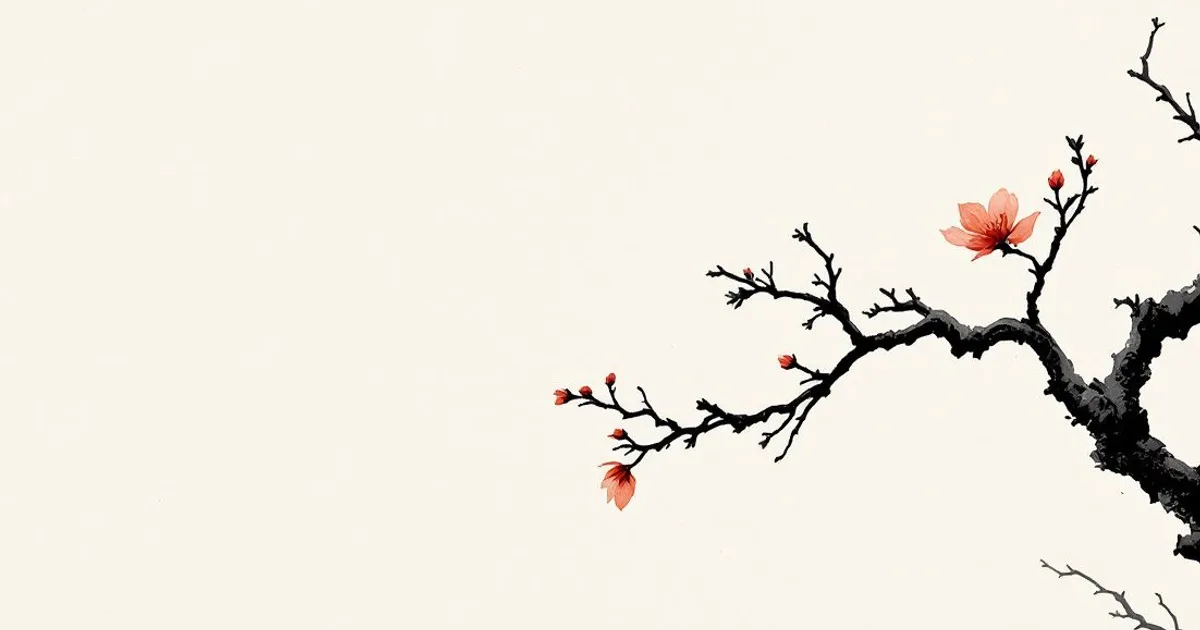
It deepens gratitude and savouring. The most counter-intuitive gift: knowing something won’t last can make it more precious, not less. The blossom is lovely partly because it falls. A morning coffee, a friend’s laugh, a child at exactly this age — held against the fact of impermanence, ordinary things glow. We tend to take for granted whatever we assume will always be there, half-watching it while our attention wanders to the next thing. Anicca quietly removes that assumption and hands the moment back to you. This is why the same teaching that can sound bleak in the abstract so often makes practitioners more alive to small joys, not less: when you stop expecting permanence, you stop sleepwalking past the present.
It loosens clinging. Most of our suffering, the Buddha taught, is the friction of gripping things that are already in motion. When you genuinely feel that everything is flowing, the grip relaxes on its own — there is simply less to hold onto. This is the near twin of letting go: seeing impermanence clearly is one of the gentlest ways the hand opens.
It lends a wise urgency. If life were endless we could postpone everything — the apology, the visit, the kind word, the long-deferred change. Impermanence collapses the excuse. This is not the frantic urgency of a to-do list; it is closer to how a guest savours a trip they know will end, paying attention precisely because the time is finite. Strive with earnestness is the calm recognition that now is the only place anything ever happens, so this — not some imagined later — is where to live well, mend what needs mending, and say what needs saying.
Practical Ways to Use Anicca Daily
Embracing impermanence is not a single insight you have once. It is a set of small, repeatable moves, woven into an ordinary day. None of these is dramatic; together they retrain how you meet a changing world. This is the everyday application of Buddhism in everyday life.
Taste one ordinary moment as fleeting. Pick something you’d usually rush through — the first sip of tea, the walk to the car, the sound of rain. Give it your full attention because it won’t come again in quite this form. You are not adding anything; you are subtracting the autopilot that assumes there will always be more.
Hold plans, roles, and possessions lightly. Make your plans wholeheartedly, then hold them with an open hand. A held-lightly plan can change and merely disappoint you, where a clenched plan changing can devastate you. The same goes for roles (“I am the one who…”) and things: enjoy them fully, knowing they are on loan. Loosening the grip in advance is how a setback lands as weather rather than catastrophe.
Meet change, ageing, and loss with a steadying phrase. When something shifts, silently note this is anicca — not to dismiss the feeling but to place it in a truer frame. With hard feelings: this will pass. With pleasant ones: this won’t last, so be here for it. The phrase isn’t a spell; it’s a way of remembering what is already true, and this is where embracing impermanence shades into acceptance — allowing what is here without firing the second arrow of resistance. For a more structured version of this, our guided Five Remembrances practice sits with ageing, illness, death, and parting one reflection at a time.
Watch impermanence directly in experience. This is the insight side. Sit for even a minute and observe a few breaths arising and dissolving. Then notice that sensations come and go, thoughts appear and vanish, moods rise and fade — none of them stays. You don’t have to believe in impermanence; you can watch it, right in the only place it can ever be verified: your own unfolding experience. Done patiently, this is how anicca moves from an idea you agree with to a fact you feel.
A Caution: Lightly Held Is Not Carelessly Dropped
It is easy to misuse impermanence, so two guardrails matter.
First, holding lightly is not not-caring. “It’s all impermanent anyway” can curdle into a cold shrug — a way to avoid commitment, grief, or love. That is a counterfeit of the teaching, not the teaching. The Buddha’s own response to impermanence was not detachment from life but earnest engagement with it. You are asked to release the demand that things stay fixed, not your tenderness toward them. Done rightly, embracing impermanence makes you love more freely, because you stop wasting the present trying to freeze it.
Second, these practices are a menu, not a mandate. You don’t owe yourself all four moves every day. On a hard day, one steadying phrase is plenty; on a good day, simply savouring your coffee with full attention is the whole practice. Treating impermanence-work as another box to tick would quietly contradict the point, which is ease, not pressure.
The Place It Holds in the Teaching
It helps to know where this sits. Anicca is the first of the three marks of existence, alongside dukkha (unsatisfactoriness) and anattā (not-self) — and the three form a chain. Because conditioned things are impermanent, clinging to them for lasting satisfaction cannot finally work; and because nothing in that flux is a fixed, controllable essence, there is no solid separate self to be found in it. The Dhammapada puts the entry point in a single line: “All conditioned things are impermanent — when one sees this with wisdom, one turns away from suffering” (Dhammapada 277, trans. Acharya Buddharakkhita). Seeing impermanence clearly tends to open onto the rest. You can explore that doctrinal structure on the three marks of existence page and the deeper treatment of anicca itself; the glossary defines the related terms.
A Small Practice to Begin
Try the one-breath farewell. Once today, when you finish something small and pleasant — a meal, a conversation, a warm shower — take a single conscious breath and silently acknowledge: this is over now; it was good; it won’t return. No sadness is required, though a little tenderness is welcome. You are simply practising the full arc the Buddha pointed to in his final words: feel impermanence honestly, and let it make you more present, not less alive. Over time, these small farewells add up to a different relationship with change — less braced against it, more able to meet it with grace. Do it once, knowing you’ll do it again tomorrow — which is, after all, exactly how impermanence works.
For the wider practice this belongs to, see Buddhism in daily life; for the doctrine beneath it, anicca; for the loosening it makes possible, the art of letting go; and for the allowing it shades into, Buddhism and acceptance.
Frequently asked questions
What does it mean to embrace impermanence?
It means letting the fact that everything changes — anicca, the first of the three marks of existence — change how you live, rather than just acknowledging it. In practice that looks like savouring ordinary moments because they're fleeting, holding plans and roles lightly, meeting change and loss with more grace, and noticing things arise and pass in your own experience. It is the lived application of the doctrine; for the teaching itself, see /anicca/.
Isn't impermanence depressing?
It has a sorrowful face — everything we love will change and pass, and Buddhism never pretends otherwise. But the same truth is freeing: if nothing lasts, then nothing bad lasts either. Pain passes, situations shift, people grow. Impermanence is also what makes a moment precious; the blossom is lovely partly because it falls. The aim is not dread or denial but a clear, tender appreciation.
How do I practise impermanence in daily life?
Start small and repeatable. Taste one ordinary moment a day as if for the last time. When a plan changes, say 'this too is anicca' and loosen your grip. Greet hard feelings with 'this will pass' — and pleasant ones with 'this won't last, so be here now.' And once a day, watch a few breaths arise and dissolve, noticing directly that experience is always moving.
What did the Buddha say about impermanence?
He made it his parting teaching. According to the Maha-parinibbana Sutta (DN 16), the Buddha's final words to his monks were: 'All compounded things are subject to vanish. Strive with earnestness' (trans. Sister Vajira & Francis Story). Impermanence and wise urgency are held together in a single breath: because nothing lasts, live well now.
Does embracing impermanence mean not caring or not planning?
No. Holding lightly is not the same as not holding. You can plan wholeheartedly and still hold the plan loosely, so a change disappoints you without devastating you. You can love deeply while knowing it will change. Embracing impermanence releases the demand that things stay fixed — not your care, your effort, or your love.