Obon: The Japanese Buddhist Festival of Ancestors
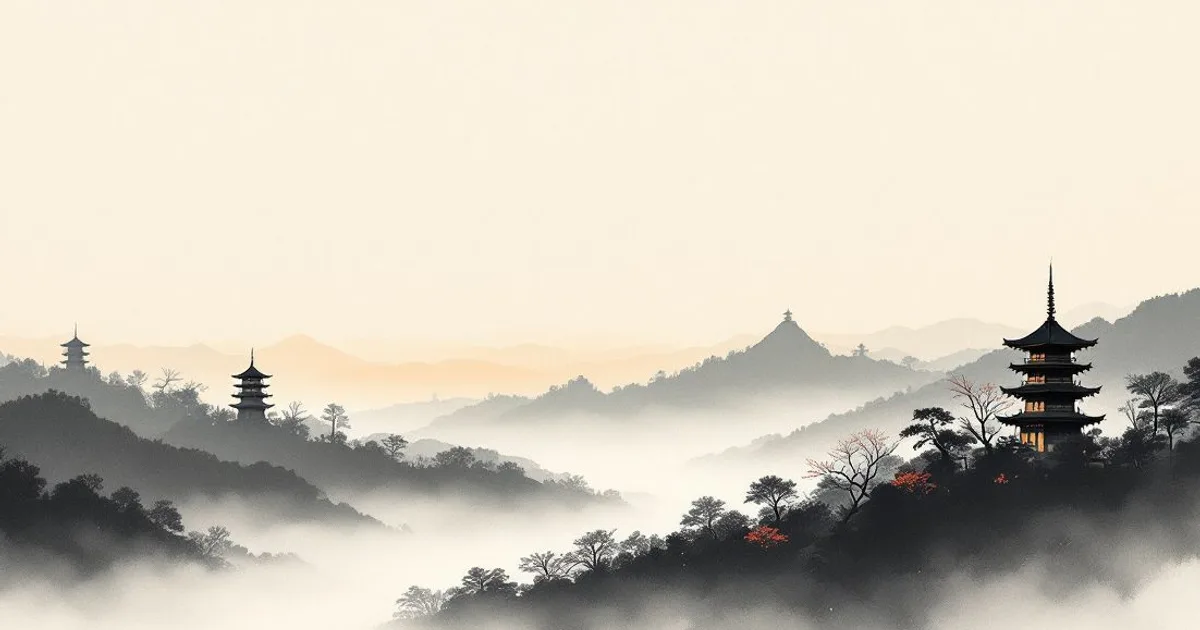
Obon (お盆, also called Bon) is Japan’s summer festival honouring the spirits of one’s ancestors. Buddhist in origin but woven together with much older Japanese custom, it is a time when families return home, tend ancestral graves, and welcome the spirits of the dead back for a few days before sending them off again with fires, dances, and floating lanterns.
Its mood is reunion and gratitude more than mourning.
What is the Obon festival and what happens during it?
Obon is the Japanese version of Ullambana, a festival kept across much of East Asia for the spirits of the dead. Encyclopaedia Britannica, describing the related Chinese “Hungry Ghost Festival,” notes that in Japan “the festival is called Obon, a shortened form of Urabon, which some scholars think is a translation of Ullambana” — the Sanskrit name behind the Buddhist scripture that gives the festival its founding story. During Obon, Britannica adds, “colorful lanterns … are lit to welcome the ghosts back to earth,” and the Bon dance is central.
The heart of Obon is simple and human: the dead are thought to return briefly to visit the living, so the living make them welcome. Families clean the family grave, set out offerings, light a small fire to guide the spirits home, gather to dance, and at the end light farewell fires and float lanterns to see the spirits safely back. (Unfamiliar terms are gathered in the glossary.)
The origin: Mokuren and his mother
The Buddhist root of Obon lies in the Ullambana Sutra (Chinese Yulanpen) and the story of one of the Buddha’s great disciples, Maudgalyayana — known in Japan as Mokuren. The story is widely told in the Mahayana world and is the same one that anchors the Chinese Hungry Ghost Festival.
In the tale, Mokuren gains supernatural sight and uses it to look for his deceased mother — only to find that she has been reborn into the realm of hungry ghosts (preta), where she suffers from unrelievable hunger and thirst. Distraught, he goes to the Buddha and asks how he can help her. As Britannica summarises the teaching, the disciple learns that to rescue a suffering relative “the whole sangha … would need to come together”; the Buddha advises him to make offerings to the assembly of monks at the close of their summer rains retreat. Mokuren does so, and his mother is released from her suffering.
Two things in that story shaped everything that follows. The first is the idea of transferring merit to the dead — that the living, through generosity to the monastic community, can ease the lot of departed loved ones. This is why Obon is bound up with offerings, temple visits, and care for the ancestors, and it connects to wider Buddhist questions about what happens after death and the rites Buddhists hold for the dead (see Buddhist funerals). The second is the dance of joy: the texts say Mokuren, overjoyed at his mother’s release, danced — and from that dance, by tradition, comes the Bon Odori, the communal dance still held every Obon.
A note on the name
It is worth being honest that the etymology of ullambana is not settled. The traditional gloss treats it as a Sanskrit word meaning roughly “hanging upside down,” a vivid image of the torments of the lower realms. But scholars have noted that this Sanskrit form is barely attested, and some argue the term derives instead from a Middle Indic / Pali word in the family of ullumpana, meaning “raising up” or “rescuing” — in which case the older “hanging upside-down” explanation is a later folk etymology. Either way, the sense of the festival — lifting the dead out of suffering — is the same.
When is Obon?
Obon does not fall on a single fixed date, and this trips up many first-time visitors. Traditionally it was kept on the 15th day of the 7th month of the lunar calendar. When Japan adopted the Gregorian calendar in the Meiji era, different regions adapted differently, and three patterns settled in:
- Hachigatsu Bon (“Bon in August”), around 15 August — by far the most common, observed across most of Japan.
- Shichigatsu Bon (“Bon in July”), around 15 July — kept in Tokyo and some other urban areas.
- The old lunar reckoning — still followed in places such as Okinawa, where the date shifts each year and can fall as late as September.
A common explanation for the August majority is agricultural: in farming communities, mid-July in the new calendar landed in the busiest part of the season, so the older August timing stuck. The festival itself runs about three days, though the exact start varies by region. If you want the precise dates for a given year and place, it is best to check a current Japanese calendar rather than assume.
Although the focus of this page is Japan, it helps to see Obon as one branch of a wider East Asian observance. The same Ullambana story underlies the Chinese Hungry Ghost Festival (also called the Yulanpen or Zhongyuan festival), kept on the 15th day of the 7th lunar month — a reminder of how teachings and customs travelled along the routes by which Buddhism spread (see the history of Buddhism). Obon sits within Japan’s own ritual year alongside other observances; for the broader picture, see Buddhist festivals around the world.
How Obon began in Japan
Obon is not a purely imported festival. Most accounts describe it as a fusion: the Buddhist Ullambana rite arriving from the continent and merging with an older native Japanese practice of welcoming the spirits of ancestors home — a custom said to predate Buddhism’s arrival in Japan. This blending is part of why Obon feels less like doctrine and more like deep family tradition.
As for when it took hold, the records are old and a little imprecise, so it is worth flagging rather than overstating. Some popular sources date the first Obon observance in Japan to the year 657. More cautiously, historical accounts tie the early practice of the rite to the reign of Empress Suiko (592–628) and note that by 733 it appears to have been adopted as a customary Buddhist holiday at the imperial court. What is clear is that it began as a court and temple observance in the Nara and Heian periods and only gradually spread to become the popular, nationwide festival it is today.
The customs of Obon
Obon’s practices vary by region and family, but most weave together the same threads: returning home, honouring the grave, welcoming the spirits, dancing, and seeing the spirits off.
Coming home and tending the graves
Obon is one of the great homecoming seasons in Japan, when many people travel back to their family hometowns. A central act is visiting the family grave (ohaka) to clean it, offer flowers, water, and incense, and pay respects. At home, families may prepare a small altar or set out offerings of food and seasonal fruit for the returning spirits.
Welcoming fires and farewell fires
To guide the spirits, families light small welcoming fires (mukaebi) at the entrance to the home at the start of Obon — by the August reckoning, on the evening of the 13th. At the festival’s close — the evening of the 16th — they light farewell fires (okuribi) to send the spirits back. The most spectacular of these is Kyoto’s Gozan no Okuribi, often called the Daimonji: five enormous bonfires set ablaze on the mountains ringing the city on the night of 16 August. As one Kyoto guide puts it, “on August 16th the dead who have come back to visit their living relatives for the Obon period will depart once again for the spiritual world.” Two of the five fires form giant Chinese characters reading 大 (dai, “great”) — including the famous one on Daimonji-yama — two more spell 妙法 (myō-hō, “wondrous Dharma,” a reference to the Buddha’s teaching), and the remaining two are shaped as a boat (funagata) and a torii gate. All five are recognised as cultural properties of Kyoto.
Floating lanterns (toro nagashi)
In many places the spirits are sent off on water. In toro nagashi, people set paper lanterns afloat on a river, lake, or the sea, each small light carrying a spirit on its way back to the other world. The image — hundreds of glowing lanterns drifting on dark water at the end of summer — is one of the most quietly beautiful in the Japanese year, and it echoes the lanterns lit to welcome the spirits in at the start.
The Bon dance (Bon Odori)
The most public and joyful side of Obon is the Bon Odori. On summer evenings, in temple grounds, shrine courtyards, parks, and town squares, people gather to dance in a circle around a raised wooden platform (yagura) where drummers and singers perform. The steps are simple, repeated, and easy to join; the styles differ from region to region, each town often keeping its own tune and movements. Because the dance descends, by tradition, from Mokuren’s dance of joy, its spirit is gladness — a community celebrating the return of its ancestors rather than grieving their loss.
What Obon is really about
For all its fires and lanterns, Obon is at heart an act of remembrance and gratitude. It expresses something close to the centre of Buddhist ethics: that we did not arrive here alone, that we are held up by those who came before, and that we owe them care. The festival turns the abstract idea of the dependence of all things into something a family can do together — sweeping a gravestone, lighting a fire at the door, dancing in a circle in the warm dark.
It also says something gentle about death itself. Obon does not pretend the dead are not gone; the whole shape of the festival is a welcome and then a leave-taking, a brief reunion and then a sending-off. But it treats that parting without dread, even with tenderness and a kind of joy. For a tradition that asks us to look death squarely in the face, Obon is a remarkably warm way of doing so — less a festival of fear than a yearly homecoming for the whole family, the living and the dead alike. (For the larger story it belongs to, see the history of Buddhism and the wider calendar of Buddhist festivals.)
Frequently asked questions
What is Obon?
Obon (お盆, also Bon) is a Japanese summer festival, Buddhist in origin, that honours the spirits of one's ancestors. For a few days families return to their hometowns, clean and visit family graves, and welcome the spirits of the dead home before sending them off again. It is often called Japan's 'festival of the dead,' but its mood is closer to a warm family reunion — gratitude and remembrance rather than solemn mourning.
When is Obon held?
It depends on the region. Most of Japan keeps Obon around the 15th of August (Hachigatsu Bon). Tokyo and some other urban areas keep it in mid-July (Shichigatsu Bon), and parts of Japan such as Okinawa still follow the old lunar calendar, so the date shifts each year. The festival itself lasts about three days. The split arose when Japan switched from the lunar to the Gregorian calendar in the Meiji era.
What is the origin of Obon?
The Buddhist root is the Ullambana (Yulanpen) Sutra and the story of the Buddha's disciple Maudgalyayana, Mokuren in Japanese. Seeing his mother suffering in the realm of hungry ghosts, he followed the Buddha's advice to make offerings to the monastic community, and so eased her suffering. This seeded the idea that the living can transfer merit to the dead. In Japan it fused with an older native practice of welcoming ancestral spirits home.
What is Bon Odori?
Bon Odori is the communal Bon dance held during Obon, usually in the evenings in temple or shrine courtyards and town squares. Dancers move in a circle around a raised platform (yagura) where musicians play. The styles differ from region to region. By tradition the dance traces back to Mokuren's dance of joy when his mother was released from suffering, so it expresses gladness and gratitude rather than grief.
What are toro nagashi and okuribi?
Both send the ancestral spirits back at the end of Obon. Okuribi are farewell fires, most famously Kyoto's Gozan no Okuribi (the Daimonji), five great bonfires lit on the mountains around the city on the night of 16 August. Toro nagashi is the floating of paper lanterns down a river or out to sea, each lantern a light guiding a spirit home to the other world.
Sources
- Hungry Ghost Festival (entry), Encyclopædia Britannica
- Obon (entry), Wikipedia
- Gozan no Okuribi / Daimonji, Discover Kyoto (kyoto.com) & Japan National Tourism Organization (japan.travel)