“The Wise Control Themselves” (Dhammapada 80)
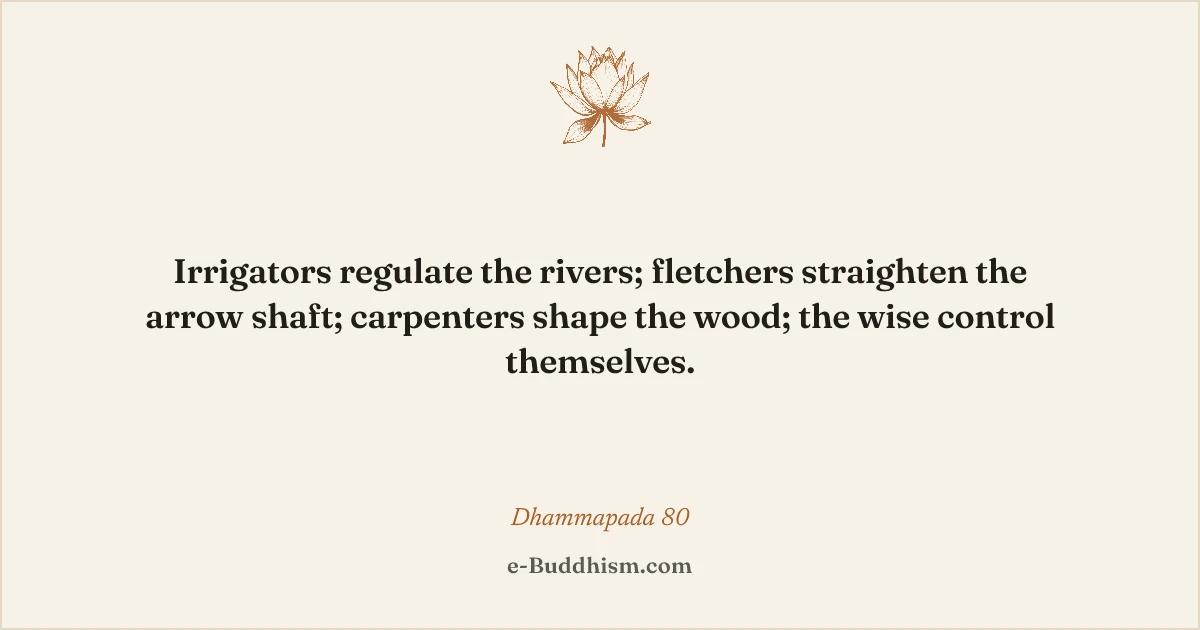
The Buddha treats becoming wise as a craft — no more mysterious, and no less skilful, than channelling water or shaping wood. Irrigators guide rivers; fletchers straighten arrows; carpenters work timber; and the wise, with the same patient skill, work on themselves. Here is the verse, its meaning, and its source.
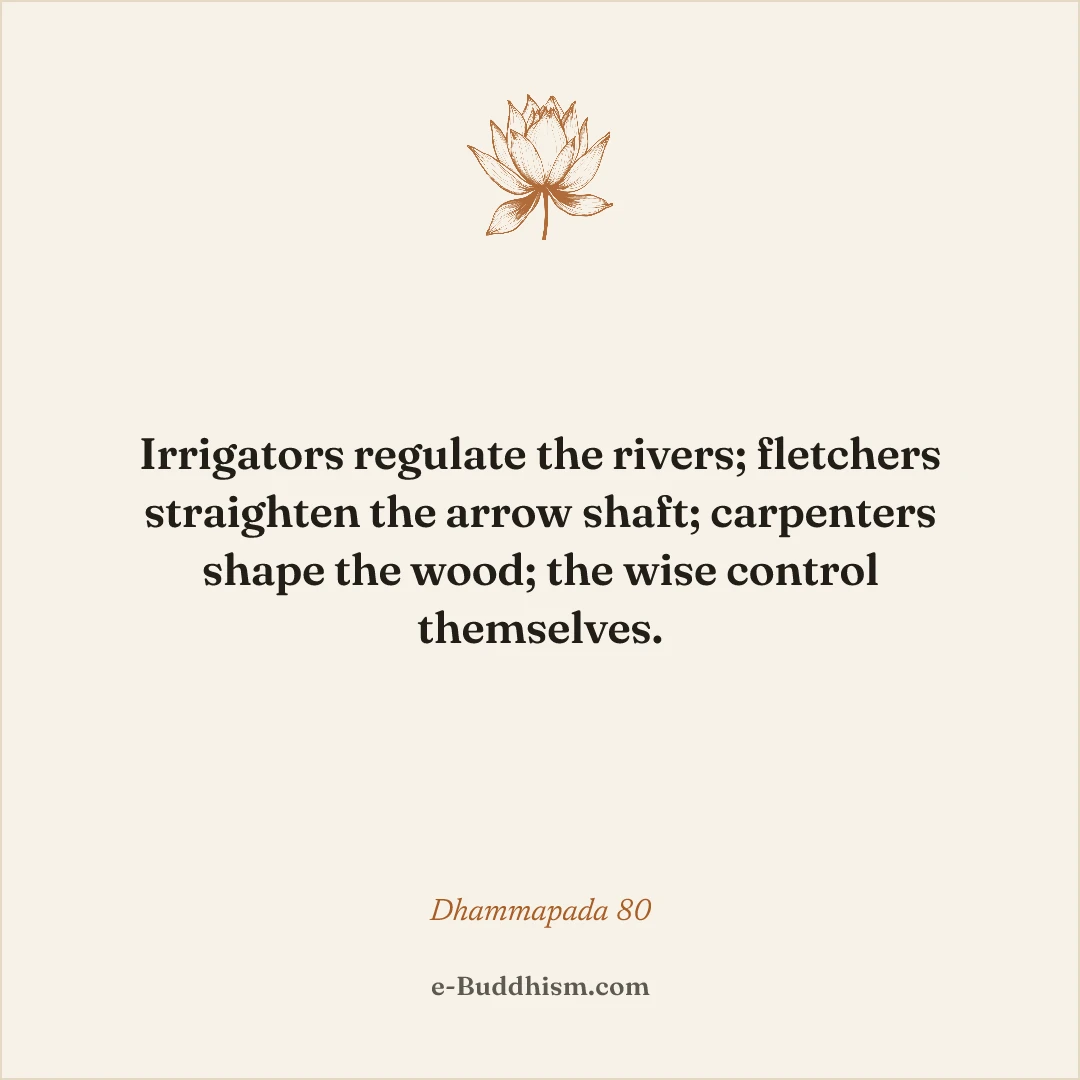
“Irrigators regulate the rivers; fletchers straighten the arrow shaft; carpenters shape the wood; the wise control themselves.” — The Buddha, Dhammapada 80 (trans. Acharya Buddharakkhita)
What ‘the wise control themselves’ means
Three homely trades, then the turn. Each craftsman takes a raw material — water, a crooked shaft, rough timber — and works it into something true and useful. The verse places “the wise” in exactly that company: their material is their own mind and conduct, and they shape it with the same deliberate skill.
Two things make the image so freeing. First, it says character is not fixed. You are not simply stuck with your temper, your distractedness, your habits; like wood, they can be worked. Second, it reframes the attitude of self-improvement. A carpenter does not despise the timber for being rough, or wait for it to straighten itself; he picks up his tools. The verse invites the same craftsman’s patience toward ourselves — not harsh self-judgment, but steady, unhurried work on a workable thing.
“Control” here is closer to shaping and guiding than to suppression. An irrigator does not fight the water; he directs it. So the wise do not crush themselves; they channel.
Where ‘the wise control themselves’ comes from
Dhammapada 80, from the Panditavagga — the chapter “on the Wise” — in the Pali Canon. The same simile recurs at Dhammapada 145.
Why ‘the wise control themselves’ matters
This is the quiet engine of the whole Buddhist path: the conviction that the mind can be trained. That training is laid out in the Noble Eightfold Path and practised most directly in meditation — and it is the same self-mastery the Buddha praises in the famous line that one who conquers himself is the noblest victor.
Browse more sourced lines in our Buddhist quotes with their meaning collection.
Frequently asked questions
What does Dhammapada 80 mean?
It compares self-mastery to a craft. Just as irrigators channel water, arrow-makers straighten shafts, and carpenters shape timber, the wise work on the one material that is truly theirs: themselves. Character, in this view, is not fixed by nature or fate — it is shaped, patiently, by training.
Why compare the mind to wood or water?
Because the comparison makes self-cultivation concrete and learnable. A carpenter doesn't resent the wood or wait for it to shape itself; he works it with skill. The verse invites the same attitude toward our own habits and reactions: not self-judgment, but craftsmanship — steady, skilful, unhurried work on a workable material.
Where does 'the wise control themselves' come from?
It is Dhammapada 80, from the Panditavagga (the chapter 'on the Wise') in the Pali Canon, quoted in Acharya Buddharakkhita's translation. The same craft image returns almost word-for-word at Dhammapada 145.