Bodhi Day: The Buddha's Enlightenment Festival
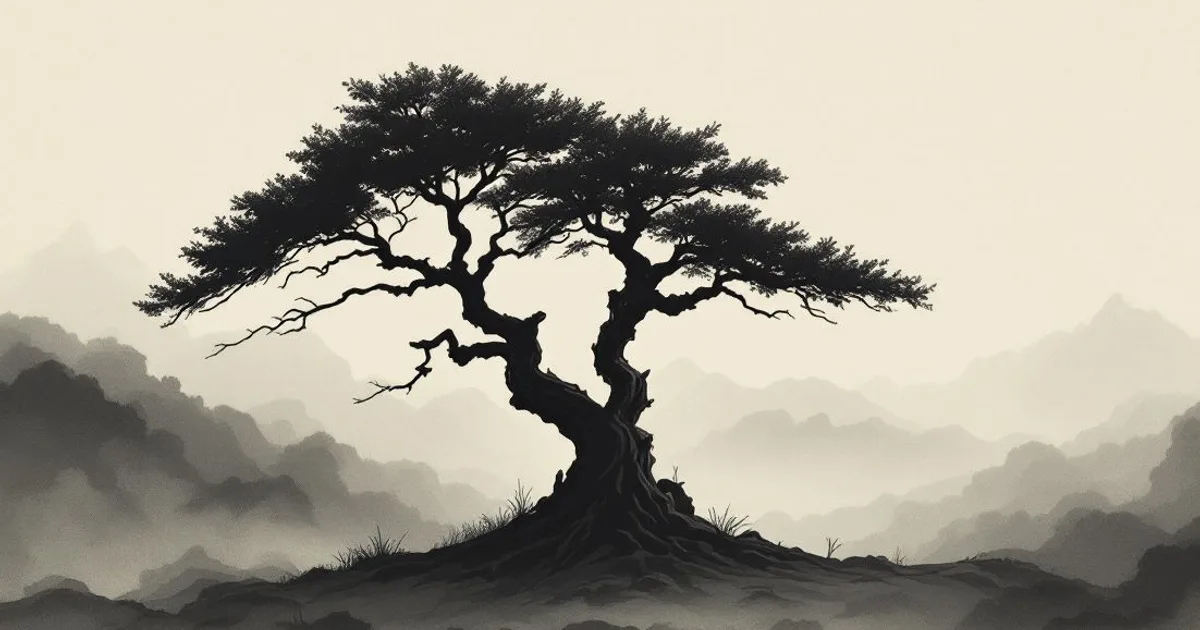
Bodhi Day commemorates the Buddha’s enlightenment (bodhi) — the night when, seated in meditation under the Bodhi tree at Bodh Gayā, Siddhārtha Gautama awakened and became the Buddha. It is chiefly an East Asian Mahayana festival, kept in Japanese Zen as Rōhatsu and in China as part of the Laba festival.
Notably, it is not a universal Buddhist holiday: the Theravada world honours the awakening within Vesak instead. It is one of the quieter, more inward of the Buddhist festivals.
What Bodhi Day commemorates
The event behind the festival is the turning point of the whole tradition: the enlightenment itself. After years of searching and severe asceticism, the future Buddha sat down beneath a pipal tree (a Ficus religiosa, ever after called the Bodhi tree, “tree of awakening”) at Bodh Gayā, resolved not to rise until he had seen the truth. Through the night he passed into deep meditation, saw the nature of suffering and its ending, and at dawn awakened fully — becoming the Buddha, “the awakened one.” Bodhi Day is the annual remembrance of that dawn.
An East Asian festival — and why
Here honesty about tradition matters, because it is easy to assume every Buddhist keeps Bodhi Day. In fact a standalone Bodhi Day belongs mainly to East Asian Mahayana Buddhism — the Buddhism of China, Japan, Korea, and Vietnam.
The reason is a difference in calendars. In the Theravada world, the Buddha’s birth, enlightenment, and death are held to have fallen on the same full-moon day and are honoured together in the single great festival of Vesak — so the enlightenment does not receive its own separate day. In Tibetan Buddhism, the same three events are commemorated across the sacred month of Saga Dawa. It is precisely because the East Asian traditions unbundle the three events that the enlightenment gets its own festival there. Recognising this keeps a common error at bay: Bodhi Day is genuine and cherished, but it is East Asian, not pan-Buddhist.
When it falls: Rōhatsu and Laba
Bodhi Day is reckoned two different ways, and they should not be merged:
- Japan — a fixed date, 8 December. In Japanese Zen the festival is Rōhatsu (臘八), a name that literally means “the eighth day of the twelfth month.” When Japan adopted the Western calendar in the nineteenth century, the observance was fixed to the civil date of 8 December.
- China — a lunar date. The Chinese equivalent is the Laba festival (臘八), kept on the 8th day of the 12th lunar month and identified by Chinese Buddhists as the Buddha’s Enlightenment Day. Because it follows the lunar calendar, it usually falls in January by the Western reckoning.
So there is no one worldwide “date of Bodhi Day”: the Japanese observance is a fixed 8 December, while the Chinese one is lunar. Any single Western date is best read as “this year it falls on…,” not as the definition.
How it is observed
Bodhi Day is inward rather than festive — fittingly, for a festival of meditation.
- Rōhatsu sesshin. In Zen monasteries, the days leading to Rōhatsu form the year’s most intensive meditation retreat, a sesshin of long, silent zazen. By tradition, practitioners sit through the final night, echoing the Buddha’s own night of awakening — a small, demanding re-enactment of the vigil under the tree.
- Laba congee. In China, the Laba festival is marked by preparing and sharing Laba congee, a warming porridge of rice, grains, beans, nuts, and dried fruit. Popular tradition links it to the bowl of milk-rice that the young woman Sujātā is said to have offered the emaciated ascetic, restoring his strength on the eve of his awakening.
- Meditation and reflection. More widely, Buddhists mark the day with extra meditation, study of the awakening story, and gratitude for the teaching it made possible.
(You may also see modern, especially Western, customs such as decorating a small “Bodhi tree” with lights; these are recent adaptations rather than ancient Asian practice, and are best described as such.)
A festival of awakening
What Bodhi Day celebrates is not a birth or a passing but an insight — the moment a human being saw all the way to the end of suffering and became free. That is why its natural mode is not spectacle but stillness: the best way to honour an awakening is to sit, as he sat, and look. For the event at its heart, see the Buddha’s enlightenment; for the festival that carries it in the Theravada world, Vesak; for its companion festival of the Buddha’s passing, Parinirvana Day; and for how it sits in the calendar near the Western holidays, can Buddhists celebrate Christmas? For the wider year, see our guide to Buddhist festivals.
Frequently asked questions
What is Bodhi Day?
Bodhi Day commemorates the day the Buddha attained enlightenment (bodhi) under the Bodhi tree at Bodh Gayā. It is mainly an East Asian Mahayana observance — kept in Japanese Zen as Rōhatsu and in China as part of the Laba festival. In the Theravada world the enlightenment is not given its own festival; it is honoured together with the Buddha's birth and death at Vesak.
When is Bodhi Day?
It depends on the tradition. In Japan, Bodhi Day (Rōhatsu) is kept on a fixed civil date, 8 December, since Japan adopted the Western calendar. In China, the equivalent Laba festival falls on the 8th day of the 12th lunar month, which usually lands in January. So there is no single universal date — the Japanese observance is fixed, the Chinese one is lunar.
How is Bodhi Day celebrated?
In Zen monasteries, Rōhatsu is the climax of a week-long intensive meditation retreat (sesshin), and practitioners traditionally sit through the final night in honour of the Buddha's own night of awakening. In China, the Laba festival is marked by eating Laba congee, a rice porridge popularly linked to the milk-rice a young woman offered the Buddha before his enlightenment. More broadly, it is a day for meditation and study.
Do all Buddhists celebrate Bodhi Day?
No. A separate Bodhi Day is essentially an East Asian Mahayana observance. Theravada Buddhists fold the enlightenment into Vesak, the single festival that honours the Buddha's birth, awakening, and death together; Tibetan Buddhists commemorate it within the sacred month of Saga Dawa. So Bodhi Day is real and important — but it is not a universal Buddhist holiday.
Sources
- Rōhatsu (臘八, 'eighth day of the twelfth month') — the Japanese Zen observance of the Buddha's enlightenment, fixed to 8 December after Japan adopted the Gregorian calendar; associated with the closing day of a week-long sesshin
- Laba Festival (臘八) — the 8th day of the 12th lunar month, identified in Chinese Buddhism as the Buddha's Enlightenment Day (Fótuó Chéngdào Rì); traditionally marked with Laba congee
- The enlightenment (bodhi) at Bodh Gayā under the Bodhi tree (a Ficus religiosa) — the event commemorated; narrated across the traditional life of the Buddha rather than in a single dedicated 'Bodhi Day' scripture