Can Buddhists Have Pets?
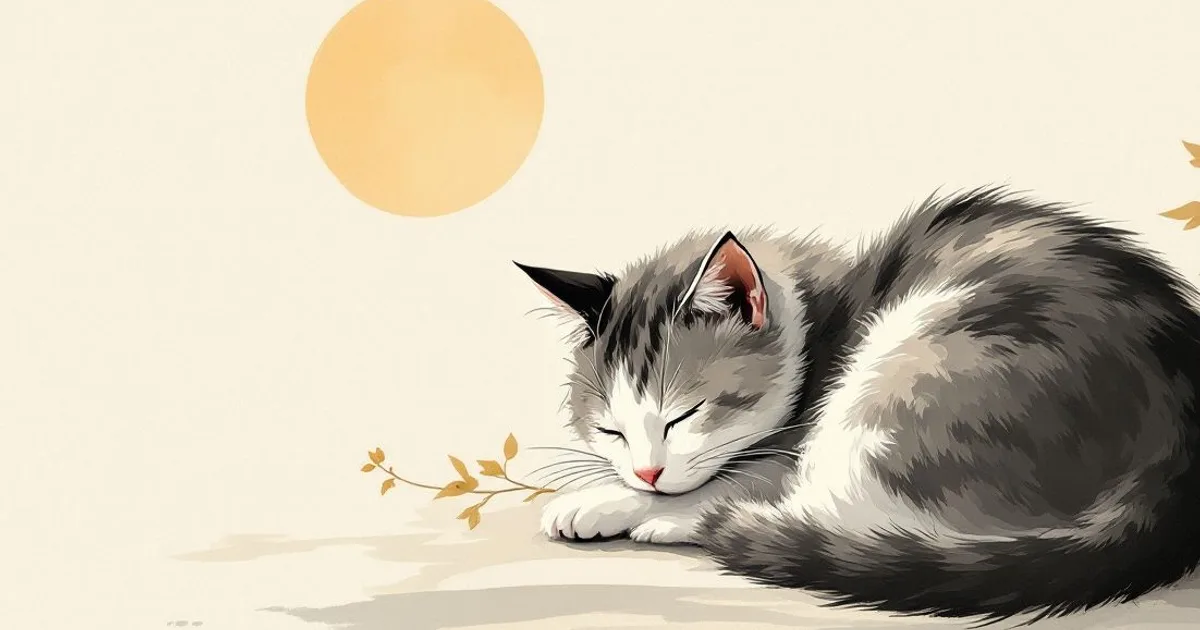
Can Buddhists have pets? Yes — happily. No rule forbids it — with one East Asian exception, noted below — and caring kindly for an animal fits naturally with Buddhism’s compassion for all sentient beings. The only gentle caution is the familiar Buddhist one: love your pet fully, but hold even that love without clinging. Far from a problem, a well-loved animal can be a daily teacher of tenderness — a small, warm corner of ethics in Buddhism.
The harder questions come after the yes: what to put in the bowl of an animal that eats meat while you keep the first precept yourself, and what to do when a pet is suffering and a vet can end it.
No rule against pets
Start with the plain question: is it allowed? Nothing in the five precepts forbids a lay Buddhist from keeping a pet. Dogs, cats, birds, fish — caring for an animal breaks no rule and hinders no practice. If anything, the daily work of feeding, protecting, and attending to a creature that depends on you is a natural school for patience and kindness.
The one text that objects
One text does object, and flattening it away would be dishonest. The Brahma Net Sutra — the bodhisattva precept code kept across East Asian Mahāyāna, composed in China rather than translated from India, and a different work from the Pāli Brahmajāla Sutta (DN 1) quoted further down this page, despite the shared name — includes, among its forty-eight secondary precepts and under the heading “On Harming Sentient Beings”: “In addition, he should not raise cats, dogs, foxes, pigs and other such animals.” Do it intentionally, it adds, and “he commits a secondary offense” (secondary precept 32, trans. Sutra Translation Committee of the United States and Canada).
Read in place, the sentence sits inside a list of harms — selling knives, clubs, bows and other life-taking devices, keeping altered scales, imprisoning people — which reads more like a catalogue of harmful livelihoods than a ban on company. The sutra gives no reason, though, and the sentence is there. It binds those who have taken the bodhisattva precepts rather than Buddhists at large, and the traditions that keep it are also the traditions of the temple cat. But the honest answer is not “no tradition has ever objected”; it is “one precept code asks its own to think twice.”
Animals are fellow beings
What makes Buddhism especially warm toward animals is its picture of existence. In the Buddhist map of rebirth, the animal realm is one of the six realms (five, in some early formulations) through which beings travel — so an animal is not a different kind of thing from us, but a fellow being at a different point on the same long journey. Any creature might, in this vast view, have been a relative in some former life — the Buddha puts it at its starkest in the Mātu Sutta: “It’s not easy to find a sentient being who in all this long time has not previously been your mother” (SN 15.14, trans. Bhikkhu Sujato).
That is why kindness to animals runs so deep in the tradition. The first precept — to refrain from harming living beings — explicitly covers them; loving-kindness (mettā) is cultivated toward “all living beings, without exception”; and the Jātaka tales are full of the Buddha-to-be appearing as, and rescuing, animals. To care for a pet is simply this compassion made concrete and daily.
Kindness — and the attachment caveat
If there is any Buddhist “catch,” it is not about whether to love an animal but how. Buddhism draws a fine line between loving-kindness, which is boundless and healthy, and clinging attachment (upādāna), which grasps and cannot bear loss. You can adore your pet, meet its needs devotedly, grieve it honestly when it dies — and still practise holding it lightly, remembering that it, like everything, is impermanent. This is not coldness. It is the mature love the whole path points to: wholehearted care that does not turn into desperate ownership. A pet, in fact, is a gentle place to practise exactly that.
Caring for an animal well
If Buddhism has any positive teaching about pets, it is less “may you?” than “how well?” Taking an animal into your home means taking responsibility for a dependent, vulnerable being — and treating it with real care becomes a daily, hands-on form of the first precept and of loving-kindness. That means meeting its needs properly, never neglecting or abandoning it, and being thoughtful even about how the animal itself is fed. The old Buddhist impulse of life release — sparing and protecting animals rather than harming them — springs from the same root. A well-kept pet, in this light, is not a distraction from practice but a small, living field in which patience, responsibility, and kindness are trained every single day.
The cat’s bowl: feeding an animal that eats meat
Here is the question the easy answer skips. If you keep the first precept — perhaps to the point of not eating meat yourself — what do you put in the bowl of a cat or a dog?
Begin where the precept actually falls. Pāṇātipātā veramaṇī is a training rule against killing, and the Buddha allowed even his monastics meat they had not seen, heard, or suspected to have been killed for them (MN 55) — an argument with its own page, can Buddhists eat meat?, and one that does not change when the mouth being fed is your cat’s. Someone who opens a tin has not killed; someone who buys it has also paid, in a modern supply chain, for a killing. Both halves are true, and no discourse resolves them for you.
What the canon does say is less grudging than you might expect: putting food in front of an animal is itself meritorious. The Dakkhiṇāvibhaṅga Sutta counts “a gift to an animal” as the last of fourteen kinds of religious donation, and rates it — the smallest return on the list, but a return: “To an animal, a hundred times” (MN 142, trans. Bhikkhu Sujato). To the wanderer Vacchagotta he went further down the scale still:
You even make merit by tipping out dish-washing water in a cesspool or a sump with living creatures in it, thinking, “May any creatures here be nourished!”
So the feeding itself is not where the fault lies. Whether a particular animal can be fed any other way is a veterinary question, not a doctrinal one — a conversation for a vet, not a sutta. Where a Buddhist can still act is at the edges: taking in an animal that already needs feeding rather than creating demand for another, and not looking away from what the bowl costs.
When a pet is suffering: the euthanasia question
Sooner or later an owner meets the hardest version of this: an animal in pain, a vet who can end it, and a precept that says do not kill. Buddhism gives no single answer. Two of the answers it does give are worth setting side by side, because they weigh the same decision differently.
In the Pali Vinaya, the hinge is the act and the intention behind it. The monastic rule is blunt, and its definitions leave no room to read animals out of it:
‘If a monk intentionally kills a living being, he commits an offense entailing confession.’ … Intentionally: knowing, perceiving, having intended, having decided, he transgresses. A living being: an animal is what is meant.
Then read the non-offence clauses. There is no offence “if it is unintentional; if he is not mindful; if he does not know; if he is not aiming at death” — and the list closes with the two exemptions that end almost every rule in this collection, “if he is insane; if he is the first offender” (Bu Pc 61:2.3.2–2.3.7, trans. Bhikkhu Brahmali). A merciful motive is not among them. By the letter of this rule, intending an animal’s death is the offence, however tenderly the intention is formed. It binds monastics rather than lay people, but the lay first precept is worded against the same act.
Lama Zopa Rinpoche was asked this exact question, and answered from the motive rather than the act. Leah Richards, a veterinary nurse, asked him at a Kopan course what to do when she was asked to euthanise sick and suffering animals, and what the effect of that would be “on one who has committed to the five lay vows”. He replied that the vow of non-killing “refers to abstaining from killing that is associated with and backed by ignorance and negative attachment”, and that only killing with a motivation that is “totally pure” becomes a virtue: killing with “a true bodhichitta intention”, the article reports him saying, becomes an act in which it is “beneficial to kill”.
That was not a permission slip. He told her that anyone in such a position “must do everything within their capacity to prevent such a compromising decision, to ascertain that there is no alternative treatment or other method at all possible – and even then, the decision is not an easy one.” He warned that death does not end the story — “A sentient being’s consciousness does not stop after this life ends” — and that what lies ahead for the animal “cannot be known to a ‘non-clairvoyant’”: if its next rebirth were a lower one, its present pain might be “worth maintaining for even just a few minutes longer” beside “the incomparable, unfathomable pain and severity of torture to be faced in the lower realms”. Since that cannot be reasoned out, he gave her a divination to decide by — write every option, alternative treatments included, on identically rolled papers, pray to Green Tara, and act on whichever falls from the hand first — and practices for the death itself, Chenrezig and Medicine Buddha mantras chanted into the animal’s ear “prior to administering the euthanasia injection and just after death”. Leah reported that he “reiterated several times during the meeting that his advice may differ from that of other lamas” (Mandala, FPMT, October–November 2004). This is one teacher’s advice, given to one person, not a statement of what Tibetan Buddhism holds.
Set the two side by side and the difference is not in the compassion but in where each puts the weight: the Vinaya asks what the act is, Rinpoche asked what the motive is — and then would not make the call, handing it to Tara rather than to a rule. Neither treats the decision as merely medical; neither makes it for you; and neither is a substitute for the veterinary conversation about what this particular animal is actually suffering. What comes afterwards the tradition does speak to, gently: see losing a pet.
What about monks and nuns?
Monastics are a different case — not because kindness to animals lessens, but because their whole life is one of renunciation and non-ownership. The early texts list livestock among the property a renunciant gives up possessing. The shorter section on ethics in the Brahmajāla Sutta — the Pāli discourse, not the East Asian precept code above — spells the inventory out, as an ordinary person’s praise of what the Buddha refrains from:
He refrains from receiving gold and currency, raw grains, raw meat, … goats and sheep, chickens and pigs, elephants, cows, horses, and mares, and fields and land.
It is a period list of possessions, and animals stand in it beside coin and land — as property. That is what the renunciant sets down; the same list recurs in the ethics section of DN 2 (Sāmaññaphala Sutta), there in the plural, of mendicants generally. So monks and nuns do not keep animals as personal belongings. Yet monasteries across the Buddhist world are famous for the temple cats and dogs they shelter and feed. The monastic rule renounces owning, never caring — a distinction that says a great deal about how Buddhism sees our fellow creatures. (For the wider ethics, see Buddhism and animals and loving-kindness.)
Frequently asked questions
Can Buddhists have pets?
Yes. No Buddhist rule stops a lay person keeping a pet, and caring for an animal fits Buddhism's compassion for all living beings. One East Asian precept code, the Brahma Net Sutra, does ask bodhisattva precept holders not to raise cats and dogs, but that binds those who take it. The gentle caution elsewhere is the usual one: love your animal fully, without clinging.
Does Buddhism see pets as fellow sentient beings?
Yes. In the Buddhist map of rebirth the animal realm is one of the realms beings travel through, so an animal is not a different kind of thing from us but a fellow being at a different point on the same journey. This is why the first precept, not to harm living beings, covers animals, and loving-kindness (mettā) is extended to 'all living beings, without exception'. A pet makes that compassion daily and concrete.
Is being attached to a pet a problem in Buddhism?
Not exactly. Loving a pet is wholesome; the caution is only against clinging. Buddhism draws a line between loving-kindness, which is boundless and healthy, and clinging attachment (upādāna), which grasps and cannot bear loss. You can adore your animal, meet its needs devotedly and grieve it honestly when it dies, while still practising holding it lightly, remembering that it, like everything, is impermanent. That wholehearted, non-clinging care is itself good practice.
Do Buddhist monks and nuns keep pets?
Generally not as personal possessions. The monastic ideal is renunciation, and the early texts list livestock among the property a renunciant gives up owning — so monastics do not keep animals as belongings. But this is about non-ownership, not coldness: monasteries very often shelter and feed temple cats, dogs, and other animals with great kindness. The rule renounces possession, not compassion.
Is it wrong to feed my cat or dog meat?
No. The first precept forbids killing, not flesh, and the early texts treat feeding an animal as merit: MN 142 counts a gift to an animal among religious donations, and AN 3.57 finds merit even in tipping dishwater where creatures can feed. The honest tension is that buying meat still pays for a killing, which no discourse resolves for you.
Does Buddhism allow euthanasia for a suffering pet?
It varies, and no text settles it. In the Pali Vinaya the hinge is intention: the non-offence clauses cover killing that is unintentional, unmindful, unknowing or not aimed at death — a merciful motive is not among them. Asked by a veterinary nurse, Lama Zopa Rinpoche made the motivation decisive — but he told her to exhaust every alternative treatment first, warned that the animal's next rebirth cannot be known, gave her a Green Tara divination for choosing between the options, and gave mantras to recite before the injection and after death. He said several times that his advice may differ from that of other lamas.
Sources
- The first precept (pāṇātipātā veramaṇī) — refraining from harming living beings, which explicitly includes animals — and the cultivation of mettā (loving-kindness) and karuṇā (compassion) toward all sentient beings; Access to Insight, 'The Five Precepts'
- The animal realm as one of the realms of rebirth (six in the common scheme, five in some early formulations); the Bhavacakra / six-realms teaching
- Brahmajāla Sutta (DN 1), the shorter section on ethics (Sīla): what the ascetic Gotama refrains from receiving, livestock included — SuttaCentral (trans. Bhikkhu Sujato, CC0). The same list recurs at DN 2 (Sāmaññaphala Sutta) in the plural
- Mātu Sutta, 'Mother' (SN 15.14) — SuttaCentral (trans. Bhikkhu Sujato, CC0)
- Jīvaka Sutta (MN 55) — meat that is not seen, heard, or suspected to have been killed for the eater; SuttaCentral (trans. Bhikkhu Sujato, CC0)
- Dakkhiṇāvibhaṅga Sutta, 'The Analysis of Religious Donations' (MN 142) — a gift to an animal counted among the fourteen donations; SuttaCentral (trans. Bhikkhu Sujato, CC0)
- Vacchagotta Sutta, 'With Vacchagotta' (AN 3.57) — merit in tipping dish-washing water where creatures live; SuttaCentral (trans. Bhikkhu Sujato, CC0)
- Theravāda Collection on Monastic Law, The Great Analysis — 'Intentionally killing a living being' (Bu Pc 61): the rule, its definitions and its non-offence clauses; SuttaCentral (trans. Bhikkhu Brahmali, CC0)
- Brahma-Net Sutra: Moral Code of the Bodhisattva, secondary precept 32, 'On Harming Sentient Beings' — the East Asian Mahāyāna bodhisattva precept code, a Chinese-composed text and a different work from the Pāli Brahmajāla Sutta (trans. Sutra Translation Committee of the United States and Canada)
- 'Euthanasia with a Good Heart' — Mandala's report of the advice Lama Zopa Rinpoche gave veterinary nurse Leah Richards on euthanising sick and suffering animals; Mandala, October–November 2004, the magazine of FPMT, Rinpoche's own organisation