Hungry Ghosts (Pretas) in Buddhism
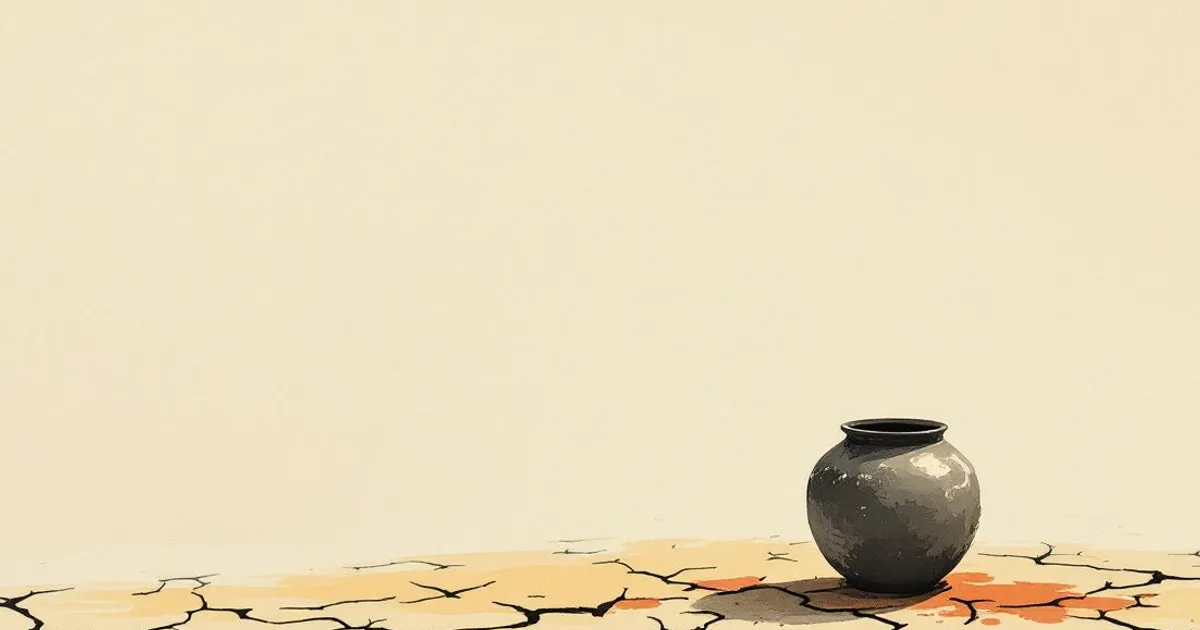
Hungry ghosts — pretas in Sanskrit, petas in Pāli — are beings trapped in a state of insatiable craving: forever hungry, forever unable to be filled. They occupy one of the lower of the six realms of rebirth in the Buddhist universe, and few images in all of Buddhism are as vivid, or as quietly disturbing, as theirs.
They are craving itself, given a body.
Beings of endless hunger
Encyclopædia Britannica describes the hungry ghosts as beings “with protruding stomachs and tiny mouths who are always ravenous.” The traditional picture sharpens this into something almost unbearable: a preta is shown with an enormous, swollen belly — a vast appetite — but a neck as thin as a needle and a mouth no bigger than a pinhole. However desperately it craves, it can never take in enough to be satisfied. In many tellings, the food and water it reaches for burst into flame or turn to filth at its touch.
The result is a being condemned to eternal, unappeasable want — to hunger with the whole of its being, and never once be filled. It is one of the most haunting images Buddhism offers, and it is meant to be: the preta is suffering of a very particular kind, the suffering of craving that feeds on itself.
The karma of grasping
Why is a being reborn here? In the Buddhist understanding, the hungry-ghost realm is the karmic fruit of lives ruled by greed, miserliness, and grasping — by the refusal to give and the endless wanting of more. Britannica notes that rebirth there results from negative karma, and that the ghosts’ “continual attachment… to earthly life” — the very clinging that, in Buddhist thought, is the cause of suffering — is what binds them. The realm is, in a sense, the perfect mirror of its cause: a life spent grasping becomes an existence of nothing but grasping.
In East Asian Buddhism, compassion for these beings is expressed each year in the Hungry Ghost Festival (Ullambana), when the living make offerings to feed the wandering ghosts and relieve their hunger — a tradition closely related to the Japanese festival of Obon.
Feeding the ghosts: dedicating merit
Buddhism does not leave the hungry ghosts only to their torment; it offers the living a way to help them. In the Tirokuṭṭa Sutta (“Hungry Ghosts Outside the Walls,” Khp 7), the Buddha describes departed relatives reborn as petas who return to their old homes — standing “outside the walls, at the crossroads and door-posts” — hoping to be remembered, yet unable to enter or to feed themselves. What can reach them is merit. When the living make offerings — food and drink given in the departed’s name, especially to the Sangha — and dedicate the goodness of that act to their dead, the ghosts receive it and rejoice. The Buddha gives a luminous simile: just as rivers running full carry their water down to the sea, so offerings devotedly given here flow to the departed there. (For the wider question of how literally to take all this, see can Buddhists believe in ghosts?)
This is the root of the Hungry Ghost observances kept across Buddhist Asia — and of a tender truth: that compassion can reach even into the realms of suffering, and that remembering our dead, generously, is a real kindness to them.
Craving you can recognise
Of all the six realms, the hungry ghost may be the one a modern reader recognises most immediately — because it describes something we have felt. This is the realm most often read psychologically, as a state of mind rather than only a place of rebirth: the torment of addiction and compulsive craving, in which one consumes and consumes and is never satisfied; the ache of a wanting that no amount of getting can fill. Seen this way, the preta is not a distant monster but a condition the human heart falls into, whenever desire becomes a hunger that feeds on itself. (We take up this literal-or-symbolic question on its own page.)
And that is exactly where the teaching turns from horror to hope. If the hungry ghost is craving given a form, then the way out is the way out of craving itself — the very heart of the Buddhist path. The realm is terrible, but it is not a sentence: like every state in saṃsāra, it is impermanent, and the freedom the Buddha pointed to is freedom from the grasping that creates it. (For the realm in its scheme, see the six realms; for the wider map, the realms of existence.)
Frequently asked questions
What is a hungry ghost in Buddhism?
A hungry ghost (Sanskrit: preta; Pali: peta) is a being trapped in a state of insatiable craving — one of the six realms of rebirth in Buddhist cosmology. Encyclopaedia Britannica describes them as beings 'with protruding stomachs and tiny mouths who are always ravenous': forever hungry, forever unable to be filled. The realm is the karmic fruit of lives ruled by greed, miserliness, and grasping.
What do hungry ghosts look like?
They are traditionally pictured with enormous, swollen bellies and necks as thin as a needle and mouths as small as a pinhole — so that no matter how much they crave, they can never take in enough to be satisfied. Food and drink are said to turn to fire or filth as they reach for them. The image is a vivid, almost unbearable picture of craving that can never be appeased.
What karma leads to rebirth as a hungry ghost?
According to Buddhist tradition, the hungry-ghost realm is the fruit of lives dominated by greed, miserliness, obsessive craving, and grasping attachment — the refusal to give, and the endless wanting of more. Britannica notes that rebirth there results from negative karma, and that the ghosts' continual attachment to earthly life is itself the cause of their suffering.
Are hungry ghosts a real realm or a state of mind?
Both readings are offered. The texts present the preta realm as a literal destination of rebirth, one of the six realms, the karmic fruit of lives ruled by greed and grasping. But it is also the realm most often read psychologically: the torment of addiction and compulsive craving, forever consuming and never satisfied, is the hungry-ghost realm lived here and now. Either way, the way out is the way out of craving itself.
Sources
- Preta (entry), Encyclopædia Britannica — hungry ghosts 'imagined and often illustrated as frightening beings with protruding stomachs and tiny mouths who are always ravenous'; one of the six realms of rebirth in saṃsāra, the result of negative karma; their continual attachment to earthly life — itself the cause of suffering — brings them back to haunt the living
- Tirokuṭṭa Sutta ('Hungry Ghosts Outside the Walls,' Khp 7, Khuddakapāṭha) — offerings given to the Sangha and dedicated to departed relatives reach them as merit; the simile of rivers flowing down to the sea; SuttaCentral / Access to Insight