Kintsugi: The Art of Golden Repair
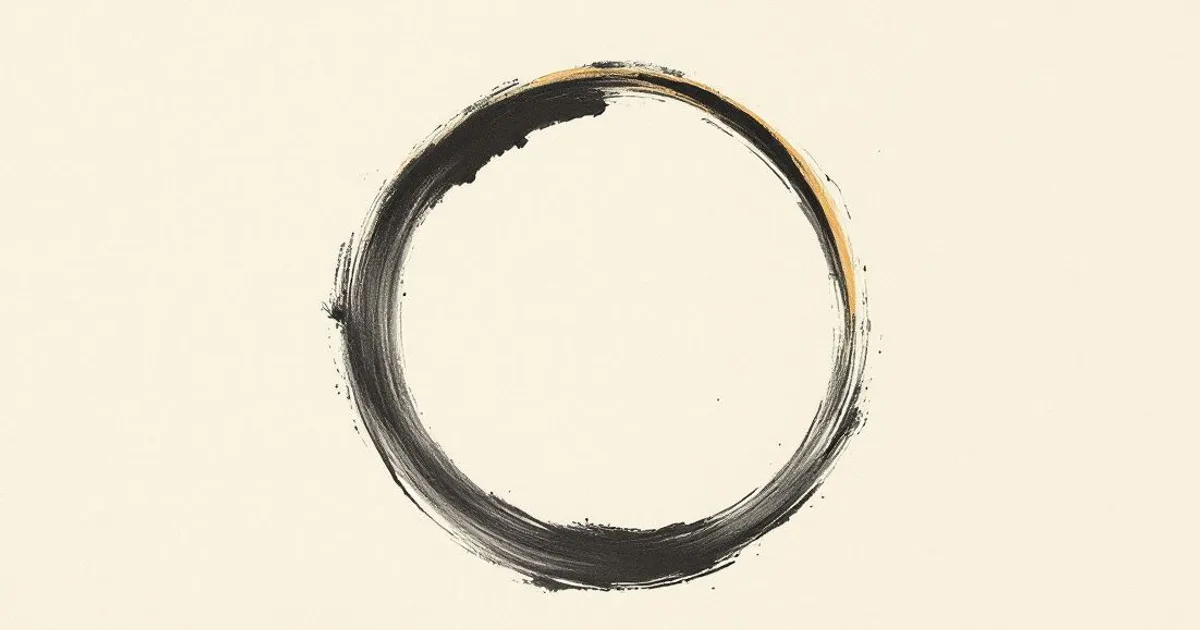
Kintsugi (金継ぎ, “golden joinery”) is the traditional Japanese art of repairing broken pottery by mending the cracks with lacquer and powdered gold, so the repair is highlighted rather than hidden. It is a craft and aesthetic, not a Buddhist teaching — though it grew up beside the tea ceremony and shares Buddhism’s acceptance of impermanence and imperfection.
What is kintsugi pottery?
In kintsugi (also called kintsukuroi, “golden repair”), a shattered bowl or cup is not thrown away. Its pieces are joined back together with urushi — a natural lacquer made from the sap of the lacquer tree — and the seams are then dusted or mixed with powdered gold, silver, or platinum. The result is a vessel laced with bright veins of metal where it once broke. The damage is not disguised; it is illuminated. As a sensibility, kintsugi “treats breakage and repair as part of the history of an object, rather than something to disguise.”
That single move — making the mend visible, even precious — is why the word has travelled so far beyond pottery. But it is worth being clear from the start about what kintsugi is and is not.
Is kintsugi Buddhist?
Short answer: no, not directly. Kintsugi is a Japanese craft with a philosophical flavour, and it sits within the broader family of ideas often gathered under Eastern wisdom traditions. It carries genuine resonances with Buddhism — but it is not a teaching the Buddha gave, not a practice from any sutra, and not a doctrine of any Buddhist school.
Three honest distinctions are worth holding:
- It is a Japanese art. Kintsugi is a repair technique and an aesthetic tradition that developed in Japan, bound up with ceramics and the tea ceremony. That is its primary identity.
- It is influenced by, and harmonises with, Buddhist-adjacent values. Kintsugi is an expression of wabi-sabi — the Japanese aesthetic that finds beauty in imperfection, age, and impermanence — and wabi-sabi in turn carries Zen and Buddhist resonances. Some writers also connect kintsugi to mushin, a Japanese ideal of non-attachment and acceptance of change. So the spirit of kintsugi rhymes with Buddhist ideas, especially impermanence.
- It is not a Buddhist doctrine. The Buddha taught nothing about gold lacquer. There is no canonical “teaching of the broken bowl.” When modern self-help frames kintsugi as a “Buddhist” lesson about resilience and honouring your scars, that is a popular extension — a lovely metaphor, but a contemporary one, not something handed down in the tradition.
We make this distinction because flattening a Japanese craft into “ancient Buddhist wisdom” is exactly the kind of well-meaning blur that makes Eastern ideas harder to understand, not easier. Kintsugi is beautiful enough on its own terms; it does not need a false pedigree.
How kintsugi works
The technique is patient, exacting, and genuinely old.
The materials
The heart of kintsugi is urushi, the lacquer drawn from the sap of the lacquer tree (Toxicodendron vernicifluum), the same material behind centuries of East Asian lacquerware. To bond the broken edges, artisans traditionally mix urushi with a paste of wheat flour or rice. The metal is real: fine gold powder is the classic finish, though silver and platinum are also used, giving the seams their characteristic shimmer.
The process
Broadly, the work moves through three stages:
- Joining. The clean break edges are coated with lacquer adhesive and pressed back together, then left to cure.
- Filling and shaping. Any gaps, chips, or missing fragments are built up and smoothed with lacquer-based fillers, so the surface is continuous.
- Gilding. The seams are painted with a final layer of lacquer — often a coloured urushi, “usually red, although occasionally black” — and while it is still tacky, metal powder is dusted or sprinkled over it, leaving “lines of gold or silver running through the ceramic.”
A crucial, unglamorous fact: urushi cures slowly, and it hardens best in humidity. Repaired pieces are often left to set in a damp, enclosed environment for anywhere from a couple of days to a couple of weeks at each stage. A single mended bowl can take many weeks from break to finished gold seam. This is craft time, not instant repair — part of why the finished object feels considered rather than merely fixed.
The three approaches
Practitioners describe a few broad methods, depending on what survives of the original:
- The crack method (hibi) — where the pieces all remain, joined with only thin lines of gold tracing the fracture.
- The piece method — where a fragment is missing, and the gap is filled entirely with gold-flecked lacquer, leaving a solid golden patch.
- The joint-call method (yobitsugi) — where a missing shard is replaced with a fragment from a different vessel altogether, creating a deliberate patchwork of mismatched ceramics.
That last method makes the philosophy especially vivid: the new piece does not pretend to match. The history of the object — including its accidents and its borrowings — is written openly on its surface.
Where kintsugi came from
Here honesty matters again, because the most-repeated origin story is a tradition, not a documented fact.
The popular account runs like this: in the late 15th century, the shogun Ashikaga Yoshimasa sent a broken Chinese tea bowl back to China for repair. It returned mended with ugly metal staples, which he found displeasing — and so, the story goes, Japanese craftspeople were set to work devising a more beautiful way to repair broken ceramics, and kintsugi was born.
It is a satisfying tale, and you will find it everywhere. But it should be told with care. As reference sources put it plainly, “it is unclear how much of the story is true,” and historians generally treat the Yoshimasa legend as legendary rather than certain. The honest position is that the exact origin of kintsugi is unknown. What is well established is the wider setting: by the era of the Japanese tea ceremony, a taste had developed for repairs that were honoured rather than hidden, and kintsugi became closely associated with that tea culture and its wabi-sabi aesthetic. So rather than a single inventor, picture a sensibility — the prizing of the imperfect, the aged, the mended — within which this particular golden craft took shape.
What kintsugi means as a metaphor
Even stripped of any false doctrine, kintsugi carries a real and resonant idea. Because the repair is made of gold and made visible, the broken object often ends up more striking, more valuable, and more storied than it was when whole. The fracture is not erased from its biography; it is gilded into it.
It is easy to see why this image speaks to people thinking about their own lives, grief, failures, or scars: the suggestion that what has been broken and mended can become not lesser but richer for the mending. That is a genuinely worthwhile reflection — and it is fair to notice that it harmonises with Buddhist themes. The tradition’s insistence on impermanence — that all conditioned things crack, age, and pass — sits naturally beside an art that builds its beauty out of breakage rather than denying it. And the wider Buddhist work of letting go, of loosening our grip on how we wish things had stayed, rhymes with a craft that accepts the break as already part of the story.
But notice the word harmonises. Kintsugi is a resonance with Buddhist ideas, not a delivery of them. The metaphor is real; the “ancient Buddhist teaching” framing is not. Held that way — as a Japanese art with a quiet philosophical kinship to impermanence and acceptance — kintsugi is both more honest and, if anything, more beautiful. It belongs to the same broad conversation as the other strands of Eastern philosophies, without having to borrow a scripture it never had.
The bowl, mended in gold, makes the point better than any explanation: nothing here pretends to be unbroken. That is exactly where its beauty comes from.
Frequently asked questions
What is kintsugi?
Kintsugi (金継ぎ, 'golden joinery'; also called kintsukuroi) is the traditional Japanese art of repairing broken pottery by mending the cracks with urushi lacquer dusted or mixed with powdered gold, silver, or platinum. Instead of hiding the damage, the repair highlights it in shining gold seams, so the break becomes part of the object's history and beauty rather than a flaw to disguise.
What does kintsugi mean?
The word kintsugi means 'golden joinery,' from kin ('gold') and tsugi ('to join' or 'mend'). The alternate name kintsukuroi means 'golden repair.' Both point to the same idea: a mend made deliberately visible and even beautiful, rather than concealed.
Is kintsugi a Buddhist teaching?
No. Kintsugi is a Japanese craft and aesthetic, not a Buddhist doctrine. It grew up alongside the tea ceremony and the wabi-sabi sensibility, which carry Zen and Buddhist resonances — and it harmonises with the Buddhist acceptance of impermanence. But the Buddha taught nothing about repairing pottery, and treating kintsugi as a 'Buddhist' resilience lesson is a modern, popular extension, not scripture.
How is kintsugi actually done?
Traditionally, the broken pieces are glued back together with urushi — a natural lacquer made from tree sap — often mixed with flour or rice paste. The repaired seams are then painted with more lacquer and sprinkled or mixed with fine metal powder, usually gold. Because urushi cures slowly in humidity, a single piece can take weeks to finish.
Where did kintsugi come from?
Its exact origin is unknown. A popular tradition links it to the 15th-century shogun Ashikaga Yoshimasa, who is said to have sent a broken Chinese tea bowl to China and disliked the ugly metal staples it came back with, prompting Japanese craftspeople to invent a finer repair. Historians treat this as legend rather than verified fact, but kintsugi did become closely tied to the Japanese tea ceremony and the wabi-sabi aesthetic.
Sources
- Kintsugi (ceramics) (entry), Encyclopædia Britannica
- Kintsugi (entry), Wikipedia
- Wabi-sabi (entry), Encyclopædia Britannica