Recovery Dharma: What It Is and How Meetings Work
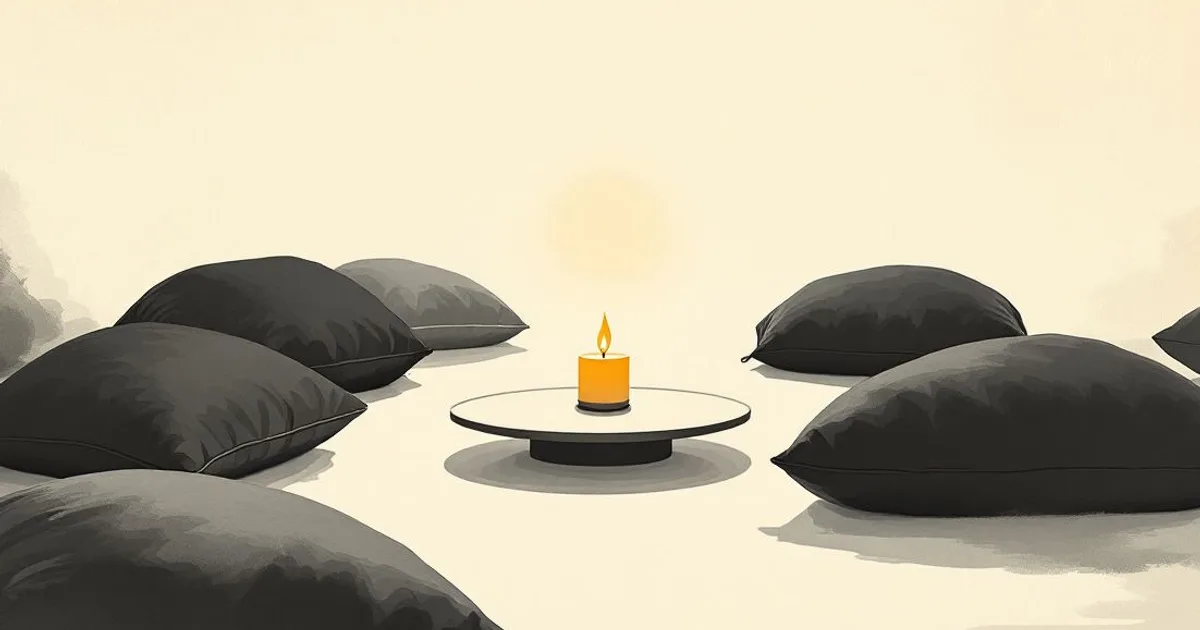
Recovery Dharma is a peer-led programme and community for recovery from addiction that uses Buddhist practices and principles: meditation, the Four Noble Truths, the Eightfold Path, written inquiry and the support of a group. It formed in 2019 out of the Refuge Recovery community. Meetings run in person, online and hybrid, they ask only for a donation if you can give one, nobody has to be Buddhist, and the programme’s book is a free download.
If you searched for “dharma recovery”, you are probably looking for Recovery Dharma; other approaches are listed further down. Recovery Dharma is a modern programme run by people in recovery, inspired by Buddhist teaching, not a practice any Buddhist tradition handed down, and its book says it “does not encompass all Buddhist traditions, lineages, teachings, and practices” (2nd ed., p. X). It is peer support, not treatment: the 2019 joint statement said it would “leave the provision of treatment options to others”, and Amy Reed’s statement for it that month recognised “the importance of these resources to individuals recovering from addiction”. Its meeting script says it is “not the only path to recovery and many may choose to combine these practices with other recovery programs” (p. 147).
What Recovery Dharma is
Recovery Dharma describes itself as “a peer-led movement and community” seeking freedom from “the suffering of addiction”, “founded on, and inspired by, Buddhism that originated in India and later on flourished in other regions of Asia” (About). Its book covers “addiction of all kinds” (p. IX), from alcohol and drugs to process addictions such as gambling, technology, shopping and eating (p. X).
Its Core Intentions call the programme “peer-led and non-theistic” and independent of “any other organization, agency, teacher, or group”. Recovery Dharma Global, a non-profit with a volunteer board elected by its global sangha, publishes the literature and keeps the meeting list. Local sangha groups that commit to the Core Intentions are “autonomous in their practices”, and the site’s content reflects members’ experience, “not the opinions of professionals or Buddhist teachers” (Diversity & Accessibility).
How Recovery Dharma began
Recovery Dharma came out of a split in Refuge Recovery, the Buddhist-inspired movement founded by Noah Levine.
- The organisations’ joint statement (6 July 2019) says the Refuge Recovery board and Levine “have had differing views about the path forward”. Levine’s team would form Refuge Recovery World Services, and the board a new non-profit, Recovery Dharma Collective, “entirely peer-led and democratically run”; all parties withdrew their legal claims (joint statement).
- Tricycle (13 July 2019) reported that Levine had resigned from the Refuge Recovery board in 2018 following allegations of sexual harm at his other organisation, Against the Stream, and that the board later sued him when he refused to give up the name, and he countersued (Tricycle). The Against the Stream findings and Levine’s denial are set out in our guide to Buddhist podcasts.
- A 2023 peer-reviewed study says Recovery Dharma was founded by former members of Refuge Recovery who “wanted to shift away from the leadership-based Refuge Recovery program to a peer-led approach” (LaBelle et al. 2023).
On 11 July the transition team wrote that they had “tentatively named this new movement Recovery Dharma”. Two days later, at Refcon5, Amy Reed said for the team: “We will follow no leader, but trust in the wisdom of the Dharma and in each individual’s own potential for recovery and awakening” (Refcon5 statement).
The Recovery Dharma book
The programme’s text is Recovery Dharma: How to Use Buddhist Practices and Principles to Heal the Suffering of Addiction, first published in 2019. The second edition, “Recovery Dharma 2.0”, is copyright 2023 Recovery Dharma Inc. under a Creative Commons licence, CC BY-NC-SA 4.0 (non-commercial, share-alike).
On the book page the PDF and EPUB are free; paperback, Kindle and Audible editions are sold, as is a paperback Inquiry Workbook. The first edition also exists as a free audiobook and in Spanish, German and Dutch. It names no individual authors, crediting “volunteers of our global sangha”.
What Recovery Dharma teaches
The book says it is structured around the “three jewels” of Buddhism, the Buddha, the Dharma and the Sangha (p. IX; see the Three Jewels), presented “without the requirement of becoming a Buddhist”. One inquiry asks what it means to take refuge in them.
The Four Noble Truths, in its own words
Recovery Dharma pairs each of the Four Noble Truths with a commitment, read aloud at meetings (p. 8):
- There is suffering. “We commit to understanding the truth of suffering.”
- There is a cause of suffering. “We commit to understanding that craving leads to suffering.”
- There is a way of ending suffering. “We commit to understanding and experiencing that less craving leads to less suffering.”
- There is a path that leads to ending suffering. “We commit to cultivating the path.”
That is an adaptation for recovery. The second truth as the Dhammacakkappavattana Sutta (SN 56.11), traditionally the Buddha’s first discourse, gives it:
Now this is the noble truth of the origin of suffering. It’s the craving that leads to future lives, mixed up with relishing and greed, taking pleasure there wherever it alights. That is, craving for sensual pleasures, craving for continued existence, and craving for nonexistence.
The book reads craving (Pāli taṇhā) in the light of addiction: “repetitive craving” and the drive to satisfy it lead to “what we now know as addiction” (p. 13). The sutta’s frame, reaching to future lives, is wider; see the cessation of craving.
The Eightfold Path as “Wise” factors
Recovery Dharma calls the factors “Wise”, not “Right”: Wise Understanding, Intention, Speech, Action, Livelihood, Effort, Mindfulness and Concentration (p. 16). See the Noble Eightfold Path for the factors as the texts give them. The book adds that the path can be “both a religious and non-religious journey”, with prayer, worship and ceremony left to each person (p. 17).
The Practice: Recovery Dharma’s seven practices
Seven practices, read at meetings, make up The Practice (pp. XV-XVI):
- Renunciation. The intention of abstinence from alcohol and other addictive substances, or, for process addictions, “wise boundaries”, preferably with a mentor or “therapeutic professional”. On the traditional precept, see Buddhism and alcohol.
- Meditation. A daily practice; the book’s appendix includes metta and forgiveness meditations.
- Meetings. Recovery meetings in person or online, whether with Recovery Dharma, other Buddhist communities or other recovery fellowships.
- The Path. Understanding the Four Noble Truths and practising the Eightfold Path daily.
- Inquiry and Investigation. Written inquiries, worked with a mentor, therapist, friend or group. “Some approach it in the same way as inventories in 12-Step programs, and some don’t” (p. 50). The book warns the questions may “activate trauma” and suggests a self-care strategy first (p. XIV).
- Sangha, Wise Friends, Mentors. Relationships within a recovery community. Mentoring is informal: “nobody is ‘certified’ or ‘authorized’ to be a mentor” (p. 49); the website describes “inquiry circles” of three to ten people who meet weekly (Friends & Mentors).
- Growth. Continued study through reading, Dharma talks, sanghas and retreats.
The book retells (p. 46) the Upaḍḍha Sutta (SN 45.2), in which the Buddha tells Ānanda that good friends are not half but “the whole of the spiritual life” (trans. Sujato).
The book notes that sangha “originally described monastic communities of ordained monks and nuns” and in many traditions has come to include the wider spiritual community (p. 42). For its traditional senses, see what is the Sangha?
What a Recovery Dharma meeting is like
“Every meeting is a meditation meeting at Recovery Dharma,” its meeting materials say. The book’s suggested format, which groups may change (pp. 147-152), runs like this:
- A volunteer facilitator opens: “I am not a Buddhist teacher, nor do I have any particular authority in this meeting.”
- Members read The Practice, the Four Noble Truths and the Eightfold Path.
- Introductions, with no need to identify “by anything other than your name”.
- A guided meditation; anyone may “tap the brakes” if strong feelings come up, for example by opening their eyes.
- A reading, topic or speaker, then sharing: three minutes each in the script, with no comments on others’ shares or advice.
- A reminder that who was there and what was said stay confidential.
- A basket for dāna, generosity: “Please give what you can”.
- A closing reading, the Dedication of Merit.
Nobody has to speak, “passing is always an option”, and there is no requirement “to become a Buddhist or serious practitioner” (p. 43). The book says there are “no requirements for attendance other than a respectful curiosity” (p. 49).
Finding a meeting. Recovery Dharma’s Beginners page points to “hundreds of online, hybrid, and in-person meetings” on its meeting list; a Type filter finds formats and affinity meetings, such as BIPOC or mental-health meetings. With no meeting nearby, the site suggests starting one with at least two people sharing roles such as facilitator and meditation leader.
Recovery Dharma, Refuge Recovery and 12-step programmes
People may belong to more than one of these programmes, and this page does not rank them.
Refuge Recovery continues. It grew from Noah Levine’s Refuge Recovery: A Buddhist Path to Recovering from Addiction (HarperOne, 2014). Refuge Recovery World Services calls it “a Buddhist-oriented, non-theistic recovery program”; Levine leads a monthly First Thursday talk, and its own online and in-person meetings are listed on refugerecovery.org. Its About page says Levine donated the book’s copyright, trademark and proceeds to it in 2020, and words the first truth as “Addiction Creates Suffering”; Recovery Dharma’s is “There is suffering”.
12-step programmes such as Alcoholics Anonymous have twelve steps: Step 2 speaks of “a Power greater than ourselves”, and Steps 3 and 11 of God “as we understood Him” (AA). Recovery Dharma has no steps and calls itself non-theistic. Its book says it is “fully compatible with other spiritual paths and programs of recovery” (p. XI), and in a survey of 209 members published in 2023 (LaBelle et al.), 45.9% were also in a 12-step programme and 70.8% had been. In place of sponsors it has mentors: its FAQ calls a mentor “similar to the 12-step concept of a sponsor” in giving one-to-one guidance, but “non-hierarchical”, and some members say “Dharma Buddy” instead.
Other Buddhist-inspired recovery approaches
- Eight Step Recovery, co-founded by Valerie Mason-John and Paramabandhu Groves, has a book from Windhorse whose new edition includes a guide to running its meetings; Mason-John’s site says it “is open to everyone”.
- Buddhism with the Twelve Steps. Kevin Griffin, author of One Breath at a Time: Buddhism and the Twelve Steps and a co-founder of the Buddhist Recovery Network, records his Tuesday morning Zoom classes as the podcast Dharma and Recovery; see our guide to Buddhist podcasts.
- Mindfulness-Based Relapse Prevention (MBRP) is covered on Buddhism and addiction.
What research exists on Recovery Dharma
We found three peer-reviewed papers that report surveys of Recovery Dharma members; Onawa LaBelle and Noel Vest are authors of all three. None can show whether the programme works: one is descriptive, and two report associations and state their limits.
- LaBelle et al. (2021) outlines Recovery Dharma’s history and describes its members from an online survey of 209.
- LaBelle et al. (2023) reports a one-time survey of 209 members (the same number as the 2021 paper), recruited through Recovery Dharma’s own channels. More mindfulness, more frequent meditation and more perceived support from Recovery Dharma went with higher “recovery capital”, the resources people bring to recovery. Being cross-sectional, the authors write, “it is impossible to determine” whether these cause it. The sample was 83.7% White and 90% US-based.
- Wang et al. (2024) surveyed 122 members twice, six months apart, in 2020, with no control group and 39% attrition; the first author declared a volunteer seat on the Recovery Dharma Global board. Difficulty regulating emotions predicted recovery capital over and above mindfulness; mindfulness rose, but recovery capital did not change. The authors call theirs a “preliminary study” that supports the programme’s practices “as a valuable addiction recovery pathway”, and write that without a control group “it is not possible to definitively determine the causal factors”.
None of these studies compared Recovery Dharma with another programme. A 2026 US study of other mutual-help groups for alcohol problems concluded that “it remains unclear whether other second-wave MHGs (e.g., Recovery Dharma) are also efficacious”, MHGs being mutual-help groups (Zemore et al. 2026). Research on mindfulness courses such as MBRP is not research on Recovery Dharma.
Where to find support
If you are struggling now, a person who can help matters more than any programme:
- Your doctor. The NHS says addiction “is a treatable condition” and suggests seeing a GP or contacting an organisation that specialises in addiction (NHS).
- US: the 988 Suicide & Crisis Lifeline: call or text 988, free and confidential, any hour, including for alcohol or drug use concerns.
- US, treatment referral: SAMHSA’s National Helpline, 1-800-662-HELP (4357), for “treatment referral and information, 24/7”, as its FindTreatment.gov site lists it.
- UK and Ireland: Samaritans, free on 116 123, any time.
- UK, drugs: FRANK, 0300 123 6600, 24 hours a day, or text 82111.
- Elsewhere: Find A Helpline lists verified helplines in more than 175 countries.
For practice in daily life, see Buddhism in everyday life.
Frequently asked questions
Is Recovery Dharma free?
Yes. Meetings have no fee: the suggested format passes a basket for dana, the Buddhist practice of generosity, and asks people to give what they can. The book's PDF and EPUB are free downloads from recoverydharma.org, and paperback, Kindle and Audible editions are sold for those who want them. The board members who run the non-profit serve as volunteers.
Do you have to be Buddhist to go to Recovery Dharma?
No. The programme's book says it offers Buddhist practices and principles without the requirement of becoming a Buddhist, and that there is never any requirement to believe in anything. Its core intentions call it non-theistic. Prayer, worship and ceremony are left to each person. You also do not have to speak at a meeting: passing is always an option.
What is the difference between Recovery Dharma and Refuge Recovery?
Both grew out of Refuge Recovery, based on Noah Levine's 2014 book. In 2019 the Refuge Recovery board and Levine settled their lawsuits: the board formed Recovery Dharma, and Levine's team Refuge Recovery World Services, which has held his book's copyright since 2020. The joint statement said his programme includes teacher-led retreats and professional treatment options; Recovery Dharma has its own volunteer-written book, names no approved teachers and leaves treatment to others.
Is Recovery Dharma a 12-step program?
No. It has no steps and does not ask anyone to believe in a higher power; it is built on the Four Noble Truths, the Eightfold Path and seven practices. Its FAQ says it is not based on the 12 Steps but is compatible with them for those who find them helpful, and in one survey of members, published in 2023, 45.9% were also currently involved in a 12-step programme.
Does Recovery Dharma have sponsors?
Not by that name. Recovery Dharma has mentors, which some members call Dharma Buddies. Its FAQ says the relationship is like a 12-step sponsorship in giving one-to-one guidance, but non-hierarchical: the two meet as equals. There is no set requirement for time in recovery to be a mentor, and the book says nobody is certified or authorized to be one.
Are there online Recovery Dharma meetings?
Yes. Recovery Dharma lists hundreds of online, hybrid and in-person meetings on recoverydharma.org, and its book notes that many online meetings can be joined by phone. A Type filter on the meeting list finds particular formats and meetings for specific groups, such as BIPOC, LGBTQIA+, or women and nonbinary members.
Sources
- Recovery Dharma Global, 'About': self-description as a peer-led movement and community founded on and inspired by Buddhism; board members elected by the global sangha and serving as volunteers; the board's tasks
- Recovery Dharma: How to use Buddhist practices and principles to heal the suffering of addiction, 2nd ed. (Recovery Dharma Global; copyright 2023 Recovery Dharma Inc.; CC BY-NC-SA 4.0): Preface and introduction pp. IX-XIV, The Practice pp. XV-XVI, Four Noble Truths p. 8, Second Noble Truth p. 13, Eightfold Path pp. 16-17, Sangha pp. 41-50 (monastic origin of the word p. 42, no requirement to become a Buddhist p. 43, Ananda story p. 46, no requirements for attendance and mentors p. 49), Meeting Format pp. 147-152; free PDF and EPUB on the book page
- Recovery Dharma, 'Frequently Asked Questions' (PDF): no requirements for membership; not based on the 12 Steps but compatible with them; mentors, Dharma Buddies and sponsors; no set time in recovery to be a mentor
- Recovery Dharma, 'Core Intentions': peer-led and non-theistic; confidentiality; peer support given freely; independence
- Recovery Dharma, 'Beginners': the seven essential ingredients of The Practice; hundreds of online, hybrid and in-person meetings
- Recovery Dharma, meeting list, with its Type filter
- Recovery Dharma, 'Meeting Materials': every meeting a meditation meeting; the four standard readings
- Recovery Dharma, 'Start a Meeting': two people or more; facilitator and meditation person
- Recovery Dharma, 'Friends & Mentors': inquiry circles of three to ten wise friends who meet weekly
- Recovery Dharma, 'Diversity & Accessibility': affinity meetings; sangha groups that commit to the Core Intentions are autonomous in their practices; site content reflects members' experience
- Joint Statement of the Board of Directors of Refuge Recovery and Noah Levine et al., 6 July 2019: dissolution of the Refuge Recovery non-profit, Refuge Recovery World Services and Recovery Dharma Collective, withdrawal of legal claims
- Recovery Dharma transition team, 'A message from the Recovery Dharma transition team', 11 July 2019: settlement, new non-profit 'tentatively named' Recovery Dharma
- Amy Reed, 'REFCON5 State of the State: Recovery Dharma Statement', 13 July 2019
- Karen Jensen and Matthew Abrahams, 'Buddha Buzz Weekly: Refuge Recovery Splits', Tricycle: The Buddhist Review, 13 July 2019
- Refuge Recovery World Services, home page: 'a Buddhist-oriented, non-theistic recovery program'; meetings, meditation and personal inventory, mentorship, retreat and service; Noah Levine's First Thursday talks; online and in-person meeting finder
- Refuge Recovery World Services, 'About': its Four Truths wording and Noah Levine's 2020 donation of the book's copyright, trademark and proceeds
- Publishers Weekly review of Noah Levine, Refuge Recovery: A Buddhist Path to Recovering from Addiction (HarperOne, 2014), ISBN 978-0-06-212284-1
- Alcoholics Anonymous, 'The Twelve Steps'
- Onawa LaBelle, Matthew Meeks, Noel Vest, Maurissa Hastings and Tayler Harding, 'Recovery Dharma: Exploration of a Buddhist-based mutual help organization for the treatment of addiction', Journal of Social Work Practice in the Addictions 22(3): 175-187 (online 2021), online survey, N = 209
- Onawa LaBelle et al., 'The role of mindfulness, meditation, and peer support in recovery capital among Recovery Dharma members', Journal of Substance Use and Addiction Treatment 145 (2023): 208939, cross-sectional survey, N = 209
- Vanessa Wang, Bryant M. Stone, Noel Vest and Onawa P. LaBelle, 'Emotion Regulation Predicts Recovery Capital Beyond Mindfulness and Demographic Variation in Recovery Dharma', Addiction Research & Theory 32(5) (2024): 346-352, two surveys six months apart, n = 122, no control group
- Sarah E. Zemore, Camillia K. Lui, Amy A. Mericle, Libo Li, Priscilla Martinez and Christine Timko, 'Second-wave mutual-help groups: Examining effectiveness for individuals with alcohol use disorders in the longitudinal, U.S. national PAL Study cohorts', International Journal of Drug Policy 147 (2026): 104921
- Dhammacakkappavattana Sutta (SN 56.11), 'Rolling Forth the Wheel of Dhamma', trans. Bhikkhu Sujato, SuttaCentral (CC0)
- Upaḍḍha Sutta (SN 45.2), 'Half the Spiritual Life', trans. Bhikkhu Sujato, SuttaCentral (CC0)
- Windhorse Publications, Valerie Mason-John and Paramabandhu Groves, Eight Step Recovery: Using the Buddha's Teachings to Overcome Addiction (new edition)
- Valerie Mason-John, 'Eight Step Recovery'
- Kevin Griffin: Dharma and Recovery, Apple Podcasts listing: recordings of his Tuesday morning Zoom classes; author of One Breath at a Time: Buddhism and the Twelve Steps; co-founder of the Buddhist Recovery Network
- SAMHSA, FindTreatment.gov: National Helpline, 1-800-662-HELP (4357), treatment referral and information, 24/7
- 988 Suicide & Crisis Lifeline (US)
- Samaritans, 'Contact Samaritans' (UK and Ireland)
- FRANK, 'Contact Frank' (UK)
- Find A Helpline
- NHS, 'Addiction: what is it?'