The Blind Men and the Elephant (Buddhism)
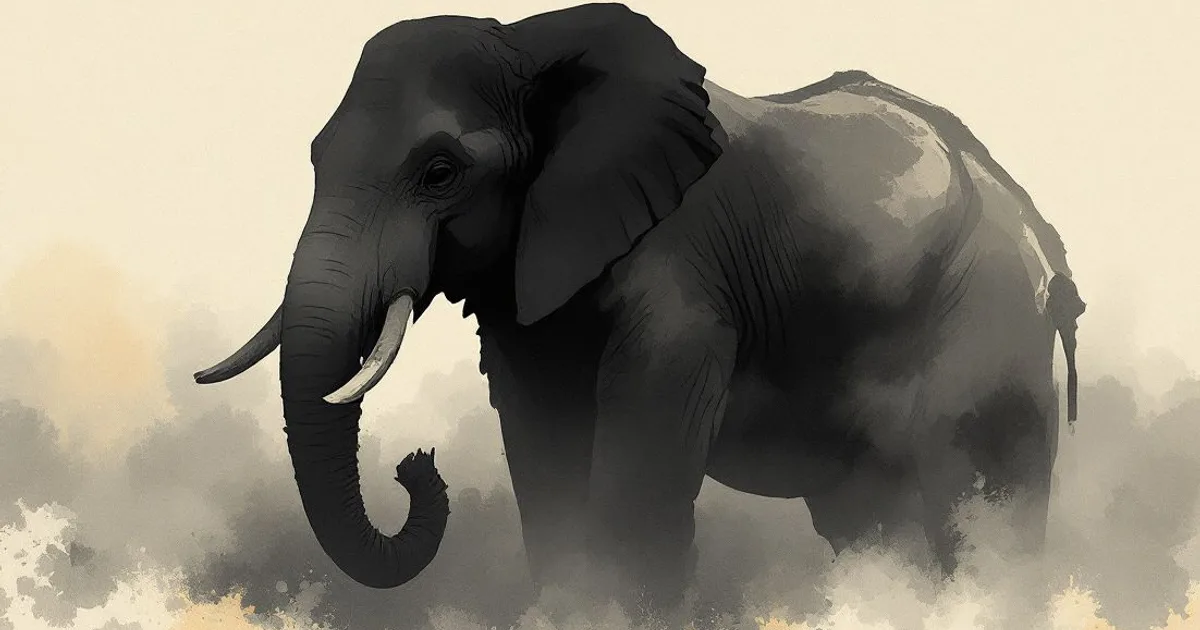
In the parable of the blind men and the elephant, a king has several people blind from birth each feel a different part of an elephant — and each then insists, fiercely, that the whole elephant is exactly like the part they touched. They argue, and finally come to blows.
The Buddha told it to show how people who grasp only a fragment of the truth mistake it for the whole — and quarrel.
The setting: ten propositions and one formula
The parable does not arrive out of nowhere, and its frame carries half the meaning. The discourse is Udāna 6.4, known in English as the Tittha Sutta (Bhikkhu Sujato titles it “Followers of Various Other Religions”). The Buddha is staying near Sāvatthī in Jeta’s Grove, and several “ascetics, brahmins, and wanderers who followed various other religions” are residing there, “holding different views, beliefs, and opinions.” The discourse then lists exactly what they were arguing about — ten propositions, in pairs and fours: the cosmos is eternal, or it is not; it is finite, or infinite; the soul and the body are one and the same, or they are two; a realized one exists after death, or does not, or both, or neither. These are the same ten questions the Buddha declines to settle in the poisoned arrow.
The ten claims, though, matter less than the clause each of them is sealed with. In the Pali every position closes idameva saccaṁ moghamaññaṁ — in Bhikkhu Sujato’s rendering, “This is the only truth, anything else is futile.” That formula, repeated ten times before an elephant is so much as mentioned, is what the parable is actually about: not the content of a view, but the grip in which it is held.
They were fighting, quarreling, and disputing, continually wounding each other with barbed words: “Such is Truth, such is not Truth! Such is not Truth, such is Truth!”
Mendicants returning from almsround report the scene to the Buddha, and he answers with a story. It is the first of three consecutive discourses on this same Sāvatthī quarrel (Ud 6.4–6.6), and the only one with an elephant in it; the second ends on a different picture of the same failure, of people who “founder in mid-stream, without reaching that objective.”
The story
Once, in that same Sāvatthī, a king told a man to gather everyone in the city who had been blind from birth, and then to show them an elephant. Not an elephant each — a part each. The discourse names nine parts, and at every one of them the man says the same thing.
To some of the blind people he showed the elephant’s head, saying, ‘Here is the elephant.’ To some of them he showed the elephant’s ear, saying, ‘Here is the elephant.’ To some of them he showed the elephant’s tusk, saying, ‘Here is the elephant.’
Head, ear, tusk, trunk, flank, leg, thigh, tail, and the tip of the tail: nine, not the six of the poem most English readers know. Then the king comes and asks them what an elephant is like — and every answer is a household or farmyard object, the shape a hand already knows.
| Part shown | Bhikkhu Sujato | Ṭhānissaro Bhikkhu |
|---|---|---|
| head | a pot | a jar |
| ear | a winnowing fan | a winnowing basket |
| tusk | a ploughshare | a plowshare |
| trunk | a draft-pole | the pole of a plow |
| flank (body) | a storehouse | a granary |
| leg (foot) | a pillar | a post |
| thigh (hindquarters) | a mortar | a mortar |
| tail | a pestle | a pestle |
| tip of the tail | a broom | a broom |
(One of the nine is textually uncertain. Ṭhānissaro Bhikkhu notes that for the tusk he reads phālo, “plowshare”, with the Thai and Sri Lankan editions, while the Burmese edition has khīlo, “post” or “stake”.)
Then comes the sentence the retellings almost always drop.
Saying, ‘Such is an elephant, not such! Such is not an elephant, such is!’ they punched each other with their fists. At that, the king was pleased.
Two things there are worth slowing down over. The blind men do not merely disagree — aññamaññaṁ muṭṭhīhi saṁsumbhiṁsu, they hit one another with their fists — which goes a step beyond the frame story, where the wanderers wound one another with words alone; Ṭhānissaro Bhikkhu has “they struck one another with their fists.” And the demonstration ends not on the men but on the king: attamano ahosi, he was pleased, or in Ṭhānissaro’s wording, “That gratified the king.” He arranged the whole thing, and he enjoyed it. Nobody in the story is helped by it. That is the picture the Buddha is holding up — a quarrel that, seen from outside, is somebody else’s entertainment.
What the parable of the blind men and the elephant means
The Buddha’s application is exact, and sharper than the retellings allow. In Ṭhānissaro Bhikkhu’s rendering the wanderers are “wounding one another with weapons of the mouth”, and the closing verse names the fault as belonging to “people seeing one side”. Bhikkhu Sujato’s rendering is blunter still: the wanderers of other religions “are blind and sightless”, and “don’t understand what is beneficial or what is not beneficial, nor what is the truth and what is not the truth.” The men each holding one part are not partly right — in the discourse they are the disputants, and the fault named is ekaṅgadassino, seeing one limb only.
The teaching is a warning against two linked dangers: the arrogance of partial knowledge, and the violence of dogmatic certainty. It is a portrait of every comment-section war and sectarian feud ever fought — people clutching fragments, each sure they alone hold the elephant.
Where the popular version comes from: Saxe’s poem of 1872
Most English-speaking readers have never met the Udāna’s version. What they know is a poem — “The Blind Men and the Elephant,” by John Godfrey Saxe, collected in The Poems of John Godfrey Saxe in 1872 and subtitled, by Saxe himself, “A Hindoo Fable.” Not a Buddhist one.
Saxe changed nearly everything. His blind men number six, not nine groups. No king assembles them and no servant leads them; they go of their own accord, “To learning much inclined,” to see the elephant. Their similes are a wall, a spear, a snake, a tree, a fan and a rope — of which only the fan comes anywhere near the discourse’s winnowing fan. They never come to blows — they dispute “loud and long” and stop there. And then Saxe adds a line that has shaped what the world takes this story to mean far more than the discourse ever did.
And so these men of Indostan Disputed loud and long, Each in his own opinion Exceeding stiff and strong, Though each was partly in the right, And all were in the wrong!
“Each was partly in the right” is Saxe’s, not the Buddha’s. It has no counterpart in the Pali. Udāna 6.4 never credits the blind men with a partial truth; its closing verse names them janā ekaṅgadassino, the folk who see just one part — and seeing one part is the fault being named, not a consolation being offered. The generous pluralism almost everyone hears in this parable comes from the poem, not from the discourse.
Saxe’s own moral, in fairness, lands closer to the discourse than his famous couplet does. He turns the fable on “theologic wars,” whose disputants “prate about an Elephant / Not one of them has seen!” — which is very nearly the Buddha’s complaint about the wanderers of Sāvatthī. It is the penultimate stanza, not the moral, that got detached and quoted.
Is it a Jain story? Anekāntavāda and the elephant
The parable is often credited instead to anekāntavāda, the Jain doctrine of many-sidedness — our own page on Buddhism and Jainism calls it the source of the image. It deserves a more careful answer than either “it’s Buddhist” or “it’s Jain.”
Anekāntavāda is not a story; it is a claim about objects. The Stanford Encyclopedia of Philosophy’s entry on Jaina philosophy calls it “the famous doctrine of the many-sidedness of things (anekāntavāda)” — the position that a real thing genuinely has many aspects, so that our assertions about it hold from one specified perspective at a time. What follows is a systematic openness: “Jaina thinkers are likewise not trying to flatten these irreducible views within a single conception. Rather, they show how each could contribute to the whole picture.”
That is a precise description of the moral most readers take from the elephant — and it is the opposite of what Udāna 6.4 does with the same image. In the Jain frame, each blind man’s report would be a legitimate standpoint on a many-sided object. In the discourse the reports are not standpoints at all; they are the reason the fists come out, and the closing verse names the men as the folk who see one part.
So here is where the evidence leaves us. The image is told outside Buddhism too — Saxe himself presented it as “A Hindoo Fable” — and which tradition told it first cannot be shown from the texts. What can be shown is that the telling we can cite chapter and verse is the Buddha’s, and that it runs the other way — and that the pluralist reading is not the Jain doctrine leaking into Buddhism but, in English at least, Saxe’s added couplet. Where our Jainism page calls anekāntavāda the source of the image, read that as the doctrine the popular version illustrates, not as the origin of the discourse given here.
An honest reading
The parable is so often quoted to mean “all religions are equally true — everyone has a piece of it” that it is worth being careful, because that is not quite the Buddha’s point. In the Udāna, the Buddha is not one of the blind men, fumbling at the dark like the rest. He is more like the one who can actually see the whole elephant. His lesson is not the relativist “everybody’s right,” but something humbler and sharper: beware of mistaking your fragment for the whole, and beware of the quarrels that follow.
That distinction matters, and most retellings blur it. We keep it, because the parable’s real gift is not a flattering “we’re all equally right” but an uncomfortable mirror: how often am I the blind man, certain my corner of the elephant is the entire animal?
Why the parable of the blind men and the elephant still matters
In an age of confident opinion and endless argument, the blind men and the elephant is almost unbearably current. It counsels intellectual humility — the recognition that our view is partial, our certainty usually premature — and it counsels peace, since most of our fiercest disputes are blind men brawling over an elephant none of us has wholly grasped. It pairs naturally with the raft (hold even your views lightly) and with the teaching of emptiness (no fixed position captures the whole of reality). (The discourse itself sits in the Udana, the book of the Pali Canon that gathers the Buddha’s inspired utterances. For how Buddhism holds its own truth-claims, see is Buddhism a religion or a philosophy? For more stories, return to the parables of the Buddha.)
Frequently asked questions
What is the Buddhist parable of the blind men and the elephant?
In the Tittha Sutta (Udana 6.4), a king has people blind from birth shown nine parts of an elephant: head, ear, tusk, trunk, flank, leg, thigh, tail, and the tip of the tail. Each group names a household or farmyard object, a pot, a winnowing fan, a ploughshare, a broom. Then they punch each other, and the king is pleased. The Buddha applies it to sectarian teachers quarrelling from one part.
What is the real meaning of the blind men and the elephant?
It is a warning against dogmatic certainty and pointless dispute. In the discourse the wanderers of other religions are the ones holding a single part, and the Buddha calls them blind and sightless, ending on people who see one side only. The popular reading, in which every tradition holds a piece of the same truth, reverses what the text says about them.
Does the parable mean all religions are equally true?
Not quite. That is the popular reading, but in the Udāna the Buddha is not one of the blind men; he is more like the one who can see the whole elephant. His lesson is not 'everyone is equally right' but 'beware of mistaking a fragment for the whole and fighting over it.' It is a teaching about humility and the folly of dogmatic quarrelling, not a statement that every view is true.
Where does the blind men and the elephant come from?
The version with the Buddha's commentary is the Tittha Sutta, the fourth discourse of the sixth chapter of the Udana ('Exclamations'), in the Pali Canon. The image is told outside Buddhism too, and is often credited to the Jain doctrine of anekantavada, the many-sidedness of things. Which tradition told it first cannot be shown from the texts; the Buddhist telling makes it a critique of sectarian view-clinging.
Who wrote the poem The Blind Men and the Elephant?
John Godfrey Saxe. His rhymed version, subtitled 'A Hindoo Fable', was collected in The Poems of John Godfrey Saxe in 1872, and it is the one most English readers know. Saxe has six blind men who go to the elephant of their own accord, and his similes are a wall, a spear, a snake, a tree, a fan and a rope, none of them from the Pali.
Is 'each was partly in the right' something the Buddha said?
No. That line is Saxe's, from the eighth stanza of his 1872 poem, and it has no counterpart in the Pali. Udana 6.4 never credits the blind men with a partial truth. Its closing verse calls them jana ekangadassino, rendered 'the folk who see just one part' by Bhikkhu Sujato and 'people seeing one side' by Thanissaro Bhikkhu.
Sources
- Udāna 6.4, “Followers of Various Other Religions (1st)” (Paṭhamanānātitthiyasutta; commonly the Tittha Sutta) — ten propositions each sealed with “This is the only truth, anything else is futile”; a king of Sāvatthī has people blind from birth shown nine parts of an elephant, who answer pot, winnowing fan, ploughshare, draft-pole, storehouse, pillar, mortar, pestle and broom, then “punched each other with their fists. At that, the king was pleased.” The closing verse names “the folk who see just one part” (janā ekaṅgadassino). SuttaCentral (trans. Bhikkhu Sujato, CC0)
- Tittha Sutta: Sectarians (1) (Ud 6.4) — the same nine parts rendered jar, winnowing basket, plowshare, pole of a plow, granary, post, mortar, pestle and broom; the sectarians “wounding one another with weapons of the mouth”; “they struck one another with their fists. That gratified the king.”; and the closing verse on “people seeing one side”. The translator's note records the variant behind “plowshare”: phālo in the Thai and Sri Lankan editions, khīlo, “post” or “stake”, in the Burmese. Access to Insight (trans. Ṭhānissaro Bhikkhu, 2012)
- Udāna 6.5, “Followers of Various Other Religions (2nd)” — the second of the three consecutive Sāvatthī discourses on the same quarrel, closing “They founder in mid-stream, without reaching that objective.” SuttaCentral (trans. Bhikkhu Sujato, CC0)
- “The Blind Men and the Elephant: A Hindoo Fable”, in The Poems of John Godfrey Saxe (1872) — six blind men of Indostan; wall, spear, snake, tree, fan and rope; “Though each was partly in the right, And all were in the wrong!”; and a closing moral on “theologic wars”. Wikisource (page scans of the 1872 edition)
- “Jaina Philosophy”, Stanford Encyclopedia of Philosophy (Marie-Hélène Gorisse, 2023) — on “the famous doctrine of the many-sidedness of things (anekāntavāda)” and the Jain doctrine of perspectives: “Jaina thinkers are likewise not trying to flatten these irreducible views within a single conception. Rather, they show how each could contribute to the whole picture.”