Buddhism in Korea: Seon, the Tripitaka and Temple Stay
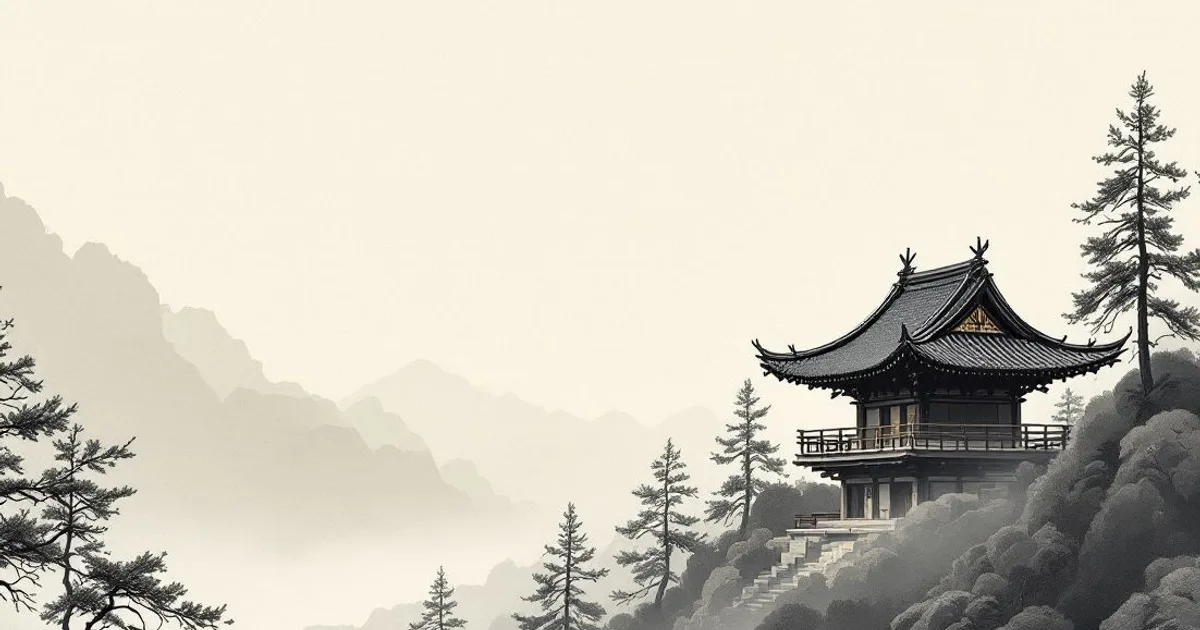
Buddhism in Korea is Mahayana, and its heart is Seon — Korean Zen, the meditation tradition shared with Chinese Chan and Japanese Zen.
Once the state religion of medieval Korea, it produced the astonishing Tripitaka Koreana woodblocks, survived five centuries of suppression, and today — at about 15% of South Koreans and declining — endures as a major cultural and contemplative force.
What is Korean Buddhism?
Korean Buddhism belongs to the Mahayana family of East Asia, and its defining tradition is Seon (Korean Zen). The largest body is the Jogye Order, which distinctively unites Seon meditation with scriptural study rather than treating them as rivals. This page concerns South Korea, whose religious life is well documented; North Korea’s is not comparable and cannot be measured the same way. Korea is not a Buddhist-majority country — most South Koreans today report no religion — but Buddhism remains one of its great historical traditions, visible in mountain monasteries, national treasures and a living meditation practice. For the wider context, see the branches of Buddhism.
A history of glory and suppression
Korean Buddhism has known both the summit of power and centuries in the wilderness — a dramatic arc worth telling honestly.
Buddhism entered the Korean peninsula during the Three Kingdoms period, traditionally in 372 CE, arriving from China. It flourished under Unified Silla (668–935), a golden age of Buddhist art and scholarship that produced masterpieces such as the Seokguram Grotto and Bulguksa temple. Under the succeeding Goryeo dynasty (918–1392) — from which the very name “Korea” derives — Buddhism reached its zenith as effectively the state religion, its monasteries wealthy and its monks powerful.
Then the pendulum swung hard. The Joseon dynasty (1392–1897) adopted Neo-Confucianism as its governing ideology and suppressed Buddhism for some five hundred years — reducing temple lands, restricting the ordination of monks, and pushing the Sangha out of the cities and into the mountains. This is why so many Korean temples sit deep in remote hills to this day: it was there, in the sansa (mountain monasteries), that the tradition survived. That endurance is itself a defining feature of Korean Buddhism’s character — patient, disciplined, and rooted in the mountains.
Seon: the Korean Zen tradition
The living core of Korean Buddhism is Seon — the Korean form of the meditation school called Chan in China, Thiền in Vietnam and Zen in Japan, all descended from the same source and from the Sanskrit dhyāna, “meditation.” (We compare these sister traditions in Chan, Sŏn and Thiền.)
Korean Seon has a distinctive genius for synthesis. The great medieval master Jinul (1158–1210) worked to unite the meditative insight of Seon with the doctrinal study of the scriptural schools, a harmonising spirit that still shapes the Jogye Order, the dominant order of Korean Buddhism today. Korean practice is especially known for ganhwa Seon — meditation on the hwadu, the Korean form of the Zen “critical phrase” or kōan. The result is a tradition that prizes rigorous seated meditation without abandoning the texts, monastic discipline held together with philosophical depth.
The Tripitaka Koreana
Korea’s supreme contribution to Buddhist civilisation is a work of staggering devotion and craft: the Tripitaka Koreana, the complete Buddhist canon carved onto wooden printing blocks.
Commissioned by the Goryeo court in the 13th century, the surviving set was carved between 1237 and 1248 — a monumental national undertaking begun after an earlier set was destroyed in the Mongol invasion of 1232, and understood partly as a spiritual act to invoke the Buddha’s protection for the kingdom. It comprises roughly 81,258 woodblocks (giving it the Korean name Palman Daejanggyeong, the “Eighty-thousand Tripitaka”), and is regarded as the most complete and accurate corpus of the East Asian Buddhist canon in existence. Since 1398 it has been preserved at Haeinsa temple, in storage halls so ingeniously designed for ventilation that the blocks have survived largely intact for centuries — a UNESCO World Heritage treasure.
Korean Buddhism today
Modern Korean Buddhism is a study in contrasts: culturally treasured, spiritually serious, and yet numerically in decline.
By the 2015 census, about 15.5% of South Koreans identified as Buddhist — down sharply from 22.8% a decade earlier — with Protestant Christians (19.7%) now slightly more numerous and a clear majority (about 56%) reporting no religion. The Pew Research Center’s 2024 survey similarly places Buddhists at around 14%. Korea, in other words, is a largely secular society in which Buddhism is a major minority tradition rather than the faith of the majority. (Some of the recorded fall may partly reflect changes in survey method, but the downward trend is real.)
Two features stand out in contemporary practice. The first is the temple stay programme, launched around 2002, which invites anyone — Korean or foreign, Buddhist or not — to live briefly in a mountain monastery and share the monks’ life of meditation, chanting and tea; it has become one of the most inviting doorways into Seon. The second is Won Buddhism, a modern reform religion founded in 1916 by Sotaesan (Park Chung-bin, 1891–1943), centred on the Il-Won-Sang, the “One Circle Image,” as a symbol of ultimate truth. Won Buddhism draws on the Buddhist heritage but is a distinct new religion, not a branch of the traditional Jogye Seon — a distinction worth keeping clear.
Korea among the traditions
Korean Buddhism is a Mahayana tradition of unusual resilience and synthesis: Seon meditation joined to scriptural study, a canon carved in wood as an act of national faith, and a monastic life that outlasted five centuries of suppression in the mountains. Though now a minority in a secular society, it remains one of the treasures of East Asian Buddhism. To see how it connects to its neighbours, read Mahayana Buddhism, its sister meditation traditions in Chan, Sŏn and Thiền, Buddhism in China and Buddhism in Japan, and the global overview in Buddhism around the world. (See also Buddhist documentaries and films.)
Frequently asked questions
What kind of Buddhism is practised in Korea?
Korean Buddhism is Mahayana, and its dominant tradition is Seon — Korean Zen, the meditation school known as Chan in China and Zen in Japan. The largest order is the Jogye Order, which unites Seon meditation with scriptural study and traces its roots to the medieval monk Jinul. Korea is also home to Won Buddhism, a distinct modern Buddhist religion founded in 1916.
What is the Tripitaka Koreana?
The Tripitaka Koreana is the complete Buddhist canon carved onto about 81,258 wooden printing blocks in 13th-century Korea, during the Goryeo dynasty. Carved between 1237 and 1248 to replace an earlier set destroyed in a Mongol invasion, it is the world's most complete and best-preserved corpus of the Buddhist canon in woodblock form. It has been housed at Haeinsa temple since 1398 and is a UNESCO treasure.
What percentage of South Korea is Buddhist?
About 15–16% of South Koreans are Buddhist — 15.5% in the 2015 census — and the share has been declining, down from 22.8% in 2005. Korea is not a majority-Buddhist country: most South Koreans (about 56%) report no religion, and Protestant Christians now slightly outnumber Buddhists. Buddhism nonetheless remains a major cultural and spiritual presence.
What is a Korean temple stay?
Temple stay is a programme that lets visitors — Korean or foreign, Buddhist or not — live in a traditional mountain monastery for a day or more, joining the monks' routine of meditation, chanting, tea and communal work. Launched around 2002, it has become one of the most accessible windows into Korean Seon Buddhism and a well-known feature of the tradition today.
Sources
- Statistics Korea (KOSTAT) — 2015 Population and Housing Census, religion (Buddhist 15.5%, down from 22.8% in 2005)
- UNESCO World Heritage Centre — Haeinsa Temple Janggyeong Panjeon, depositories for the Tripitaka Koreana woodblocks (13th century; ~81,258 blocks)
- Encyclopædia Britannica — Korean Buddhism; the Goryeo and Joseon periods; Sŏn (Korean Zen)
- Won Buddhism, official site (wonbuddhism.org) — founded 1916 by Sotaesan (Park Chung-bin, 1891–1943)