Anathapindika: The Buddha's Foremost Donor and Jetavana
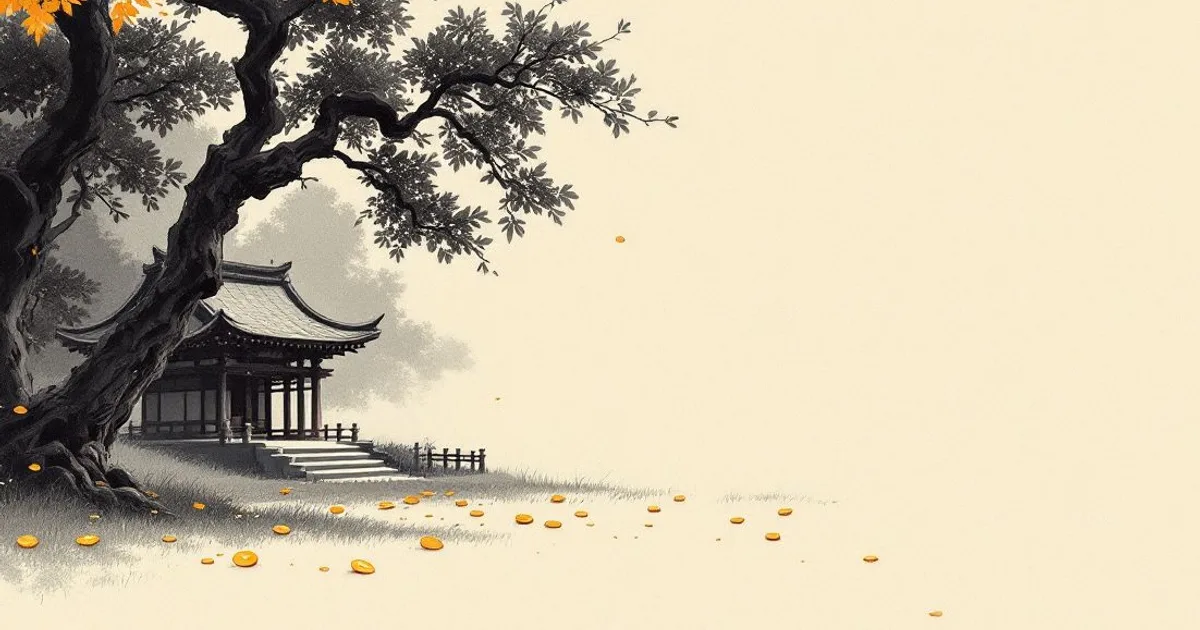
Anāthapiṇḍika was Sudatta, a wealthy householder of Sāvatthī whom the Buddha named foremost of his lay disciples as a donor (AN 1.249). He bought Prince Jeta’s park and built the Jetavana monastery, the setting of a great many of the Buddha’s discourses. The Pali texts make him a stream-enterer from his first meeting with the Buddha, and tell of his death after a last teaching from Sāriputta (MN 143).
- Given name
- Sudatta; Anāthapiṇḍika is a nickname.
- Home
- Sāvatthī (Śrāvastī), capital of the kingdom of Kosala.
- Great gift
- Jeta’s Grove (Jetavana), bought from Prince Jeta and dedicated to the Saṅgha.
- Death
- After Sāriputta’s teaching in MN 143; reborn among the Tusita gods.
Who was Anāthapiṇḍika?
Bhikkhu Sujato’s note on SN 10.8: “His given name was Sudatta, but he is usually known by the sobriquet Anāthapiṇḍika, ‘feeder of the poor’”. Hellmuth Hecker reads the name as one who gives alms (piṇḍa) to the unprotected (a-nātha). The suttas call him a gahapati, a householder; G. P. Malalasekera’s Dictionary of Pali Proper Names calls him “A banker (seṭṭhi) of Sāvatthī” and glosses the name “feeder of the destitute”.
In the Pali Canon’s list of outstanding disciples the Buddha names “the householder Sudatta Anāthapiṇḍika” foremost of his laymen “as a donor” (AN 1.249); the same list names Jīvaka foremost in confidence in an individual (AN 1.256). Sujato counts him in “over twenty discourses in the Saṁyutta and Aṅguttara Nikāyas”. With Visākhā he was one of Sāvatthī’s two great donors (Hecker).
Meeting the Buddha at Rājagaha
SN 10.8 tells the meeting briefly, the Vinaya at length (Kd 16:4). In Rājagaha on business, he found his brother-in-law, a wealthy merchant, busy preparing a meal for the Buddha and his monks. “Did you say, ‘Buddha’?” he asked three times. “It’s rare in the world to hear the word ‘Buddha’.”
He got up three times in the night, thinking it was dawn. As he left the city the light vanished and fear came on him, until an invisible spirit, Sivaka, called out that a hundred elephants, a hundred horses and a hundred thousand jewelled maidens “are not worth a sixteenth part / of a single forward stride!” At the Cool Grove the Buddha saw him coming and said, “Come, Sudatta.” Anāthapiṇḍika thought, “The Buddha calls me by name!” (SN 10.8).
The Vinaya goes on: a graduated talk on giving, ethics and heaven, then the four noble truths, and “the stainless vision of the Truth: ‘Anything that has a beginning has an end.’” That is the formula for stream-entry, the first of the four stages of awakening, as Hecker and Malalasekera both read it. He took refuge and invited the Saṅgha to a meal, refusing even King Bimbisāra’s offer to pay: “There’s no need, sir. I have the means.”
How he bought Jetavana, Jeta’s Grove
He invited the Buddha to Sāvatthī and there looked for somewhere “neither too far from habitation nor too close”, quiet and fit for seclusion. He found Prince Jeta’s park.
He then went to Prince Jeta and said, “Sir, please give me your park to set up a monastery.” “I wouldn’t give it away even if you covered the park with ten million gold coins.” “It’s a deal!” “No it isn’t!” They then asked judges to decide on the matter. They said, “Sir, since you gave a price, the park is sold.” Anāthapiṇḍika then had gold coins brought out in carts and covered the Jeta Grove with ten million coins.
A patch by the entrance was still bare when the prince stopped him: “Let me keep it. It will be my gift.” Anāthapiṇḍika agreed, and Jeta built a gatehouse there. Anāthapiṇḍika built dwellings, halls, wells and ponds, and on the Buddha’s advice dedicated the grove “to the Sangha as a whole, both present and future” — in the Pali, the Saṅgha of the four quarters (cātuddisa).
The grove’s name opens a great many discourses: “At one time the Buddha was staying near Sāvatthī in Jeta’s Grove, Anāthapiṇḍika’s monastery.” Sujato calls it “the monastery at which the Buddha most often stayed”, and the Maṅgala Sutta is among the discourses set there. The commentarial tradition places nineteen of the Buddha’s forty-five rains retreats there (the Dhammapada commentary; Hecker).
What the Buddha taught him
His discourses read like a manual for the lay life:
| Discourse | What Anāthapiṇḍika is taught |
|---|---|
| AN 4.62 | Four happinesses: ownership, using wealth, debtlessness and blamelessness; the others are “not worth a sixteenth part” of the last |
| AN 5.41 | Five reasons to be wealthy, from providing for one’s family to donations for ascetics and brahmins; no regrets if the money runs out |
| AN 3.109 | An unprotected mind lets deeds “fester”, like a bungalow with a bad roof |
| AN 10.92 | The five precepts, the four factors of stream-entry and dependent origination mark a stream-enterer |
| AN 10.93 | He silences a crowd of wanderers; a monk ordained a hundred years, says the Buddha, would have refuted them just as he did |
Two discourses refuse to let giving be the whole path. In AN 9.20 he admits his family gives only “coarse sour gruel with false black pepper”, and the Buddha recalls his own past life as Velāma, whose vast gifts found no worthy recipient. A ladder follows: “It would be more fruitful to build a dwelling especially for the Saṅgha of the four quarters than to feed the mendicant Saṅgha headed by the Buddha” — exactly what Anāthapiṇḍika had done. Refuge, the precepts and a heart of love rank higher still, and highest of all “the perception of impermanence—even as long as a finger-snap”. The second came when he brought some five hundred lay followers:
“Householders, you have supplied the mendicant Saṅgha with robes, almsfood, lodgings, and medicines and supplies for the sick. But you should not be content with just this much. So you should train like this: ‘How can we, from time to time, enter and dwell in the rapture of seclusion?’ That’s how you should train.”
His illness, death and rebirth
Three discourses find him gravely ill. When Sāriputta reminds him of his confidence in the Buddha, the teaching and the Saṅgha, his ethics, and the path from right view to right freedom, his pain dies down (SN 55.26). To Ānanda he says: “Honorable Ānanda, I am not afraid. What have I to fear?” Ānanda replies: “You have declared the fruit of stream-entry” (SN 55.27).
MN 143 is his last illness. Sāriputta, visiting him at home with Ānanda, teaches him to let go: “I shall not grasp the eye, and there shall be no consciousness of mine dependent on the eye”, and so on through the senses, the elements, the aggregates, this world and the next.
When he said this, Anāthapiṇḍika cried and burst out in tears. Venerable Ānanda said to him, “Are you failing, householder? Are you fading, householder?” “No, Honorable Ānanda. But for a long time I have paid homage to the Buddha and the esteemed mendicants. Yet I have never before heard such a Dhamma talk.” “Householder, such Dhamma talk does not strike when teaching white-clothed laypeople. Rather, it strikes when teaching those gone forth.” “Well then, Honorable Sāriputta, let such Dhamma talk strike when teaching white-clothed laypeople as well! There are gentlemen with little dust in their eyes. They’re in decline because they haven’t heard the teaching. There will be those who understand the teaching!”
Not long after, he died and “was reborn in the host of joyful gods” — in Pali tusitaṁ kāyaṁ, the Tusita heaven of the 31 planes of existence. Late one night a radiant deva lit up Jeta’s Grove and praised it in verse: “by these are mortals purified, / not by clan or wealth”. Ānanda guessed it was Anāthapiṇḍika, and the Buddha agreed (MN 143; SN 2.20).
The later legends: poverty, a goddess, a son and a daughter
These stories come from the commentaries, not the suttas: chiefly the Dhammapada commentary, ascribed to Buddhaghosa “without due warrant”, as the 1921 Harvard edition of E. W. Burlingame’s translation puts it.
His poverty. For Dhammapada 119–120 the commentary says he had spent fifty-four crores on Jetavana; traders owed him eighteen more, and eighteen crores of buried family treasure were swept into the sea. Poor now, he still fed the monks, if only with “bird-feed and sour gruel”, and heard the Velāma Sutta (AN 9.20). The goddess over his gate urged him to stop giving, and he threw her out; to win back her home she had to refill his empty storeroom with fifty-four crores. The Buddha then spoke the verses on deeds not yet ripened (see Buddha quotes on karma). Burlingame notes that the story largely abbreviates the introduction to Jātaka 40.
His son. Kāla wanted nothing to do with the Buddha, so his father paid him to keep the Uposatha and learn a verse. He stayed to listen, entered the stream, and refused the money (Dhammapada 178).
His daughter. Culla Subhaddā married into the family of her father’s friend Ugga, who followed other teachers, and invited the Buddha from afar by throwing jasmine flowers into the air (Dhammapada 304).
How the accounts differ
The price. In the Pali Vinaya the coins spread over the grove come to a koṭi: “The Pali just says koṭi, ‘ten million’”, Brahmali notes. The later tradition is far larger: the Dhammapada commentary has him spend fifty-four crores on Jetavana, and Malalasekera’s dictionary gives eighteen crores for the land, as much for the buildings and eighteen more for the dedication festival.
Prince Jeta. In the Pali Vinaya he keeps the last patch as his gift. In the Saṃghabhedavastu, as 84000’s glossary summarises it, the Buddha put Jeta’s name first at the prince’s unspoken wish, Jeta then gave the rest and built the gate, and the Buddha told reciters to keep his name first.
The name. In the Pali the Buddha calls him “Sudatta” unprompted (SN 10.8). In the Chinese parallel SA 592, from the Sarvāstivāda school’s Saṁyuktāgama, the Buddha asks his name only after he has taken refuge; he answers 須達多 (Sudatta) and explains that people call him 給孤獨 because he always gives to the lonely, the poor and the distressed.
How Anāthapiṇḍika is remembered today
In Theravāda Buddhism the texts carry his memory: the list of foremost disciples, every sutta set in “Anāthapiṇḍika’s monastery”, the commentarial stories. The Buddhist Publication Society of Kandy tells his life as that of “an exemplary lay Buddhist” (Access to Insight’s summary).
In Sanskrit sources and the Mahāyāna sūtras he is Anāthapiṇḍada. The shorter Sukhāvatī sūtra, the Amitābha Sūtra, begins in 84000’s translation from the Tibetan: “The Bhagavān was dwelling in Śrāvastī, in Jeta’s Grove, Anāthapiṇḍada’s Park” (trans. Sakya Pandita Translation Group). The Gaṇḍavyūha, the last chapter of the Avataṃsaka, is set there too.
In Japan the monastery is Gion Shōja (祇園精舎), which Japanese encyclopedias explain as short for 祇樹給孤独園, the Chinese name for Jeta’s Grove, Anāthapiṇḍada’s Park. The Nipponica encyclopedia notes that the name is widely known from the opening line of the Tale of the Heike, 祇園精舎の鐘の声、諸行無常の響あり; as Heibonsha’s encyclopedia explains the line, the sound of Gion Shōja’s bell carries the echo of the impermanence of all things.
In India the site is Saheth, part of the centrally protected Sahet-Mahet site, which spans Shravasti and Balrampur districts in Uttar Pradesh; Nipponica credits A. Cunningham (1814–93), the British excavator of the site, with the identification. The Archaeological Survey of India (in a page archived in 2023) calls the ruins “supposed to represent Jetavana”: stupas, monasteries and temples from the Kushan period (first century CE) onward, and a copper-plate charter of 1130 granting villages to “the monks of the Jetavana-mahavihara”. The largest temple “is believed, without much reason, to stand on the site of the original Gandha-kuti erected by Anathapindika”. See also the Buddhist pilgrimage sites.
What Anāthapiṇḍika stands for
He shows dāna as a practice, not a payment. The canon praises his giving and keeps pointing past it: to ethics, to the joy of seclusion, to impermanence, and at his death to letting go. Wealth is to be earned honestly and used well, and never measures a person: “not by clan or wealth”. See merit, Buddhism and money and Buddha quotes on happiness, and for another donor who gave the Saṅgha a park, Ambapālī.
Frequently asked questions
Who was Anathapindika?
A wealthy householder of Savatthi, the capital of Kosala, whose given name was Sudatta. He met the Buddha at Rajagaha, became a stream-enterer, bought Prince Jeta's park and built the Jetavana monastery for the Sangha. The Buddha named him foremost of his lay disciples as a donor (AN 1.249), and he appears in over twenty discourses.
What does the name Anathapindika mean?
It is a nickname, not his given name. Bhikkhu Sujato renders it feeder of the poor, and Malalasekera's dictionary feeder of the destitute; Hellmuth Hecker reads it as one who gives alms, pinda, to the unprotected, a-natha. His personal name was Sudatta, which is why the Buddha's first words to him, Come, Sudatta, delighted him.
Did Anathapindika really cover Jetavana with gold coins?
That is how the canon tells it. In the Vinaya, Prince Jeta says he would not give the park away even if it were covered with ten million gold coins, judges rule that he has named a price, and Anathapindika has gold brought in carts to cover the ground. Jeta keeps a last patch by the entrance and builds a gatehouse there. Larger sums in crores come from the later commentaries.
Was Anathapindika enlightened?
He was a stream-enterer, the first of the four stages of awakening, according to the Pali texts. The Vinaya says the stainless vision of the Truth arose in him at his first meeting with the Buddha. Later, when he lay gravely ill, Ananda told him that he had declared the fruit of stream-entry (SN 55.27).
How did Anathapindika die?
Of a painful illness at home in Savatthi. In MN 143 Sariputta, with Ananda, teaches him to let go of grasping at the senses, the elements, this world and the next. He weeps, saying he has never heard such a teaching, dies soon after, and is reborn among the Tusita gods. Late one night he returns as a god to praise Jeta's Grove.
Where is Jetavana today?
At Saheth, part of the Sahet-Mahet site in Uttar Pradesh, which spans Shravasti and Balrampur districts and is protected by the Archaeological Survey of India. The ASI says the ruins are supposed to represent Jetavana. Excavated foundations of stupas, monasteries and temples begin in the Kushan period, and a copper plate of 1130 grants villages to its monks.
Sources
- Sudatta Sutta (SN 10.8), the meeting at the Cool Grove near Rājagaha, with Bhikkhu Sujato's note that his given name was Sudatta and that Anāthapiṇḍika means 'feeder of the poor'; SuttaCentral (trans. Bhikkhu Sujato, CC0)
- Vinaya, Cullavagga, Khandhaka 16 (Senāsanakkhandhaka), 'The account of Anāthapiṇḍika' (Kd 16:4.1–4.10) and 'The expression of appreciation for the Jeta Grove dwellings' (Kd 16:9.1–9.2): his stream-entry, the purchase of Jeta's park, the gatehouse and the dedication, with Brahmali's note that the Pali says only koṭi, ten million; SuttaCentral (trans. Bhikkhu Brahmali, CC0)
- Aṅguttara Nikāya 1.248–257 (AN 1.249 and 1.256): the householder Sudatta Anāthapiṇḍika named foremost of the Buddha's lay disciples as a donor; SuttaCentral (trans. Bhikkhu Sujato, CC0)
- Advice to Anāthapiṇḍika (MN 143): Sāriputta's teaching at his deathbed, his tears and request, and his return as a god of the Tusita host, with Sujato's notes on his place in the canon; SuttaCentral (trans. Bhikkhu Sujato, CC0)
- With Anāthapiṇḍika (SN 2.20): the same verses spoken by the godling Anāthapiṇḍika at Jeta's Grove, and Ānanda's guess; SuttaCentral (trans. Bhikkhu Sujato, CC0)
- With Anāthapiṇḍika, 1st and 2nd (SN 55.26 and 55.27): Sāriputta and Ānanda visit him when he is gravely ill; Ānanda tells him he has declared the fruit of stream-entry; SuttaCentral (trans. Bhikkhu Sujato, CC0)
- About Velāma (AN 9.20): how to give, and the ladder of deeds more fruitful than giving; SuttaCentral (trans. Bhikkhu Sujato, CC0)
- Rapture (AN 5.176): the Buddha tells Anāthapiṇḍika and some five hundred lay followers not to be content with supplying the Saṅgha; SuttaCentral (trans. Bhikkhu Sujato, CC0)
- Debtlessness (AN 4.62), Getting Rich (AN 5.41), Unprotected (AN 3.109), Dangers (AN 10.92) and What is Your View? (AN 10.93), all addressed to or about Anāthapiṇḍika; SuttaCentral (trans. Bhikkhu Sujato, CC0)
- Saṁyuktāgama 592 (SA 592, 須達), the Chinese parallel to SN 10.8, translated by Guṇabhadra in 435–443 CE from the Sarvāstivāda collection; Taishō text via CBETA on SuttaCentral (no English translation published there; the page paraphrases it)
- G. P. Malalasekera, Dictionary of Pali Proper Names, entries 'Anāthapiṇḍika', 'Jetavana' and 'Jeta' as edited on SuttaCentral: banker (seṭṭhi) of Sāvatthī, feeder of the destitute, eighteen crores three times over
- Hellmuth Hecker, 'Anathapindika: The Great Benefactor' (The Wheel 334, Buddhist Publication Society, 1986), Access to Insight: the meaning of the name, nineteen rains at Jetavana, his stream-entry
- E. W. Burlingame, Buddhist Legends, Part 1 (Harvard Oriental Series 28, 1921), Dhammapada commentary I.1, pp. 146–147: Jetavana built for fifty-four crores, nineteen rains there and six at Visākhā's Pubbārāma; and the volume's note for librarians that the ascription to Buddhaghosa is without due warrant; Internet Archive scan, University of Toronto
- E. W. Burlingame, Buddhist Legends, Part 2 (Harvard Oriental Series 29, 1921), Dhammapada commentary IX.4, 'Anathapindika and the goddess', pp. 268–271, with his note that it abbreviates the introduction to Jātaka 40; Internet Archive scan, University of Toronto
- E. W. Burlingame, Buddhist Legends, Part 3 (Harvard Oriental Series 30, 1921), Dhammapada commentary XIII.11, 'Virtue bought and paid for' (Kāla, pp. 28–30), and XXI.8, 'Culla Subhadda the virtuous' (pp. 184–187); Internet Archive scan, University of Toronto
- The Display of the Pure Land of Sukhāvatī (Toh 115), trans. Sakya Pandita Translation Group, 84000: the opening in Jeta's Grove, Anāthapiṇḍada's Park, and glossary entry g.39 with the Saṃghabhedavastu account of Prince Jeta's name
- The Stem Array (Gaṇḍavyūha, Toh 44-45), trans. Peter Alan Roberts, 84000: the final chapter of the Avataṃsaka, set in Jetavana, Anāthapiṇḍada's park
- 'Gion shōja' (祇園精舎), Kotobank: Nihon Daihyakka Zensho (Nipponica, Shogakukan; entry signed 森章司) and Heibonsha's World Encyclopedia and Mypaedia: the full name 祇樹給孤独園, Kosala's capital, the Amitābha Sūtra's setting, the nineteen rains, Cunningham's identification of Saheth, and the opening line of the Tale of the Heike
- Archaeological Survey of India, 'Saheth (Jetavana)', Internet Archive Wayback Machine copy of 5 December 2023 (the live page now redirects): ruins supposed to represent Jetavana, excavations since 1863, Kushan-period beginnings, the Gandhakuṭi identification held without much reason, and the copper-plate grant of 1130
- Archaeological Survey of India, 'Centrally Protected Monuments/Sites: State-wise and Circle-wise', Lucknow Circle no. 188: 'The site of Sahet Mahet' in Sravasti and Balrampur districts