Vairocana Buddha: The Cosmic Buddha of Light
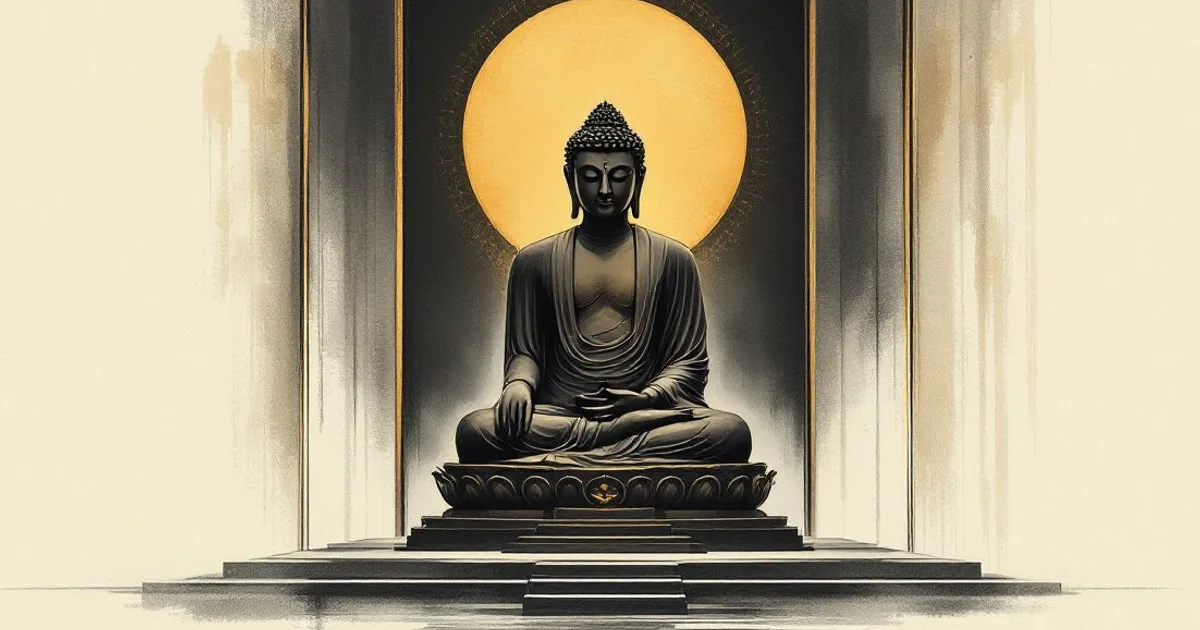
Vairocana is the cosmic buddha of the Avataṃsaka Sūtra and of esoteric Buddhism, and his Sanskrit name means “belonging to the sun”. In the Avataṃsaka and in Huayan (Japanese Kegon), the Mahāyāna school built on it, Śākyamuni and countless other buddhas are his manifestations, and Nara’s Great Buddha is his image. As Mahāvairocana, in Japanese Dainichi (“Great Sun”), he sits at the centre of Shingon’s two great maṇḍalas, and in Tibetan, Nepali and Javanese art he takes the chief place among the five buddhas.
See also types of buddhas and buddhas and bodhisattvas.
- Sanskrit
- Vairocana; in esoteric texts Mahāvairocana, the Great Vairocana
- Meaning
- “Coming from or belonging to the sun, solar” (Monier-Williams); Japanese Dainichi, “Great Sun”
- Other names
- Chinese Piluzhena 毘盧遮那, short form Lushena 盧舍那; Japanese Birushana, Rushana or Roshana, and Dainichi Nyorai 大日如来; Korean Birojana, Nosana; Tibetan rnam par snang mdzad
- Main texts
- The Avataṃsaka Sūtra and the Brahma Net Sutra; the Vairocanābhisaṃbodhi (Mahāvairocana Sūtra) and the Sarvatathāgatatattvasaṃgraha
- Traditions
- Huayan and Kegon; Shingon and Tendai; Tibetan and Newar Vajrayāna. Not a buddha of the Pāli canon
- Mudrā
- Knowledge fist (chiken-in) and Dharma-realm concentration seal (hokkai jōin) in Japan; often the teaching gesture in Tibet
- Famous images
- Tōdai-ji’s Great Buddha, Nara (752); the Longmen colossus (675); Unkei’s Dainichi at Enjō-ji (1175–76)
What does Vairocana mean?
The name is formed from virocana, “shining upon, brightening, illuminating”, a word that as a noun means the sun; Monier-Williams’s Sanskrit dictionary glosses vairocana itself as “coming from or belonging to the sun, solar”. Franklin Edgerton’s dictionary of Buddhist Hybrid Sanskrit gives “the sun” as its first sense and, as a proper name, lists Vairocana first of the five “transcendent” buddhas, Tibetan rnam par snang mdzad, which Britannica renders “Maker of Brilliant Light”. Both dictionaries also record Vairocana as the name of a meditative absorption (samādhi).
In Pāli the word is verocana, “the sun” in the Pali Text Society’s dictionary. When Rāhu, lord of the titans, seized the Sun God, the Buddha told him to let go:
He is a beacon in the darkness,
the dazzling sun, circle of awesome might.
Rāhu, do not swallow him as he traverses the sky.
Rāhu, release my offspring, the Sun!
The Pāli behind “the dazzling sun” is verocano. East Asia transliterated the name and translated it. Chinese wrote Piluzhena (毘盧遮那), shortened to Lushena (盧舍那); Japanese reads these Birushana and Rushana, also Roshana, and Korean Birojana and Nosana. Mahāvairocana was translated as “Great Sun”, 大日, Japanese Dainichi, or as (Dai)henjō, “(Great) Universally Illuminating One”. Tōdai-ji explains its Great Buddha as the buddha “the light of whose knowledge and compassion illumines widely”.
Vairocana in the Avataṃsaka Sūtra and Huayan
Vairocana first takes a central role in the Avataṃsaka Sūtra, the “Flower Garland”. In the sutra Śākyamuni is only one of countless manifestations of Vairocana, and is even called by his name. Vairocana prayed to appear in this way, in countless worlds at once, and the bodhisattvas those buddhas teach were once his own pupils. The sutra’s last chapter, The Stem Array (Gaṇḍavyūha), tells the story of the birth in the Lumbinī grove as Vairocana’s, and Queen Māyā says to the pilgrim Sudhana:
Noble one, just as I have been the mother of this Buddha Vairocana, in the same way I have been the mother of a vast extent, without middle or end, of past tathāgatas.
The Brahma Net Sutra (Fanwang jing), a text composed in China that drew on Avataṃsaka teachings, supplied the image that the colossi of Longmen and Nara follow (see below). It seats Vairocana on a lion throne in the Lotus Treasury World, and a verse describes the scene in his voice:
Now, I, Vairocana Buddha
Am sitting atop a lotus pedestal;
On a thousand flowers surrounding me
Are a thousand Sakyamuni Buddhas.
Each flower supports a hundred million worlds;
In each world a Sakyamuni Buddha appears.
All are seated beneath a Bodhi-tree,
All simultaneously attain Buddhahood.
All these innumerable Buddhas
Have Vairocana as their original body.
The sutra also sets rules for monastics and lay people, rulers included (see bodhisattva vows).
In China the Huayan school, based on the Avataṃsaka, enjoyed the patronage of Empress Wu Zetian in particular (see Buddhism in China). Its picture of one omniscient buddha presiding over innumerable worlds, each with a buddha of its own, was likened to a ruler over a centralised state, and it helped Wu, who saw herself as a universal monarch, to present herself as an absolute sovereign. Vairocana’s typical attendants are the bodhisattvas Mañjuśrī, on a lion, and Samantabhadra, on a six-tusked elephant; in China the three are known as the Three Saints of Huayan.
In Japan the school is Kegon, and its head temple is Tōdai-ji in Nara. As expositor of the Kegon scriptures, in which he pervades the entire universe, Vairocana is normally called Rushana. In 749, the temple records, Emperor Shōmu made it clear that he held the Avataṃsaka to be the most fundamental of all Buddhist texts.
Mahāvairocana, the Great Sun of Shingon
In esoteric Buddhism (Japanese mikkyō) Vairocana eventually took the place of Śākyamuni as expositor of the teaching and became the centre of the pantheon. Two scriptures that reached China from India give him that place, and East Asian esoteric Buddhism still treats them as its two basic texts.
The Vairocanābhisaṃbodhi, better known as the Mahāvairocana Sūtra (Japanese Dainichikyō), is known in no Sanskrit manuscript, though other Sanskrit works quote passages from it. Śubhākarasiṃha (637–735) and his disciple Yixing (683–727) translated it into Chinese in 724–5, and a Tibetan translation followed early in the ninth century. Most of it is a dialogue between the Buddha Vairocana and Vajrapāṇi, “Lord of Mysteries”. Asked the cause, root and culmination of the knowledge of an omniscient one, Vairocana answers:
The bodhi-mind is its cause, compassion is its root, and expedient means is its culmination. Lord of Mysteries, what is bodhi? It means to know one’s mind as it really is.
Those three propositions — bodhicitta, compassion and skilful means — are considered to sum up the whole sūtra. The second text, the Sarvatathāgatatattvasaṃgraha (Japanese Kongōchōkyō, “Diamond Peak Sutra”), describes the Diamond Realm maṇḍala.
Kūkai (774–835), the founder of Shingon, came upon the Dainichikyō in Japan and travelled to China in 804 to study it. In Chang’an the master Huiguo (746–805) initiated him into both lineages, one centred on the Diamond (Vajradhātu) maṇḍala, the other on the Womb (Garbha) maṇḍala of the Mahāvairocana Sūtra; he returned in 806. The two maṇḍalas had evolved separately in India; Huiguo is thought to have paired them as paintings, and Kūkai taught that the two are not two. Dainichi is at the centre of both, with partly different buddhas around him. The Womb maṇḍala, the “mandala of principle”, and the Diamond, the “mandala of wisdom”, customarily hang facing each other on the eastern and western walls of a hall, in Tendai as in Shingon (see Buddhist mandala and Buddhism in Japan).
Unlike other buddhas, Dainichi is shown as a bodhisattva, in silk robes, armlets and bracelets, wearing a five-wisdom crown that marks his identity with the five buddhas. He is generally white, and his mount is the lion. In Shingon he is the chief object of reverence and is regarded as the source of the entire universe. On Mount Kōya, where Kūkai founded his monastery, the Konpon Daitō pagoda, which Kūkai called a representation of the universe, enshrines a Womb Realm Vairocana surrounded by four figures of the Diamond Realm. The fierce wisdom king Fudō Myōō is Dainichi’s representative, a transformation of him in fierce form (see wisdom kings).
Is Vairocana the dharmakāya?
It depends on the text. Mahāyāna speaks of three bodies of a buddha: the dharmakāya, the embodiment of the Dharma; the saṃbhogakāya, the “embodiment of bliss”; and the nirmāṇakāya, the earthly “embodiment of transformation” (see one buddha, three bodies).
Shingon answers yes. In the summary of the Stanford Encyclopedia of Philosophy, traditional Mahāyāna treats the dharmakāya (Japanese hosshin) as an abstract principle, impersonal and non-preaching. For Kūkai it is the Buddha Dainichi, who preaches the Dharma by concretising it in the cosmos as his own body. The Dainichikyō had named its central buddha with a sun metaphor but left his identity with the dharmakāya ambiguous; Kūkai is regarded as the first to set it out systematically. On this view exoteric teachings go back to Śākyamuni, esoteric ones directly to Dainichi.
Other sources draw a finer line. Rolf Giebel’s glossary to the Vairocanābhisaṃbodhi assigns Mahāvairocana to the Dharma body and Vairocana to the enjoyment body, “although the two are sometimes used interchangeably”, and some Buddhists regard Mahāvairocana as a being separate from the Vairocana who is one of the five buddhas. Himalayan art shows two main types of Vairocana: buddha (nirmāṇakāya) appearance and ornamented, peaceful (saṃbhogakāya) appearance.
Vairocana among the five buddhas and in Tibet
In the Vajrayāna set of the five wisdom buddhas, Vairocana heads the Buddha family, is coloured white and usually sits at the centre; in Japan’s Diamond Realm his is the wisdom of the essence of the Dharma-realm, which embraces the other four wisdoms. In Nepali, Tibetan and Javanese art he is often considered the progenitor of the other four, or even the primordial buddha himself. The centre is not fixed. 84000’s introduction to The Stem Array holds that even in the higher tantras Vairocana keeps his place as the central buddha of the five families, yet in the Guhyasamāja maṇḍala Akṣobhya takes the centre and Vairocana the east. At the Svayambhu stupa in Kathmandu the four buddhas of the directions sit in niches in the dome; Vairocana, whose place is the centre, was eventually given a niche of his own just south of Akṣobhya, which, in Alexander von Rospatt’s words, “defies the logic of the mandala” (see Buddhism in Nepal).
His cult was prominent in Tibet’s imperial period. In 804 and 806 a meditation master from a monastery near Lake Kokonor commissioned stone carvings of a crowned buddha on a lion throne among eight bodhisattvas, at Denma Drak in Kham and at Bimda Temple near Jyekundo. Inscriptions beside them record the circumstances, the artists’ names and prayers concerning Vairocana in the closing section of the Gaṇḍavyūha. They are the earliest dated Tibetan art yet known, and the art historian Amy Heller reads their Vairocana as standing for the Tibetan emperor.
As the central figure of a Himalayan painting he belongs mainly to the Caryā and Yoga tantras: the Vairocanābhisaṃbodhi, the Tattvasaṃgraha and the Sarvadurgatipariśodhana. In one of the Tattvasaṃgraha’s two forms he is white and four-faced, holding a five-pointed vajra with both hands in the gesture of supreme enlightenment. In the Anuttarayoga tantras he is one of the five, white and peaceful, his hands in the teaching gesture (see Tibetan Buddhism). A seated meditation posture also bears his name: Tibetan writers most often expound the seven-point posture of Vairocana from Kamalaśīla’s Bhāvanākrama, though other buddhas such as Amitābha share it (see meditation posture).
Great images of Vairocana
Colossal size, the art historian Dorothy Wong argues, became a metaphor for the cosmic dimension of buddhahood, and came to symbolise the authority of rulers too. For fuller histories, see giant Buddha statues and the greatest Buddhist monuments.
| Image | Place | Date | What the sources record |
|---|---|---|---|
| Fengxian Temple colossus | Longmen, near Luoyang, China | 672–675 | Seated on a giant lotus; 17.14 m, about 20 m with the mandorla; Empress Wu gave 20,000 strings of cash from her cosmetic money in 672 (Wong) |
| Great Buddha (Daibutsu) | Tōdai-ji, Nara | cast by 749, consecrated 752; much restored | Bronze; 14.98 m on a 3.05 m pedestal (temple); lotus petals engraved with the Lotus Treasury World |
| Dry-lacquer Rushana | Tōshōdai-ji, Nara | late Nara period | A further thousand buddhas embossed on its halo (JAANUS) |
| Dainichi by Unkei | Enjō-ji, Nara | begun 1175, delivered 1176 | Diamond Realm Dainichi making the knowledge fist; Unkei’s earliest surviving work; a National Treasure |
| Konpon Daitō | Mount Kōya, Wakayama | first built 816–887, later rebuilt | Womb Realm Vairocana among four Diamond Realm figures (Kōyasan) |
| Great Buddha of the Central Plain | Yaoshan, Lushan County, Henan, China | completed 2008 | Standing; 108 m, 208 m in all; the largest standing Buddha statue in 2019 (Wong) |
The Longmen Vairocana’s cosmology is the Avataṃsaka’s, but its iconography, a buddha atop a lotus whose every petal holds a world, comes from the Brahma Net Sutra. The Tōdai-ji image follows the same pattern and stood about 16 metres tall when completed in 752, larger than the restored statue of today. An ink inscription inside the pedestal of the Enjō-ji Dainichi records that Unkei began it in the first year of the Angen era (1175) and delivered it in the second (1176), after about eleven months’ work under the direction of his father, Kōkei.
Mudrās and the Mantra of Light
Dainichi’s two Japanese mudrās match the two maṇḍalas. In the Diamond Realm he forms the knowledge fist (chiken-in): the clenched right hand grasps the raised forefinger of the otherwise clenched left. In India it was called jñānamuṣṭi or bodhyagrī, and Indo-Tibetan iconography generally used the second name, the “mudra of supreme enlightenment”, the name also given to the gesture of the Tattvasaṃgraha’s Vairocana in Tibetan art. Japanese esoteric tradition reads the left hand as sentient beings and the right as the buddhas, so the gesture stands for their mutual response; Britannica calls it the “mudra of the six elements”, uniting matter with consciousness. In the Womb Realm his hands rest in his lap, right over left, palms up and thumbs touching, in the concentration seal of the Dharma-realm (hokkai jōin).
One of the most famous mantras in Japan is the Mantra of Light (kōmyō shingon). Japanese reference works call it the mantra of Dainichi Nyorai and a general spell of all buddhas and bodhisattvas, and read it on abogya beiroshanō makabodara mani handoma jinbara harabaritaya un. It appears in a short text translated by Amoghavajra whose Chinese title names Vairocana (T1002). The text promises that sand empowered 108 times with the mantra and scattered over the dead, or on their graves, frees them from the retribution for their wrongs, even in the hells, and brings rebirth in the western Land of Utmost Bliss. Tendai and Shingon use it in services and in rites such as segaki, the offering to hungry ghosts. In medieval Japan the older schools promoted it as better than the nembutsu; it spread bound up with Pure Land thought and was carved on stone memorial stupas (see Buddhist mantras).
How the traditions differ
| Tradition | Who Vairocana is | Key texts |
|---|---|---|
| Huayan (China), Kegon (Japan) | The buddha of whom Śākyamuni and all buddhas are manifestations; Rushana of Nara | Avataṃsaka Sūtra; Brahma Net Sutra |
| Shingon and Tendai (Japan) | Mahāvairocana, Dainichi, at the centre of both maṇḍalas; for Kūkai, the preaching dharmakāya | Mahāvairocana Sūtra; Sarvatathāgatatattvasaṃgraha |
| Tibetan and Newar Vajrayāna | Head of the Buddha family, white, usually central; not central in the Guhyasamāja | Caryā, Yoga and Anuttarayoga tantras |
| Theravāda | No buddha of that name; Pāli verocana is the sun, and Verocana a lord of titans | The Pāli canon |
Theravāda. The Pāli canon that Theravāda keeps as scripture names no buddha Vairocana. A search of SuttaCentral’s Pāli texts finds verocana only as the sun or as a name, for instance of Verocana, lord of the titans, and never as the name of a buddha. In SN 11.8 Verocana and Sakka, lord of the gods, stand at the Buddha’s door and argue whether effort or patience wins a goal; Bhikkhu Sujato glosses the name “son of Virocana” (Agni or the Sun). Sanskrit literature likewise uses Vairocana as the patronymic of Bali, son of the asura Virocana. The cosmic buddha belongs to the Mahāyāna and its tantric traditions.
For the other buddhas and bodhisattvas, return to buddhas and bodhisattvas.
Frequently asked questions
Who is Vairocana Buddha?
Vairocana is the cosmic buddha of the Avatamsaka Sutra and of esoteric Buddhism. In the Avatamsaka, Shakyamuni and countless other buddhas are his manifestations, and Nara's Great Buddha is his image. As Mahavairocana, called Dainichi in Japan, he is at the centre of Shingon's two great mandalas, and in Tibetan and Nepali art he leads the five buddhas. He is not a buddha of the Pali canon.
What does Vairocana mean?
It means 'belonging to the sun' or 'solar'. Sanskrit vairocana comes from virocana, 'shining, illuminating', a word that also means the sun, and its Pali form verocana means the sun. Mahavairocana, the Great Vairocana, was translated into Chinese and Japanese as Great Sun, Dainichi, and Britannica renders the Tibetan name as 'Maker of Brilliant Light'.
Is Vairocana the same as Dainichi?
Largely, but not always. Dainichi, Great Sun, translates Mahavairocana, the form at the centre of Japan's esoteric mandalas. As teacher of the Kegon scriptures, and as the Great Buddha of Nara, Vairocana is usually called Rushana. Rolf Giebel's glossary to the Mahavairocana Sutra separates Mahavairocana, the Dharma body, from Vairocana, the enjoyment body, while noting that the two names are sometimes used interchangeably.
Is Vairocana the dharmakaya?
It depends on the tradition. For Kukai, founder of Shingon, the dharmakaya is the Buddha Dainichi, and it preaches: the whole cosmos is his body. Traditional Mahayana, as the Stanford Encyclopedia of Philosophy summarises it, treated the dharmakaya as an impersonal principle that does not preach. Rolf Giebel's glossary to the Mahavairocana Sutra pairs Mahavairocana with the Dharma body and Vairocana with the enjoyment body.
What is Vairocana's mantra and mudra?
In Japan the Mantra of Light, komyo shingon, is called the mantra of Dainichi; Shingon and Tendai recite it in services, and sand empowered with it is scattered for the dead. His Diamond Realm mudra is the knowledge fist, the right hand grasping the raised left forefinger; in the Womb Realm his hands rest in his lap in the concentration seal. Tibetan art often shows the teaching gesture.
Where is the biggest Vairocana statue?
In Henan, China. The standing Vairocana at Yaoshan in Lushan County, completed in 2008, is 108 metres tall and 208 metres in total, and in 2019 the art historian Dorothy Wong called it the largest standing Buddha statue. Older giants include the 17-metre Longmen Vairocana, finished in 675, and Nara's Great Buddha, consecrated in 752 and much restored.
Sources
- The Stem Array (Gaṇḍavyūha), Toh 44-45, trans. Peter Alan Roberts, 84000: Translating the Words of the Buddha — introduction i.3, i.45–i.46 and i.48 on Vairocana; 42.56 and 42.85 (Vairocana's births seen from Lumbinī); 44.60 (Māyādevī to Sudhana)
- Sūriya Sutta, 'The Sun' (SN 2.10), trans. Bhikkhu Sujato (CC0), SuttaCentral — verse 5.1–5.4, Pali 'verocano'
- Verocana Sutta, 'Verocana, Lord of Titans' (SN 11.8), trans. Bhikkhu Sujato (CC0), with his note on the name, SuttaCentral
- SuttaCentral dictionary entry 'verocana' — Pali Text Society Pali-English Dictionary: 'the sun (lit. shining forth)', = virocana; New Concise Pali-English Dictionary and Digital Pali Dictionary
- Monier Monier-Williams, A Sanskrit-English Dictionary (1899), p. 1025 'vairocana' and p. 983 'vi-rocana', Cologne Digital Sanskrit Dictionaries
- Franklin Edgerton, Buddhist Hybrid Sanskrit Dictionary (1953), p. 512 'vairocana', Cologne Digital Sanskrit Dictionaries — the sun; first of the five buddhas, Tibetan rnam par snang mdzad; the birth story told of Vairocana in the Gaṇḍavyūha
- Brahma-Net Sutra: Moral Code of the Bodhisattva, 'Bodhisattva Mind-Ground Chapter, Second Part', Sutra Translation Committee of the United States and Canada, YMBA online edition ('Based on Kumarajiva's text')
- Fanwang jing 梵網經 (Brahma Net Sūtra), T1484, vol. 24, p. 1003c29 (我今盧舍那), SAT Daizōkyō Text Database, University of Tokyo
- Rolf W. Giebel, trans., The Vairocanābhisaṃbodhi Sutra, BDK English Tripiṭaka 30-I (Numata Center, 2005; dBET PDF under CC BY-NC-SA 3.0) — translator's introduction pp. xiii–xv, Fascicle One p. 5 (T18:1c), glossary entries 'Mahāvairocana' and 'Vairocana'
- John Krummel, 'Kūkai', Stanford Encyclopedia of Philosophy (first published 2006, substantive revision 2026) — Kūkai as founder of Shingon, Huiguo and the two lineages, the return in 806, Dainichi as the hosshin
- JAANUS (Japanese Architecture and Art Net Users System, comp. Mary Neighbour Parent), 'Dainichi 大日' — the name, Henjō, the central and supreme deity of Esoteric Buddhism, iconography, the two seals, colour and lion
- JAANUS, 'Rushanabutsu 盧舎那仏' — Rushana as Vairocana of the Kegon scriptures, the Lotus Matrix World of the Bonmōkyō, the Great Buddha of Nara and the Tōshōdaiji image
- JAANUS, 'Ryōkai mandara 両界曼荼羅' — the two mandalas, Huiguo, Kūkai, Tendai, and how they are hung
- JAANUS, 'chiken-in 智拳印', 'gochi nyorai 五智如来' and 'shibutsu 四仏' — the knowledge-fist mudra and its names, the five wisdoms, the buddhas around Dainichi in the two mandalas
- JAANUS, 'Fudō Myōō 不動明王' — Fudō as the representative of Dainichi
- Tōdai-ji, official English site, 'Daibutsu-den' — the Daibutsu 'properly known as Vairocana Buddha', the Avatamsaka Sutra, the Lotus Treasury engravings on the petals
- Tōdai-ji, official English site, 'History: 8th century' — Shōmu and the Avatamsaka Sutra in 749, casting completed in 749, consecration in 752
- Tōdai-ji, official Japanese site, 'Daibutsuden' — head temple of the Kegon school (華厳宗大本山); the statue 14.98 m on a 3.05 m pedestal (in Japanese)
- Dorothy C. Wong, 'Colossal Buddha Statues along the Silk Road', Acta Via Serica 4.2 (December 2019): 1-27 (open access) — colossal size as metaphor (p. 3), names (p. 4), Huayan and Empress Wu (p. 8), the Longmen Vairocana and the Brahma Net (p. 9), the Tōdaiji image (pp. 15-16), the Yaoshan Vairocana (p. 20)
- Norman Harry Rothschild, 'Fazang (Fa-tsang, 643–712 C.E.)', Internet Encyclopedia of Philosophy — Empress Wu as universal monarch and the Huayan universe presided over by Vairocana
- 'Buddhist trinity of Vairocana, Manjusri and Samantabhadra', China, late 16th–17th century, Minneapolis Institute of Art (2003.199.1) — the Three Saints of Huayan
- Kōyasan Shingon-shū Sōhonzan Kongōbu-ji, official English site, 'Highlights' (Danjo Garan) — Kōbō Daishi's monastery; the Konpon Daitō (816–887), a representation of the universe enshrining a Womb Realm Vairocana among four Diamond Realm figures
- Agency for Cultural Affairs, Cultural Heritage Online, '木造大日如来坐像〈運慶作〉' (wooden seated Dainichi Nyorai by Unkei), Enjō-ji, dated 1176, with the pedestal inscription (begun Angen 1, delivered Angen 2), National Treasure 1993 (in Japanese)
- Kotobank, 'Enjō-ji' — a Shingon temple of the Omuro branch in Nara city (in Japanese)
- Kotobank, 'Kōmyō shingon' (Mantra of Light) — Seisen-ban Nihon kokugo daijiten and Britannica Kokusai Dai-hyakka Jiten Shō-kōmoku Jiten: one of the most famous mantras, the mantra of Dainichi, its reading, the empowered sand, its use in Tendai and Shingon and its medieval spread (in Japanese)
- 不空羂索毘盧遮那佛大灌頂光真言, trans. Amoghavajra, Taishō no. 1002, vol. 19, p. 606b–c, SAT Daizōkyō Text Database, University of Tokyo
- Jeff Watt, 'Vairochana Buddha Main Page', Himalayan Art Resources (10-2008, updated 5-2017, 2-2020) — the two main types, nirmanakaya and sambhogakaya appearance
- Jeff Watt, 'Vairochana Iconography', Himalayan Art Resources (10-2008, updated to 7-2021) — the Charya and Yoga Tantra sources, the Tattvasamgraha form, the Anuttarayoga form
- Jeff Watt, 'Seven Point Posture of Vairochana', Himalayan Art Resources (4-2017) — Kamalaśīla's Bhāvanākrama
- Amy Heller, 'Imperial Carvings of Vairochana' (Ancient Tibetan Buddhist Rock Carvings of Vairochana: Portraits of Tibetan Sovereigns and Their Courtiers), Project Himalayan Art, Rubin Museum of Art (2023)
- Alexander von Rospatt, 'The Svayambhu Chaitya of Kathmandu: Shrines as the Focal Point of Buddhist Communities', Project Himalayan Art, Rubin Museum of Art (2023) — Vairochana's niche
- Alexander Berzin, 'The Five Buddha-Families and Five Dhyani Buddhas', Study Buddhism — the Guhyasamāja mandala, with Akshobhya in the centre and Vairochana in the east
- Britannica Editors, rev. Matt Stefon, 'Vairochana', Encyclopaedia Britannica (checked 2026-11-10) — the supreme Buddha of East Asia, Tibet, Nepal and Java; Mahavairochana as a separate being for some; Shingon; the Tibetan name; the chief position among the five; the Tōdai-ji Roshana; the mudra of the six elements